

KATHMANDU- LUKLA- PHAKDING- NAMCHE- TENGBOCHE - NAMCHE- PHAKDING-LUKLA- KATHMANDU


Why Everest View Trek with an Experienced Sherpa Guide?
- Enjoying the stunning views of Mount Everest and the surrounding Himalayan peaks.
- Exploring the quaint Sherpa villages in the area, including the famous Namche Bazaar.
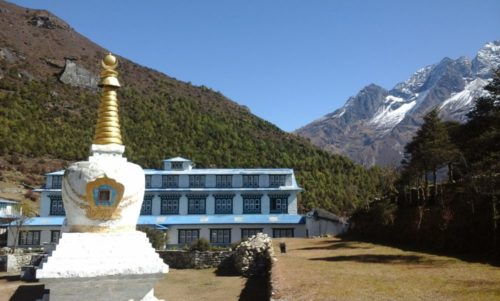
- Visiting the Tengboche Monastery, the largest and one of the oldest Buddhist monasteries in the region.
- Exploring the picturesque Sagarmatha National Park, a UNESCO World Heritage Site renowned for its spectacular landscapes and diverse wildlife.
- Hiking to the Kala Patthar viewpoint for a spectacular panoramic view of the Everest massif.
- Enjoying the breathtaking beauty of the Khumbu Glacier, one of the largest glaciers in the region.
- Visiting Thame Village, the birthplace of legendary mountaineers and a village renowned for its rich Sherpa heritage.
- Experiencing the traditional hospitality of the Sherpa people and tasting their delicious local cuisine.
A Brief Overview of the Everest View Trek:
The Everest View Trek 3 Days is a short and rewarding trekking experience in Nepal’s Khumbu region, designed for travelers who want to see Mount Everest and the surrounding Himalayan peaks in a limited time. Starting with a scenic flight to Lukla, the trek follows the classic trail through Sherpa villages and mountain forests toward Namche Bazaar and the Everest View Hotel.
The trail passes through Sagarmatha National Park, a UNESCO World Heritage Site known for its spectacular mountain scenery, Sherpa culture, Buddhist monasteries, rhododendron forests, and Himalayan wildlife. Along the way, you can experience the traditional lifestyle of the Sherpa people while enjoying views of peaks such as Mount Everest, Lhotse, Nuptse, Ama Dablam, Thamserku, and Kongde Ri.
The major highlight of the Everest View Trek is the hike above Namche Bazaar toward Syangboche and the Everest View Hotel, where the Himalayan panorama opens dramatically on clear days. This viewpoint provides an excellent opportunity to enjoy and photograph Mount Everest and other famous peaks of the Khumbu region.
With only three days of trekking, this short Everest journey is ideal for travelers who have limited time in Nepal but still want to experience the Everest region, Sherpa culture, mountain scenery, and genuine Himalayan trekking atmosphere. It offers a practical alternative to longer Everest treks while focusing on the spectacular mountain views that make the Everest region famous.
Is the Everest View Trek Good for Beginners?
Yes, the Everest View Trek is an excellent choice for beginners who want to experience the Everest region without taking on the longer Everest Base Camp Trek. The route follows established mountain trails through Sherpa villages and reaches Namche Bazaar at around 3,440 meters, with teahouse accommodation along the way.
Although beginner-friendly, the trek still requires good basic fitness because you will walk uphill and downhill for several hours each day. The main challenge is altitude, so a gradual itinerary, comfortable walking pace, plenty of water, and proper acclimatization are important.
With the right preparation and an experienced guide, first-time trekkers can enjoy the Everest View Trek comfortably. It offers impressive views of Mount Everest, Ama Dablam, Lhotse, and other Himalayan peaks, along with Sherpa culture and beautiful mountain scenery.
10 Reasons to Choose a Local Guide for the Everest View Trek:
- Local Himalayan Knowledge – Learn about the Everest region, Sherpa culture, villages, monasteries, and mountains from someone who knows the area.
- Safer Trekking – An experienced local guide understands the trail, weather changes, altitude, and common trekking risks.
- Altitude Support – Your guide can monitor how you are feeling as you climb toward Namche Bazaar and the Everest View
- Hotel and advise you when to rest or slow down.
- Best Mountain Views – Local guides know the best places and times to enjoy clear views of Mount Everest, Ama Dablam, Lhotse, Nuptse, and Thamserku.
- Easy Trail Navigation – Follow the correct route without worrying about confusing junctions or unfamiliar sections of the trail.
- Local Cultural Experience – Your guide can explain Sherpa traditions, Buddhist culture, prayer wheels, monasteries, and local customs.
- Teahouse Assistance – Your guide can help arrange comfortable accommodation and meals, especially during busy trekking seasons.
- Help During Unexpected Problems – If you become sick, injured, delayed, or affected by bad weather, a local guide can coordinate practical assistance.
- Better Use of 3 Days – With limited time, a local guide helps organize the walking pace and daily route so you can focus on the Everest experience rather than logistics.
- Support the Local Community – Choosing a local guide helps keep tourism income within the Khumbu and Sherpa communities.
Everest View Trek with an Experienced Sherpa Guide Outline
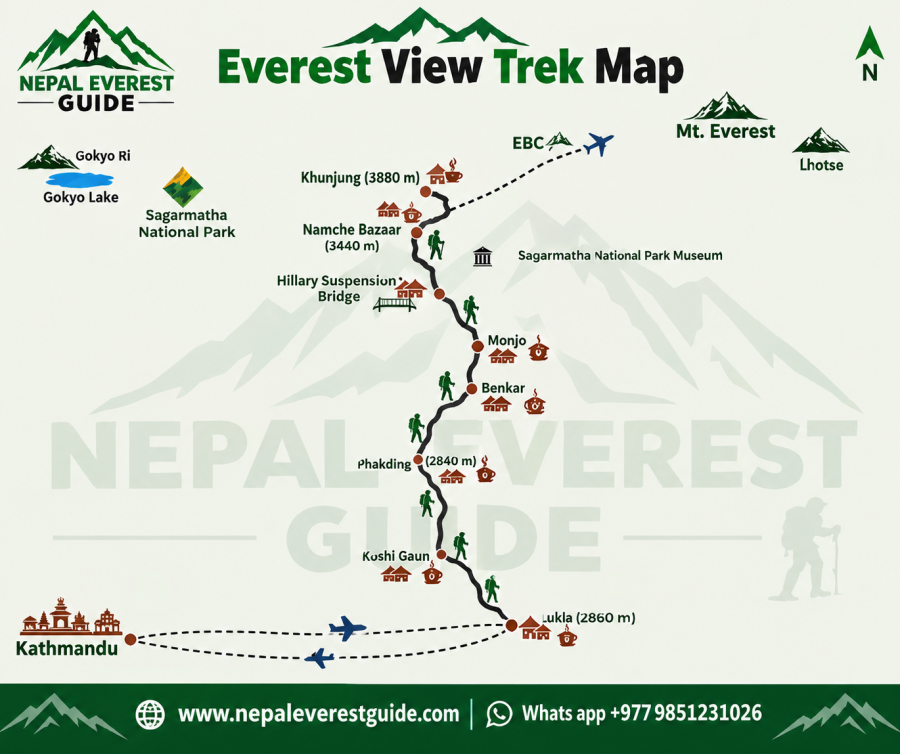
Day 01: Lukla – Phakding (8 km) – 3–4 Hrs Trek
Day 02: Phakding – Namche Bazaar (10–12 km) – 5–6 Hrs Trek
Day 03: Namche Bazaar – Everest View Hotel – Namche Bazaar – Lukla (18 km) – 7–8 Hrs Trek
What's included?
Permits & Government Fees
- Sagarmatha National Park Entry Permit required for the Everest region.
- Khumbu Pasang Lhamu Rural Municipality Entry Permit.
- Local government and applicable monastery entry fees required during the trek.
- All applicable local taxes and official government fees related to the trekking package.
Experienced Guide & Porter Service
- Experienced, government-licensed trekking guide throughout the trek.
- Guide expenses, including his salary, meals, accommodation, insurance, transportation, and required trekking equipment.
Accommodation & Meals
- Standard teahouse/lodge accommodation during the trek on a twin-sharing basis.
- Breakfast, lunch, and dinner throughout the trekking period.
- Morning tea or coffee during the trek.
- Accommodation, meals, and basic facilities for the guide and porters are also included.
Transportation
- Ground transportation as required by the itinerary.
- Airport/hotel transfers and other ground transportation specified in the trekking itinerary.
Trekking Support
- Professional trekking support and local coordination throughout the journey.
- Assistance with permits, local fees, and trekking logistics from the beginning to the end of the tre
What's not included?
- Lunch and dinner in Kathmandu are not included in the package.
- Travel insurance is not included and must be arranged by the traveler.
- Lukla–Kathmandu flights are not included in the package.
- International airfare and departure taxes are not included.
- Personal expenses of any kind are not included.
- Nepal entry visa fees and entrance fees for sightseeing activities are not included.
- Bar bills and other bar-related expenses are not included.
- Alcoholic and non-alcoholic beverages are not included unless specifically mentioned in the itinerary.
- Emergency rescue and evacuation costs are not included.
- Tips for guides and porters are not included and are at the traveler's discretion.
Day by Day Itinerary
DAY
01
Flight from Kathmandu to Lukla then Trek to Phakding
30 Min Flight & 3 Hrs Trek Breakfast , Lunch & Dinner Guest House in phakding
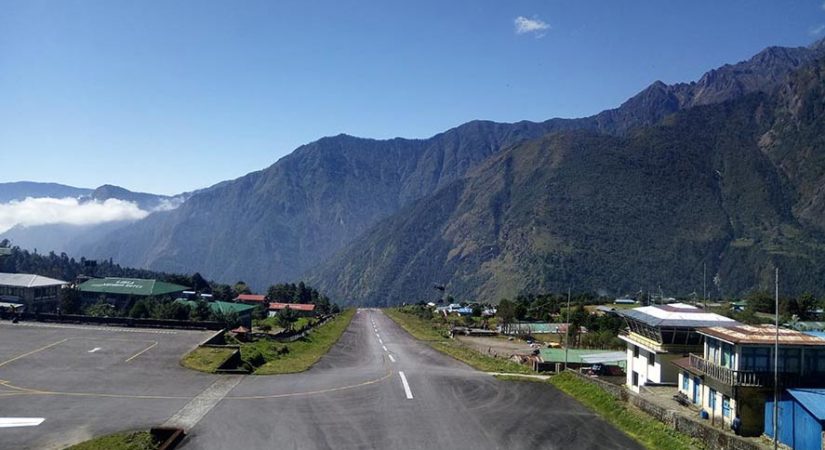
Early in the morning, we take a scenic flight to Lukla (2,860 m), enjoying spectacular views of the Himalayan landscape along the way. Upon arrival, we meet our experienced, licensed trekking guide and trekking crew before beginning our journey toward Phakding.
The trail follows the Dudh Koshi River, passing through charming Sherpa villages, traditional mani walls, and scenic mountain landscapes. Along the way, we cross several suspension bridges and enjoy the peaceful surroundings of the Khumbu region.
After approximately 3–4 hours of trekking and around 8 km, we reach Phakding (2,610 m), where we check into a local teahouse and have time to relax.
This first day provides a gentle introduction to the Everest region, allowing us to experience the local Sherpa culture and Himalayan scenery while gradually adapting to the higher altitude.
DAY
02
Trek from Phakding to Namche Bazaar
6-7 Hrs Breakfast , Lunch & Dinner Guest House in Namche
After breakfast in Phakding, we begin our trek toward Namche Bazaar (3,440 m), the main trading and cultural hub of the Khumbu region. The trail follows the Dudh Koshi River, passing through beautiful pine and rhododendron forests, traditional Sherpa villages, and several suspension bridges decorated with colorful prayer flags.
Along the way, we pass through Monjo, the gateway to Sagarmatha National Park, before continuing toward Jorsale. The trail then follows the river valley before becoming steeper as we begin the final ascent to Namche Bazaar.
As we climb higher, we may catch our first distant views of Mount Everest, Lhotse, Thamserku, and Kongde Ri, weather permitting. After the final uphill section, we arrive at Namche Bazaar, a lively mountain town surrounded by spectacular Himalayan scenery.
After checking into our teahouse, we have time to relax and explore the surrounding area. Namche is well known for its Sherpa culture, local markets, cafés, shops, and traditional mountain atmosphere.
DAY
03
Visit Sagarmatha National park, Museum , Everest view then trek back to Lukla
7-8 Hrs Breakfast , Lunch & Dinner Guest House in Namche
On day 3 of your trip, you will have an incredible opportunity to explore the natural beauty and rich history of Sagarmatha National Park, a UNESCO World Heritage Site. Your first stop will be the park's Photo Gallery Hall and Museum, where you can learn about the natural and cultural heritage of the Everest region. You will discover the fascinating history and traditions of the Sherpa people, as well as the diverse flora and fauna found throughout the park. The museum also features stunning photographs showcasing the breathtaking landscapes of the Himalayas and some of the world's highest peaks.
After exploring the museum, you will continue to enjoy breathtaking views of some of the Himalayas' most majestic mountains, including Mount Everest, Lhotse, Nuptse, Ama Dablam, Khangtega, Thamserku, Tawache, and Khumbila. These spectacular views offer unforgettable memories of the incredible beauty of the Everest region. You will have time to enjoy the scenery, take photographs, and appreciate the surrounding mountains before returning to your hotel in Namche Bazaar to collect your baggage.
From Namche, you will begin your descent toward Lukla, following the same trail used during your ascent. The route takes you through beautiful forests, across suspension bridges spanning deep gorges, and past charming Sherpa villages. Although the long descent can be challenging, it offers a wonderful opportunity to experience the landscape from a different perspective and enjoy the changing scenery along the trail.
After several hours of trekking, you will arrive in Lukla, where you can rest and reflect on the memorable experiences and incredible Himalayan scenery from your Everest View Trek.
Departure Dates
Sorry, No fixed departure dates are listed to group join, please request private trip
𝑫𝒊𝒔𝒄𝒐𝒗𝒆𝒓 𝒕𝒉𝒆 𝒎𝒂𝒋𝒆𝒔𝒕𝒊𝒄 𝑴𝒐𝒖𝒏𝒕 𝑬𝒗𝒆𝒓𝒆𝒔𝒕 𝒐𝒏 𝒂 𝒃𝒖𝒅𝒈𝒆𝒕-𝒇𝒓𝒊𝒆𝒏𝒅𝒍𝒚 𝒕𝒓𝒆𝒌 𝒘𝒊𝒕𝒉 𝒐𝒖𝒓 𝒆𝒙𝒑𝒆𝒓𝒊𝒆𝒏𝒄𝒆𝒅 𝒈𝒖𝒊𝒅𝒆. 20 𝒚𝒆𝒂𝒓𝒔 𝒐𝒇 𝒈𝒖𝒊𝒅𝒊𝒏𝒈, 𝒔𝒊𝒎𝒑𝒍𝒆 𝒕𝒓𝒊𝒑 𝒐𝒓𝒈𝒂𝒏𝒊𝒛𝒂𝒕𝒊𝒐𝒏, 𝒂𝒏𝒅 𝒘𝒆𝒍𝒍-𝒎𝒂𝒏𝒂𝒈𝒆𝒅 𝒔𝒆𝒓𝒗𝒊𝒄𝒆𝒔 𝒂𝒕 𝒂𝒏 𝒂𝒇𝒇𝒐𝒓𝒅𝒂𝒃𝒍𝒆 𝒑𝒓𝒊𝒄𝒆. 𝑩𝒐𝒐𝒌 𝒏𝒐𝒘.
𝑾𝒉𝒂𝒕'𝒔 𝒂𝒑𝒑 /𝑻𝒆𝒍𝒆𝒈𝒓𝒂𝒎: +977 9851231026 𝒐𝒓 𝒎𝒂𝒊𝒍 𝒖𝒔 𝒂𝒕: 𝒏𝒆𝒑𝒂𝒍𝒆𝒗𝒆𝒓𝒆𝒔𝒕𝒈𝒖𝒊𝒅𝒆@𝒈𝒎𝒂𝒊𝒍.𝒄𝒐𝒎
Reviews
Oliver Harris
Australia
Amazing Short Tsum Valley Trek – Highly Recommended!
2026My family and I had an unforgettable 9-day Short Tsum Valley Trek in Nepal. Everything was well organised, safe, and enjoyable. Our licensed guide Rupesh was excellent—friendly, knowledgeable, patient, and always attentive to our family’s needs. He shared wonderful information about the local culture, villages, monasteries, and Himalayan landscape.
Our porter, Prem, was also hardworking, helpful, and cheerful throughout the trek. The peaceful Tsum Valley, traditional villages, beautiful monasteries, and spectacular mountain views made this a truly memorable family adventure. Thank you, Rupesh, Prem, and the entire team, for an amazing experience. Highly recommended!
Vivi Laveriano
Germany
3-Day Everest View Trek – Short but Incredible Himalayan Journey
2024My name is Vivi Laveriano from Germany, and I recently completed the Everest View Trek in 3 days with Nepal Everest Guide. This short trek was an incredible experience with stunning views of Mount Everest and the surrounding Himalayan peaks. My guide, Dharma, was excellent – very professional, caring, and knowledgeable about the mountains and local culture. He always made sure I was safe, comfortable, and enjoying every moment of the journey. The trek was well organized, with good accommodation and smooth management throughout. Even in just 3 days, I felt the true beauty of the Khumbu region and the warm hospitality of local people. I am very satisfied with the service and highly recommend Nepal Everest Guide and guide Dharma to anyone planning a trip to Nepal.
pakisthan
Shayan ali
May, 2019Me and my family we have been planning to visit nepal since 2015 , but we didnot have enough time to visit nepal finally in 2019 we managed our time for 10 days towards Everest region, we only wanted to see mt Everest world’s tallest peak, actually we did it with the excellence management by local guide Santosh, he was recommended by my friend and hear about him many times, he is smart and helpful. I wish i can come back again for Everest base camp trek, i hear so many interesting history about base camp so i will be back for that soon and explore the beauty of Everest region. we saw Sherpa museum , mt. Everest, Tyangboche monastery and passes many suspension bridges along the path, it was one of my best trip till now. local guide Santosh is highly recommended if anybody looking for local management and local mountain freelance guide.
Namaste, nepal
Sincerely
Essential Information
Everest View Trek Permits and Regulations:
The Everest View Trek requires a Sagarmatha National Park Entry Permit and a Khumbu Pasang Lhamu Rural Municipality Permit. These permits are required for entering and trekking through the Everest region and are normally arranged by your trekking agency or guide.
Trekkers should follow local environmental and cultural regulations, including managing waste properly and respecting Sherpa traditions and Buddhist sites. For a smooth and safe journey, trekking with a licensed local guide is highly recommended.
Everest View Trek: Common Health Issues and Prevention
The most common concerns on the Everest View Trek are altitude sickness, dehydration, fatigue, cold, and stomach problems. Because the trek reaches Namche Bazaar at 3,440 meters, walk at a comfortable pace, drink plenty of water, eat well, and allow your body time to adjust to the altitude.
Dress in warm layers and protect yourself from cold weather, especially in the morning and evening. Eat freshly cooked food and drink safe or treated water to reduce stomach problems. If you develop symptoms of altitude sickness, such as headache, nausea, dizziness, or unusual tiredness, inform your guide and do not continue ascending until you feel better.
Everest View Trek Weather, Temperature and Difficulty
The Everest View Trek is best enjoyed during spring (March to May) and autumn (September to November), when the weather is generally stable, skies are clearer, and mountain views are at their best. Winter (December to February) brings colder temperatures and possible snow, while the monsoon season (June to August) can bring rain, clouds, and less reliable mountain visibility.
Everest View Trek Temperature
Temperatures vary with the season and altitude. Daytime conditions can be comfortable for walking, but mornings and nights become much colder as you gain elevation. At higher points around Namche Bazaar and Syangboche, temperatures can fall below freezing at night, especially in winter. Warm layers, a waterproof jacket, gloves, and suitable trekking shoes are recommended.
Everest View Trek Difficulty
The Everest View Trek is generally considered a moderate short trek. The trail includes several uphill and downhill sections, with the highest areas around Syangboche and the Everest View Hotel. Although the trek is short, the increasing altitude can make walking more demanding than the distance suggests.
Good fitness, a steady walking pace, proper hydration, and gradual adjustment to the altitude can make the trek more comfortable. Trekkers should also be aware of possible symptoms of altitude sickness, particularly as the route reaches higher elevations. With reasonable preparation and an experienced guide, the 3-day Everest View Trek can be a rewarding way to experience the Khumbu region in a limited time.
Importance of acclimatization on the Everest view trek
Acclimatization is a crucial aspect of any high-altitude trek, including the Everest view trek. This process involves allowing your body to gradually adjust to the lower levels of oxygen as you ascend to higher altitudes. The Everest view trek reaches a maximum altitude of around 3,800 meters, which is still considered high altitude and can lead to altitude sickness if not acclimatized properly.
Here are some reasons why acclimatization is important on the Everest view trek:
- Prevention of altitude sickness - Altitude sickness is caused by the lack of oxygen in the air at higher altitudes. Acclimatization allows your body to adjust to this change gradually, reducing the risk of altitude sickness.
- Better enjoyment of the trek - Proper acclimatization means you can enjoy the trek more without feeling the effects of altitude sickness, such as headaches, nausea, and dizziness.
- Faster recovery time - Acclimatization helps your body recover faster from physical exertion at high altitudes, making it easier to complete the trek.
- Lower risk of accidents - Altitude sickness can impair judgment and coordination, increasing the risk of accidents. Proper acclimatization reduces the risk of these accidents occurring.
During the Everest view trek, it is recommended to spend at least two nights at each altitude level to allow for proper acclimatization. It's also important to drink plenty of water, avoid alcohol and caffeine, and eat a balanced diet to help your body adjust to the altitude. Your trekking guide will also monitor your acclimatization progress and advise you on any necessary precautions.
What to pack for the Everest view trek?
The Everest view trek is a popular trekking route in the Everest region of Nepal. It is a shorter trek compared to the full Everest Base Camp trek and is ideal for those who want to experience the beauty of the region without the strenuous climb to the base camp.
Here are some items you may want to consider packing for the Everest view trek:
- Trekking boots - Make sure to bring a comfortable and sturdy pair of hiking boots to handle the rugged terrain.
- Warm clothing - The temperature drops significantly as you climb higher, so bring warm clothing such as a down jacket, thermal layers, gloves, and a hat.
- Rain gear - It's not uncommon for rain or snow to occur in the region, so make sure to bring a waterproof jacket and pants.
- Daypack - A small backpack to carry essentials such as a water bottle, camera, sunscreen, and snacks.
- Trekking poles - These can help with stability and balance on steep trails.
- Medications and first aid kit - Make sure to bring any necessary medications and a basic first aid kit.
- Sleeping bag - Most tea houses provide blankets, but a sleeping bag can provide extra warmth and comfort.
- Headlamp - A headlamp can be useful for early morning or late night treks.
- Camera - The scenery in the Everest region is stunning, so bring a camera to capture the views.
- Cash - Most tea houses do not accept credit cards, so bring enough cash to cover expenses such as meals and accommodations.
Remember to pack light and only bring the essentials as you'll be carrying everything on your back during the trek.
How long is the Everest Panorama Trek?
The length of the Everest Panorama Trek depends on the itinerary, but it typically takes 5 to 7 days to complete the trek. However, some trekkers choose to extend their trip for a few more days to explore the surrounding areas and acclimate to the high altitude. The trek can be customized to meet individual needs and preferences, so the duration can vary.
How difficult is the Everest Panorama Trek?
The difficulty level of the Everest Panorama Trek is considered to be moderate. It is a shorter and less strenuous alternative to the full Everest Base Camp Trek, but still involves some uphill and downhill walking on mountain trails. The highest point reached on the trek is Tengboche Monastery at an altitude of 3,867 meters, and the trek involves several days of gradual ascent and descent.
Physical fitness, proper acclimatization, and proper gear are important factors to consider when embarking on this trek. However, the trek can be customized to suit different fitness levels, and trekkers can take their time to acclimate to the high altitude. With a professional guide and proper preparation, most people with a moderate level of fitness can successfully complete the Everest Panorama Trek.
Best time to go on the Shortest Everest Trek:
The best time to embark on the Shortest Everest Trek is during the spring (March to May) and autumn (September to November) seasons. These months offer clear skies and mild temperatures, providing the perfect weather conditions for a comfortable and memorable trekking experience.
Spring brings the added beauty of blooming rhododendrons and other wildflowers, adding a pop of color to the lush forests along the trail. The clear skies during this time of year also provide unobstructed views of the magnificent peaks, including Mount Everest.
Autumn is another prime time for the trek, with warm, stable weather and fewer crowds. The clear skies during this season offer some of the best views of the peaks and make for perfect photo opportunities.
It's important to note that the monsoon season, which runs from June to August, can bring heavy rainfall and cloud cover, making trekking conditions difficult. Winter is also a challenging time for the trek, with snow and freezing temperatures making the trail difficult to traverse.
In conclusion, the best time to undertake the 3-day Shortest Everest Trek is during the spring and autumn seasons, when the weather is mild, the skies are clear, and the views of the Himalayan peaks are at their best.
What kind of equipment do I need for the Everest Panorama Trek?
For the Everest Panorama Trek, it's recommended to bring the following equipment:
- Clothing: warm layers, waterproof jacket and pants, hat, gloves, and a down jacket for colder temperatures
- Footwear: sturdy and comfortable hiking boots with good ankle support
- Backpack: a daypack for carrying essentials such as water, snacks, camera, and extra clothing
- Sleeping bag: a three-season sleeping bag rated for temperatures below freezing
- Headlamp: with extra batteries
- Personal hygiene items: towel, toothbrush, toothpaste, wet wipes, and hand sanitizer
- First aid kit: including personal medications, blister kit, and basic first aid supplies
- Sun protection: sunglasses, sun hat, and high SPF sunscreen
- Water bottles or hydration system
- Trekking poles: optional but can be helpful on the steep and uneven trails.
It's also important to note that while many of these items can be purchased in Kathmandu, it's often more cost-effective to bring them from home, and it also ensures that you have the specific items you need.
Where do I stay during the Everest Panorama Trek?
During the Everest Panorama Trek, trekkers typically stay in local teahouses or lodges. These accommodations offer basic facilities, including a bed to sleep in, and meals. The teahouses are usually staffed by local families and serve as a hub of activity for trekkers. They offer a unique opportunity to experience the local culture and hospitality of the Sherpa people. Some teahouses and lodges also offer hot showers and Wi-Fi, although the availability of these facilities may vary depending on the location and the time of year. It's always a good idea to check the amenities offered by each establishment before booking to ensure that you have everything you need for a comfortable trek.
What permits do I need for the Everest Panorama Trek?
To trek the Everest Panorama Trek, you'll need to obtain a TIMS (Trekker's Information Management System) card and a Sagarmatha National Park entry permit. The TIMS card is a requirement for all trekkers in Nepal and serves as a form of identification and helps regulate the flow of trekkers in the region. The Sagarmatha National Park entry permit is required to enter the national park and helps to conserve the natural and cultural resources in the region.
It's important to note that these permits are subject to change and it's always a good idea to check the latest regulations before embarking on your trek. Many trekking agencies can assist with obtaining the necessary permits, or they can be purchased directly from the Nepal Tourism Board or the Trekking Agencies' Association of Nepal (TAAN) in Kathmandu.
What is the highest point of the Everest Panorama Trek?
The highest point of the Everest Panorama Trek is Tengboche, which is located at an altitude of 3,867 meters (12,687 feet) above sea level.
How much does it cost to do the Everest Panorama Trek?
The cost of the Everest Panorama Trek varies depending on several factors such as the length of the trek, the number of people in the group, the level of comfort and services desired, and the time of year. On average, a budget-friendly trek can cost between $1,000 and $1,500 per person, while a more luxurious trek can cost upwards of $2,500 per person.
The major expenses include airfare to and from Lukla, the starting point of the trek, guide and porter fees, food and accommodation, permits, and insurance. Some trekkers also opt to include additional services such as oxygen, private transportation, or helicopter evacuation insurance, which can increase the overall cost of the trek.
It is recommended to book your trek with a reliable trekking agency to ensure that all permits, fees, and expenses are included in the cost, and that you have a safe and enjoyable trekking experience.
Are there any restrictions or safety concerns for the Everest Panorama Trek?
There are a few restrictions and safety concerns that trekkers should be aware of when planning to do the Everest Panorama Trek. Some of the key things to keep in mind include:
Age restriction: The trek requires a good level of physical fitness, and it's not recommended for people with serious health conditions or for very young children.
Altitude sickness: The trek takes you to high altitudes, and it's important to be aware of the risk of altitude sickness and take appropriate measures to prevent it.
Insurance: It's essential to have adequate travel and medical insurance before embarking on the trek, as the risk of accidents or illnesses increases at high altitudes.
Weather conditions: The weather in the Khumbu region can be unpredictable, and it's important to be prepared for changes in temperature and conditions, especially during the monsoon season.
Local restrictions: There may be local restrictions or closures of certain trails, so it's important to check the latest information before starting the trek.
Respect local culture: The trek passes through the homes of the Sherpa people, and it's important to show respect for their culture and traditions, especially when visiting the Tengboche Monastery.
Political stability: The region is politically stable, but it's always a good idea to stay informed of any developments and to follow the advice of local authorities.
Overall, it's important to be well-prepared, take necessary precautions, and follow the guidance of experienced trek leaders and guides to ensure a safe and enjoyable trekking experience.
What foods are recommended for Everest panorama trek in Nepal?
During the Everest Panorama Trek, you'll have the opportunity to try a variety of local and international cuisines, depending on the level of comfort you prefer and the type of accommodation you choose. However, it's important to keep in mind that high altitude trekking can have an effect on your appetite, so it's important to eat nutritious and high-energy foods to keep your energy levels up.
Some recommended foods for the Everest Panorama Trek include:
Carbohydrates: Rice, pasta, noodles, potatoes, and bread are all good sources of carbohydrates, which provide energy and help to regulate your body's fluid balance.
Proteins: Meat, eggs, cheese, and dairy products are all good sources of protein, which help to repair and build muscle.
Fruits and Vegetables: Fresh or dried fruits, such as apples, bananas, and apricots, are easy to carry and provide a quick source of energy. Leafy greens and vegetables, such as spinach and carrots, are also good options.
Snacks: High-energy snacks, such as energy bars, nuts, and dried fruit, are great for snacking on the go and can help to keep your energy levels up during the trek.
Drinks: Stay hydrated by drinking plenty of water, and consider drinking electrolyte-replacement drinks, such as Gatorade, to help regulate your body's fluid balance.
It's important to note that the availability of some foods and drinks may be limited in the more remote areas of the trek, so it's best to bring some essential supplies from Kathmandu or Lukla.
Simple lodges Vs Luxury Hotels in Everest panorama trek
The choice between staying in simple lodges or luxury hotels during the Everest Panorama Trek depends on your personal preferences and budget.
Simple lodges, also known as tea houses, are the most common form of accommodation along the trekking trail. They offer basic facilities, such as a bed and a shared bathroom, and are a good option for those who are looking for a budget-friendly and authentic trekking experience. The lodges serve simple meals, such as dal bhat and soup, which are made with fresh ingredients and provide energy for the next day's hike.
Luxury hotels, on the other hand, offer more comfortable and modern facilities, such as private rooms, en-suite bathrooms, and hot showers. They also serve a wider variety of meals and drinks, including international cuisine and drinks. Luxury hotels are a good option for those who are looking for a more comfortable trekking experience, or who want to indulge themselves after a long day of hiking.
Regardless of whether you choose simple lodges or luxury hotels, it's important to note that both options provide great opportunities to meet and interact with the local Sherpa people, learn about their culture and way of life, and immerse yourself in the natural beauty of the region.
what about weather in Lukla during Winter, spring and Autumn season in nepal?
The weather in Lukla, which is the starting point of the Everest Panorama Trek, can vary depending on the season.
Winter (December to February) in Lukla is usually very cold, with temperatures ranging from minus 10 to 5°C during the day and dropping even lower at night. The region is also prone to snow and high winds, making it difficult to fly in and out of Lukla.
Spring (March to May) is a popular time to trek in the Everest region, with stable weather and clear skies, offering great views of the surrounding mountains. Temperatures during the day can range from 5 to 15°C, with cold nights.
Autumn (September to November) is also a good time to trek in the region, with warm days and clear skies. The temperatures during the day can range from 10 to 20°C, with cool nights. This season is also the time for the popular festivals of Nepal, making it a great time to visit and immerse in the local culture.
It's important to note that weather in the mountains can be unpredictable, and it's best to check the latest conditions and be prepared for changes in weather.
Flight delays and cancellations in Lukla
Flight delays and cancellations in Lukla are not uncommon due to the challenging weather conditions in the region. However, there are several options you can consider if your flight gets delayed or cancelled:
- Wait for the next available flight: If there is a delay, you can wait at the airport and take the next available flight once the weather improves.
- Change your itinerary: If the delay is prolonged, you can consider changing your itinerary and trekking to a different region in Nepal.
- Book a helicopter: If you need to reach your destination on time, you can opt for a helicopter flight, which can be more expensive but much faster and reliable.
- Take alternative transportation: If a helicopter is not an option, you can opt for alternative transportation such as road transport or taking a jeep to the nearest town and then catch a connecting flight.
It's important to have a flexible itinerary and a contingency plan in case of flight delays or cancellations in Lukla. You should also make sure to book your trip with a reliable trekking company that can help you with any arrangements.
How much is flight ticket from lukla to Kathmandu and back round trip?
The cost of a flight ticket from Lukla to Kathmandu and back round trip can vary depending on several factors, such as the time of year, the airline, and demand. On average, a one-way flight ticket from Lukla to Kathmandu can cost around $170 to $180, and a round trip can cost $340 to $360. It is always a good idea to book in advance to get the best price, and to check multiple airlines for comparison. It's also important to keep in mind that flight prices may be subject to change, so it's best to check for the most up-to-date pricing.
Frequently Asked Questions and Answers (FAQs) About Shortest Everest Trek
How difficult is the Everest view trek?
The Everest view trek is considered a moderate trek, suitable for people with a basic level of fitness.
What is the best time to do the Everest view trek?
The best time to do the Everest view trek is from March to May and from September to November.
How long does the Everest view trek take?
The Everest view trek typically takes around 12 days, including acclimatization days.
What is the maximum altitude on the Everest view trek?
The maximum altitude on the Everest view trek is around 3,880 meters, at the Everest View Hotel.
Is it necessary to hire a guide for the Everest view trek?
While it is not necessary to hire a guide, it is highly recommended for safety reasons and to make the most of the experience.
What is the cost of the permits required for the Everest view trek?
The cost of the Sagarmatha National Park Entry Permit is around USD 30, and the cost of the Khumbu Pasang Lhamu Rural Municipality Entrance Permit is around USD 20.
Are there ATMs available on the Everest view trek route?
There are ATMs available in Lukla and Namche Bazaar, but it is recommended to carry enough cash.
What is the weather like on the Everest view trek?
The weather can be unpredictable, with temperatures ranging from mild to very cold. Trekkers should be prepared for rain, snow, and wind.
Are there medical facilities available on the Everest view trek?
Basic medical facilities are available in Namche Bazaar and Lukla, but it is recommended to carry a basic first aid kit.
Can I do the Everest view trek without prior trekking experience?
While prior trekking experience is not necessary, it is recommended to have a basic level of fitness and be prepared for some physical challenges.
What kind of accommodation is available on the Everest view trek?
There are basic teahouses and lodges available on the trek route, with options ranging from budget to luxury.
Can I do the Everest view trek solo?
While it is possible to do the trek solo, it is recommended to hire a guide or porter for safety reasons.
Is it safe to drink water on the Everest view trek?
It is recommended to drink bottled or filtered water to avoid the risk of water-borne diseases.
What kind of food is available on the Everest view trek?
The teahouses and lodges on the trek route offer a variety of food options, including local and international cuisine.
Are there any cultural experiences on the Everest view trek?
The trek offers several opportunities to experience the unique Sherpa culture, including visits to monasteries and festivals.
What should I pack for the Everest view trek?
Trekkers should pack warm clothing, comfortable footwear, a waterproof jacket, sunscreen, sunglasses, a hat, and a basic first aid kit.
What is the best way to get to Lukla?
The easiest way to get to Lukla is by flight from Kathmandu.
Can I use a drone to take photos on the Everest view trek?
Drone usage is strictly prohibited in the Sagarmatha National Park and can result in fines and legal action.
What are the risks of altitude sickness on the Everest view trek?
The risk of altitude sickness increases as the altitude increases, and it is essential to acclimatize properly and follow safety guidelines.
Can I extend the Everest view trek to include the Everest Base Camp?
It is possible to extend the Everest view trek to include the Everest Base Camp, but it requires additional time and preparation.
Cancellation Note
- Free cancellation up to 60 days prior departure
- 30% of the total cost of the trip will be charged if cancelled between 60 to 30 days prior to departure date
- 60% of total cost of the trip will be charged if cancelled in between 30 to 14 days prior to departure date.
Web design & Developed by Wildstone Solution
