

KATHMANDU - POKHARA - THIKHEDUNGA - GHPREPANI - POONHILLVAL- GHANDRUK VALLEGE - POKHARA


Why Monsoon Trek in Nepal?
- Scenic views of the terraced rice paddies and lush green forests.
- The vibrant, colorful rhododendron forests are in full bloom.
- A chance to experience the serene atmosphere of the mountain villages during the monsoon season.
- The opportunity to explore and witness the rich culture and traditions of the Gurung people in the Ghorepani region.
- Visit the picturesque hilltop villages of Ulleri, Banthanti, and Nangethanti, surrounded by verdant forests.
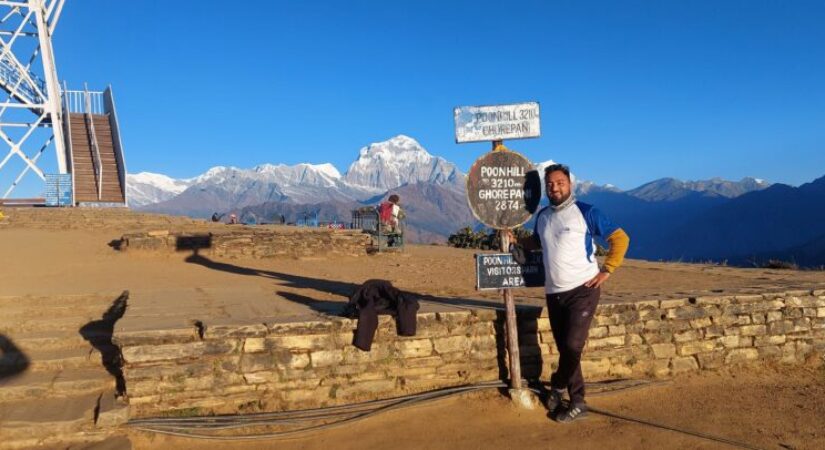
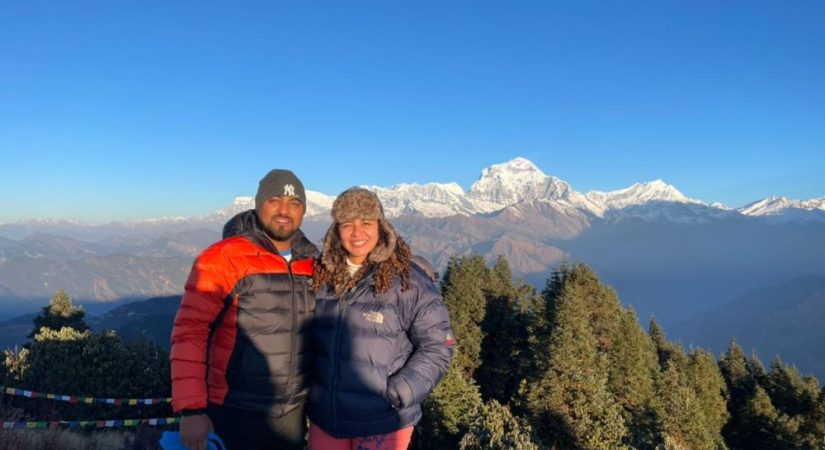
- Experience the serene beauty of Poon Hill, one of the best viewpoints in the region.
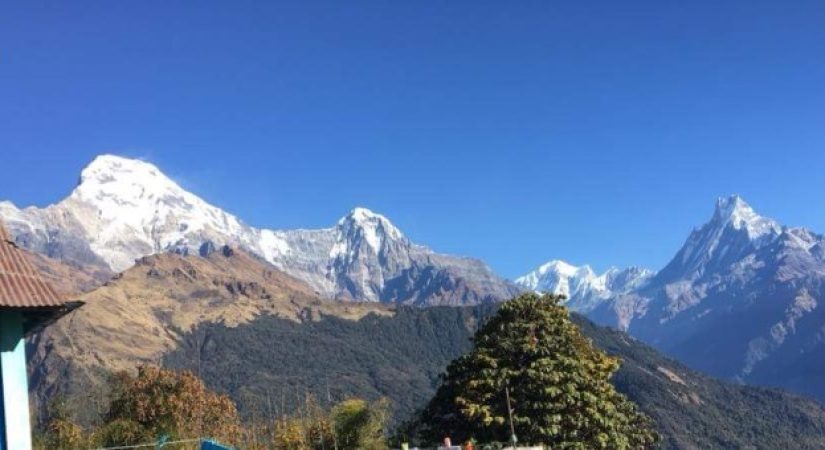
- Admire the majestic views of the Annapurna and Dhaulagiri mountain ranges in the clear sky.
- Enjoy the natural hot springs at Jhinu Danda, renowned for their therapeutic qualities.
- Discover the diversity of the flora and fauna in the region, with a chance to spot some exotic bird species.
- Visit the sacred temple of the Hindu goddess Kali in Ghandruk, an iconic symbol of the region.
Monsoon Trek in Nepal: Overview
What Should You Pack for Monsoon Trekking?
Essential monsoon trekking gear includes a waterproof jacket, rain trousers, backpack rain cover, waterproof bags, quick-drying clothing, trekking shoes with good grip, extra socks, and a small towel. Starting early is also useful because rainfall can become heavier later in the day.
Overall, monsoon trekking in Nepal is not the best choice for travelers whose main priority is clear Himalayan views. However, it can be a good option for flexible trekkers who enjoy lush landscapes and quieter trails. For a drier summer trekking experience, Upper Mustang and other rain-shadow destinations are generally better choices.
Why Trek in Nepal During Monsoon with a Licensed Local Guide?
- Better trail knowledge: An experienced local guide knows alternative routes, muddy sections, river crossings, and changing trail conditions during the rainy season.
- Improved safety: Monsoon can bring heavy rain, slippery trails, landslides, and swollen streams. A trained guide can help assess conditions and adjust the daily walking plan.
- Government-recognized qualification: Nepal’s trekking guide training system provides qualified guides with government certification after training in trekking, safety, and related skills.
- Help with permits and TIMS: Many trekking routes require a licensed guide and TIMS through a government-registered trekking agency. The Nepal Tourism Board specifically lists several popular routes where this requirement applies.
- Local weather knowledge: Local guides understand typical monsoon weather patterns and can recommend safer walking times, suitable overnight stops, or route changes when conditions deteriorate.
- Support during emergencies: If an accident, landslide, or other natural hazard occurs, having a trained local guide and properly registered trek arrangement can make communication and rescue coordination easier.
- Local cultural experience: A local guide can also introduce you to villages, local traditions, food, and everyday life that you might otherwise miss.
Monsoon Trek in Nepal Outline
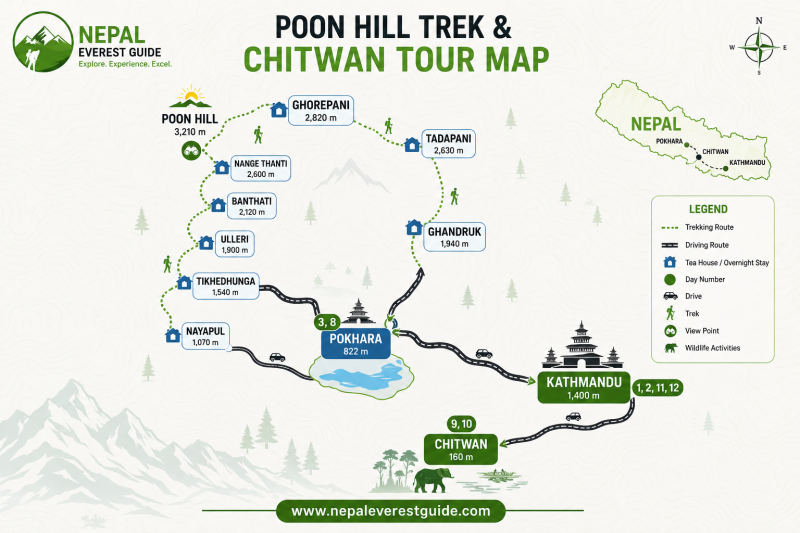
A typical itinerary for the Ghorepani Ghandruk trek during monsoon time could be as follows:
Day 1: Drive from Ulleri than trek to Ghorepani (2,850 m),
Day 2: Ghorepani to Tadapani (2,620 m),
Day 3: Tadapani (2,620 m) to Ghandruk than drive to Pokhara
What's included?
- Trekking Permits & TIMS: All required trekking permits and TIMS (Trekkers’ Information Management System) card.
- Full Board During the Trek: Breakfast, lunch, dinner, and tea-house accommodation throughout the trek.
- Hotel Accommodation: Hotel stays in Kathmandu and Pokhara as per the itinerary.
- Experienced Trekking Team: Experienced, licensed trekking guide and required porters.
- Guide Services: Food, accommodation, drinks, salary, insurance, equipment, transportation, and local taxes for the guide.
- Tourist Transportation: Transportation by standard tourist bus as mentioned in the itinerary.
- Government & Local Taxes: All applicable government and local taxes are included.
- Airport Transfers: Airport pickup and drop-off services are included.
What's not included?
- Porter Service: Porter services are not included unless specifically mentioned in the package or itinerary.
- Travel Insurance: Personal travel insurance, including medical and emergency evacuation coverage.
- Nepal Entry Visa: Nepal visa fees and related charges.
- International Airfare: International flights and applicable airport taxes.
- Meals & Drinks in Cities: Main meals, beverages, and drinks in Kathmandu, Pokhara, or other cities unless specifically mentioned in the itinerary.
- Tips: Tips and gratuities for the trekking guide and Driver are not included and are at your discretion after the successful completion of the trip.
Day by Day Itinerary
DAY
01
Drive from Pokhara to Ulleri via Birethanti, then Trek to Ghorepani – 2,850 m
3 Hrs Drive & 4 Hrs Trek Lunch & Dinner Hotel in Ghorepani
Your Ghorepani Poon Hill trek begins with a scenic morning drive from Pokhara to Ulleri. The journey follows the Seti and Modi River valleys toward Nayapul and Birethanti, an important gateway to the Annapurna trekking region. From Birethanti, the road continues through beautiful hill villages, terraced farmland and forested landscapes before reaching Ulleri, at around 2,050 m. The drive generally takes around 3–4 hours, depending on road and traffic conditions.
After arriving in Ulleri, you will have lunch or a short rest before beginning the trek toward Ghorepani. The trail climbs gradually through beautiful rhododendron and oak forests, passing small settlements and teahouses along the way. You will walk through Banthanti and continue toward Nangethanti, enjoying peaceful forest scenery and occasional glimpses of the surrounding green hills.
From Nangethanti, the trail continues uphill toward Ghorepani, with the air becoming cooler as you gain altitude. This section is especially attractive during spring when the rhododendron forests are in bloom. After several hours of walking, you reach Ghorepani (around 2,850 m), a famous mountain village and an important overnight stop on the Poon Hill route.
After checking into your teahouse, you can relax and enjoy the mountain surroundings. If the weather is clear, the late-afternoon or sunset light may reveal spectacular views toward Dhaulagiri (8,167 m) and other Himalayan peaks. Your guide will then explain the early-morning plan for Poon Hill (3,210 m), where you will go the following morning to experience one of the region's most famous Himalayan sunrises.
DAY
02
Ghorepani – Poon Hill Sunrise – Tadapani – 2,620 m
7 Hrs Breakfast, Lunch & Dinner Hotel in Tadapani
You will wake early, usually around 4:30–5:00 AM, and walk from Ghorepani to Poon Hill (3,210 m) with your guide. The uphill walk normally takes around 45–60 minutes, depending on your pace. Reaching the viewpoint before sunrise allows you to find a good position and wait for the first light over the Himalayas.
Poon Hill is one of the most famous sunrise viewpoints in the Annapurna region. As the sun rises, the mountains gradually turn golden, including Dhaulagiri I (8,167 m), Tukuche Peak (6,920 m), Nilgiri (7,061 m), Annapurna South (7,219 m), Hiunchuli (6,441 m), Annapurna II (7,937 m) and Machhapuchhre/Fishtail (6,993 m). On a clear morning, this panoramic mountain view is the major highlight of the trek.
After enjoying sunrise and taking photographs, you return to Ghorepani for breakfast. You then continue toward Deurali and through beautiful rhododendron and oak forests. The trail passes through Banthanti and other small forest settlements, with a mixture of uphill and downhill sections. Nepal Tourism Board describes the Ghorepani–Ghandruk route as passing through impressive rhododendron forest with excellent mountain scenery.
In the afternoon, you continue toward Tadapani (2,620 m), a peaceful forest settlement surrounded by Himalayan scenery. After reaching your teahouse, you can rest and enjoy the mountain atmosphere. If the sky remains clear, the evening light around Annapurna South and Machhapuchhre provides a beautiful end to this rewarding trekking day.
DAY
03
Tadapani to Ghandruk – Drive to Pokhara
3 Hrs Breakfast, Lunch & Dinner Hotel in Pokhara
After breakfast at Tadapani (2,620 m), you begin the final walking section of your trek toward Ghandruk, one of the best-known Gurung villages in the Annapurna region. The trail descends gradually through forest, passing beautiful woodland, small streams and traditional mountain landscapes. The walk is generally easier than the previous day's longer section.
As you approach Ghandruk, the forest begins to open and you get better views of the surrounding mountains. Ghandruk is situated at approximately 1,990 m and is famous for its traditional Gurung culture, stone-paved paths, slate-roofed houses and terraced farmland. Nepal Tourism Board describes Ghandruk as a major Gurung settlement and highlights its spectacular Annapurna and Machhapuchhre surroundings.
After reaching Ghandruk, take time to explore the village and enjoy lunch. Depending on the weather, you may have views toward Annapurna South (7,219 m), Hiunchuli (6,441 m) and Machhapuchhre/Fishtail (6,993 m). This is also a good opportunity to experience traditional Gurung village life before leaving the mountains.
After lunch, you will meet your vehicle and drive from Ghandruk to Pokhara. The road descends through the hills toward the Pokhara Valley, and the scenery gradually changes from mountain villages and terraced fields to greener lower hills. On arrival in Pokhara, your three-day Ghorepani–Poon Hill trek officially ends, leaving you with the sunrise from Poon Hill, Himalayan panoramas, rhododendron forests and the cultural experience of Ghandruk as the main memories of the journey.
Departure Dates
| Starts On | Ends On | Price (USD) | Availability | Booking |
|---|
Don't miss out on the incredible opportunity to save 10% on your Monsson trek in Nepal! Book now to secure your spot and experience the breathtaking beauty of this region at a discounted price. Don't let this limited time offer slip away, book today!
Essential Information
Is Poon Hill Trek Suitable During Monsoon?
However, Poon Hill remains a relatively short and lower-altitude trek, so it can still be a good option for trekkers who are prepared for wet conditions. The forests become exceptionally green, waterfalls are active, and the landscape has a fresh, lush appearance. For the best experience, carry good rain gear, waterproof trekking shoes, and extra protection for your backpack and electronics.
What to Pack for Poon Hill Trek in Monsoon?
For the Poon Hill Trek in monsoon, pack light but focus on rain protection, waterproof footwear, and quick-drying clothing. A clear packing list helps you stay comfortable on wet, muddy, and slippery trails.
Monsoon Poon Hill Trek Packing List
- Waterproof rain jacket – essential for regular rainfall
- Rain pants – protect your legs from heavy rain and wet trails
- Waterproof trekking shoes – choose shoes with good grip
- Quick-dry trekking pants – avoid heavy cotton trousers
- Quick-dry T-shirts – 2–3 lightweight shirts
- Warm fleece or light jacket – useful at Ghorepani and Poon Hill
- Waterproof backpack cover – protects your main bag from rain
- Dry bags or plastic bags – keep clothes, documents, and electronics dry
- Trekking socks – carry 3–4 pairs and keep an extra dry pair
- Sun hat and sunglasses – useful when the weather clears
- Trekking poles – helpful on slippery and muddy sections
- Headlamp – important for the early-morning Poon Hill sunrise hike
- Water bottle – carry enough water for the day's walk
- Personal medicines and basic first-aid kit
- Insect repellent or leech protection – useful on wet forest sections
- Small towel – helpful after getting wet
- Power bank – useful for keeping your phone charged
- Toiletries and personal hygiene items
- Lightweight daypack – convenient for daily essentials
Tip: You do not need to overpack for Poon Hill. Since teahouses provide blankets and basic accommodation, concentrate on waterproof clothing, comfortable footwear, and keeping your belongings dry.
Why Trek Poon Hill with an Experienced Local Guide During Monsoon?
Trekking Poon Hill with an experienced local guide during monsoon provides extra support when rain can make trails wet and slippery. A local guide understands the route, changing weather, and local conditions, helping you enjoy the trek more safely and comfortably.
- Local trail knowledge: Knows the Poon Hill route, shortcuts, viewpoints, and difficult sections.
- Weather awareness: Monitors changing weather and understands local rainfall patterns.
- Safer route decisions: Can adjust the walking route or schedule when heavy rain affects trail conditions.
- Accommodation support: Helps arrange suitable teahouses, especially when weather causes changes to the itinerary.
- Local communication: Communicates easily with teahouse owners, drivers, and local communities.
- Emergency support: Provides immediate assistance and helps coordinate local support if an emergency occurs.
How Is Transportation Managed for the Poon Hill Trek During Monsoon?
Transportation for the Poon Hill Trek during monsoon can be affected by heavy rainfall, especially on mountain roads. The usual route includes a drive from Pokhara to Ulleri to begin the trek. After completing the trek through Ghorepani, Poon Hill, Tadapani, and Ghandruk, you can drive from Ghandruk to Pokhara.
During June, July, and August, road conditions can change quickly after heavy rain. Mud, landslides, or damaged road sections may cause delays or require route changes. Your local guide or trekking agency can check current conditions and arrange suitable transportation based on the weather and road situation.
Tea House Accommodation and Food During the Poon Hill Monsoon Trek
Tea houses along the Poon Hill Trek remain available during the monsoon season, especially in major villages such as Ulleri, Ghorepani, Tadapani, and Ghandruk. Most provide simple, clean rooms with beds, blankets, and shared bathrooms. As monsoon is the quieter trekking season, some smaller lodges may close, so booking accommodation in advance is recommended.
Food is generally available throughout the trek, with popular options including Dal Bhat, momos, noodles, fried rice, pasta, soup, eggs, pancakes, and porridge. Hot meals and tea are particularly welcome after walking in the rain. Because heavy rainfall can occasionally affect transportation and supplies, carrying a few snacks and choosing a local guide can make your Poon Hill monsoon trek more comfortable.
Is the Poon Hill Trek Difficult During Monsoon?
The Poon Hill Trek during monsoon is considered moderate, but rain can make the trail more challenging than in dry seasons. Wet stone steps, muddy sections, leeches, and slippery trails require careful walking. The route also involves frequent uphill and downhill sections, especially around Ulleri and Ghorepani.
With good trekking shoes, rain protection, reasonable fitness, and an experienced local guide, most regular trekkers can complete the trek comfortably. Starting early each day also helps avoid heavier afternoon rainfall and provides better trail conditions.
What Are the Pros and Cons of the Poon Hill Trek During Monsoon?
The Poon Hill Trek during monsoon (June to August) offers a quieter and greener experience, but it also comes with wet and unpredictable trail conditions. Understanding both advantages and disadvantages helps you decide whether the rainy-season trek matches your travel plans and expectations.
Pros of Poon Hill Trek During Monsoon
- Lush green scenery: Rain transforms the rhododendron forests, hills, and terraced fields into vibrant green landscapes.
- Fewer trekkers: The trail is much quieter than during the busy spring and autumn seasons, providing a more peaceful experience.
- Beautiful waterfalls: Monsoon rainfall increases the flow of waterfalls and streams along the trekking route.
- Fresh mountain atmosphere: Rain-washed forests and misty hills create a different and refreshing Himalayan landscape.
- Peaceful tea house experience: With fewer visitors, tea houses are generally quieter and less crowded.
- Occasional clear views: Although clouds frequently cover the mountains, short weather breaks can still provide glimpses of Annapurna and Machhapuchhre.
Cons of Poon Hill Trek During Monsoon
- Frequent rainfall: June, July, and August are wet months, so trekkers should expect rain and sudden weather changes.
- Limited mountain views: Clouds and mist often hide Annapurna, Dhaulagiri, and Machhapuchhre, reducing the chance of a clear Poon Hill sunrise.
- Muddy and slippery trails: Wet stone steps and muddy sections, particularly around Ulleri and Ghorepani, require extra care.
- Leeches on forest trails: Leeches are more common in the warm, wet forest sections during the rainy season.
- Possible transportation delays: Heavy rainfall can make roads slower or occasionally disrupt transportation between Pokhara and the trailhead.
- More difficult walking conditions: Humidity, rain, and slippery terrain can make a moderate trek feel more challenging.
- Somewhat limited lodge choices: Some smaller tea houses may operate on a reduced basis during the quieter monsoon season.
Is Poon Hill Trek Worth Doing During Monsoon?
- The Poon Hill Trek in monsoon can be worthwhile if you enjoy green landscapes, peaceful trails, waterfalls, and do not mind walking in the rain. However, if your main goal is a clear Himalayan sunrise and panoramic Annapurna and Dhaulagiri views, spring and autumn are better choices. Monsoon trekking requires good waterproof clothing, suitable footwear, flexible plans, and realistic expectations about mountain visibility.
Cancellation Note
- Free cancellation up to 60 days prior departure
- 30% of the total cost of the trip will be charged if cancelled between 60 to 30 days prior to departure date
- 60% of total cost of the trip will be charged if cancelled in between 30 to 14 days prior to departure date.
Web design & Developed by Wildstone Solution
