

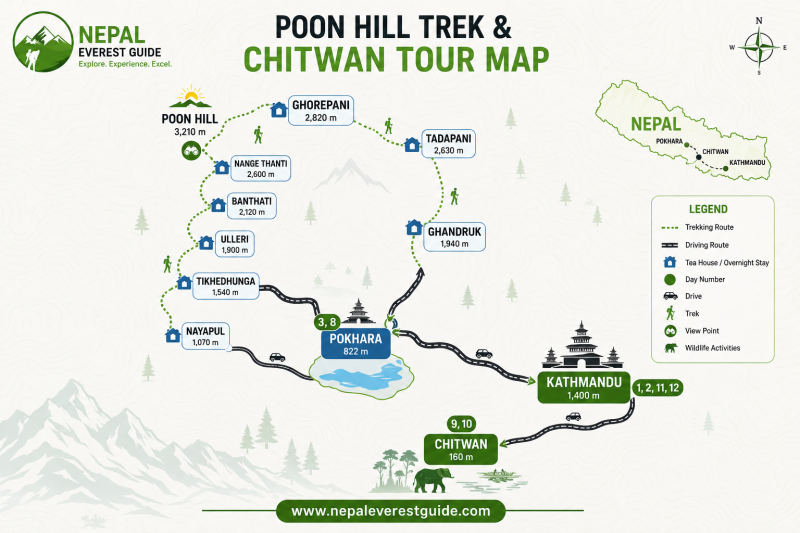
POKHARA(900 m) - NAYAPUL(1075 m) - ULLERI (1950 m) - GHOREPANI(2820 m) - POONHILL(3210 m) - TADAPANI-GHANDRUK- POKHARA


Why Poon hill Trek from Pokhara?
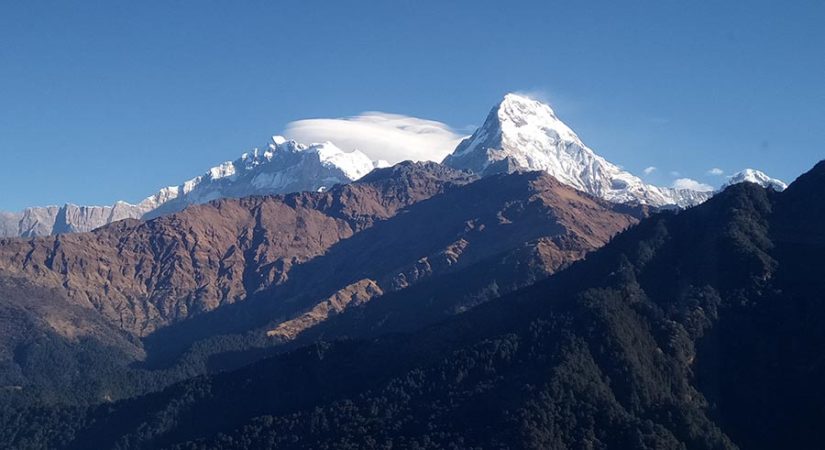
- Scenic views of Annapurna and Dhaulagiri mountain ranges.
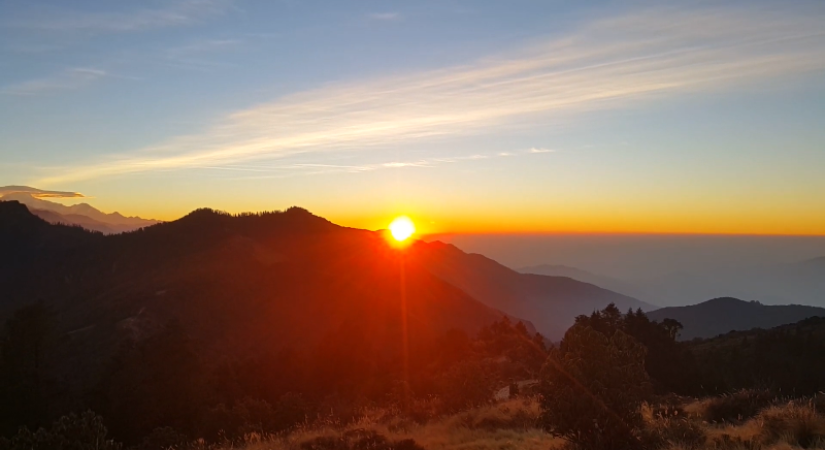
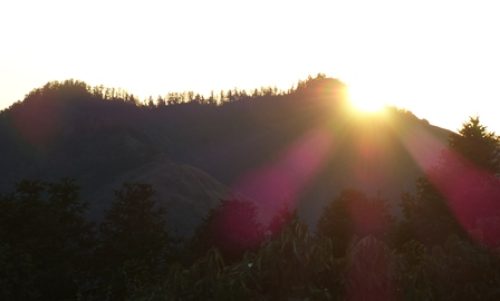
- Spectacular sunrise over the Himalayas.
- Experience of trekking through diverse landscapes and terrains.
- Encounter with diverse cultures and traditions of the local communities.
- Exploration of the historic and cultural city of Pokhara.
- Opportunity to interact with friendly local people and learn about their lifestyle.
- Visit to Ghorepani village and Poon Hill viewpoint.
- Experience of staying in traditional teahouses during the trek.
- Possibility to spot wildlife such as Himalayan Thar, monkeys and birds.
- Sense of accomplishment and personal growth from completing the trek.
Introduction to Poon hill Trekking from Pokhara:
Poon Hill Trekking from Pokhara is one of the most popular short Himalayan adventures in Nepal, offering spectacular sunrise views over the Annapurna and Dhaulagiri mountain ranges. Starting from Pokhara, the journey combines a scenic drive, beautiful mountain trails, traditional villages, rhododendron forests, and panoramic Himalayan scenery. It is an excellent choice for travelers looking for a short and rewarding Annapurna region trek.
The Poon Hill Trek from Pokhara usually begins with a drive from Pokhara to Nayapul, followed by trekking through Birethanti, Hille, Ulleri, and Ghorepani. Depending on your available time and walking pace, the trek can be customized into different itineraries. Most trekkers walk around 6–7 hours per day, while some longer sections may take up to 10 hours.
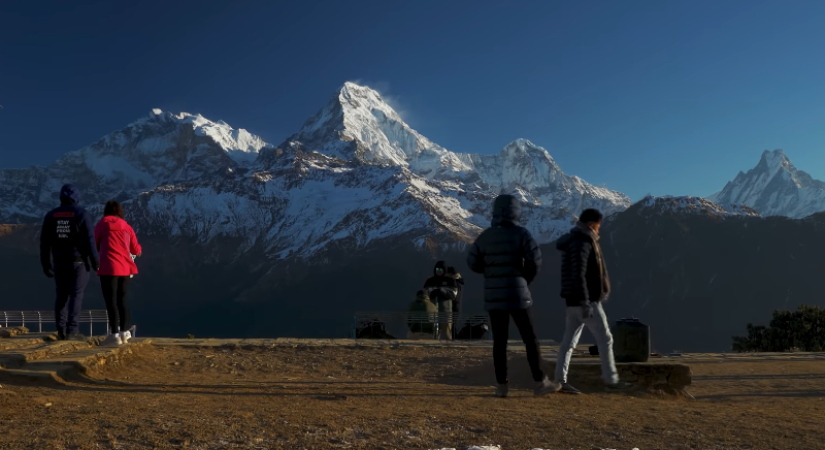
The major highlight of Poon Hill trekking from Pokhara is the early-morning hike from Ghorepani to Poon Hill viewpoint for sunrise. From an elevation of approximately 3,210 meters, trekkers can enjoy magnificent views of Dhaulagiri, Annapurna South, Hiunchuli, Annapurna, and Machhapuchhre (Fishtail) as the first sunlight reaches the Himalayan peaks. This sunrise experience is the main reason Poon Hill is so popular.
After enjoying the sunrise, the trail continues from Ghorepani to Tadapani and Ghandruk, passing through peaceful forests and scenic mountain landscapes. Ghandruk, a traditional Gurung village, provides an opportunity to experience local culture, village life, and beautiful Annapurna views before returning to Pokhara. Tea houses and lodges are available throughout the trekking route, making the journey convenient for both first-time and experienced trekkers.
Overall, Poon Hill Trekking from Pokhara is a relatively easy-to-moderate short trek suitable for families, students, couples, and travelers with limited time in Nepal. The trek requires an Annapurna Conservation Area Permit (ACAP) and can be organized with a local independent guide for a more flexible experience. If you want to experience Himalayan sunrise, mountain villages, and the natural beauty of the Annapurna region without committing to a long trek, Poon Hill is an excellent choice
Why Choose Poon Hill Trekking from Pokhara?
Poon Hill Trekking from Pokhara is a great choice for travelers who want to experience the Himalayas in a short and rewarding trek. Here are the main reasons to choose this trek:
- Easy Access from Pokhara: The trek starts with a convenient drive from Pokhara to Nayapul, making it easy to add to your Nepal holiday.
- Spectacular Poon Hill Sunrise: Enjoy an unforgettable sunrise over the Annapurna and Dhaulagiri mountain ranges from the famous Poon Hill viewpoint.
- Short Himalayan Trek: The trek can be completed in a few days, making it ideal for travelers with limited time in Nepal.
- Beautiful Mountain Views: Enjoy panoramic views of Annapurna, Dhaulagiri, Machhapuchhre (Fishtail), Annapurna South, and Hiunchuli.
- Traditional Mountain Villages: Walk through Ulleri, Ghorepani, Tadapani, and Ghandruk and experience local culture and village life.
- Rhododendron Forests: In spring, the trail becomes colorful with blooming rhododendron flowers and beautiful forest scenery.
- Suitable for Beginners: The Poon Hill Trek from Pokhara is a relatively easy-to-moderate trek and is suitable for first-time trekkers and families with good basic fitness.
- Comfortable Tea House Stay: Local tea houses and lodges provide accommodation, meals, and basic facilities throughout most of the trekking route.
- Experience the Annapurna Region: This trek offers a wonderful introduction to the landscapes, culture, and Himalayan scenery of the Annapurna region of Nepal.
Is Poon Hill Trek Suitable for Beginners?
Yes, the Poon Hill Trek is an excellent choice for beginners looking to experience the Himalayas without undertaking a highly demanding adventure. The trail is well-established, and the trek does not require technical climbing skills or previous high-altitude trekking experience. With reasonable fitness, a comfortable pace, and proper preparation, first-time trekkers can enjoy the scenic journey through beautiful villages, forests, and mountain landscapes.
The Poon Hill Trek for beginners offers a rewarding introduction to trekking in Nepal, with comfortable teahouses and local facilities available along the route. One of its biggest highlights is the spectacular sunrise from Poon Hill, with panoramic views of the Annapurna, Dhaulagiri, and Machhapuchhre (Fishtail) ranges. Its manageable duration, moderate difficulty, and breathtaking scenery make Poon Hill Trekking from Pokhara a popular option for first-time trekkers.
Why Trek to Poon Hill with a Local Expert Guide?
- Local Knowledge – Learn about the region from an experienced local.
- Easy Navigation – Follow the safest and most suitable trail.
- Better Acclimatization – Trek at a comfortable pace for your group.
- Cultural Experience – Discover local villages, traditions, and lifestyles.
- Mountain Insights – Identify Annapurna, Dhaulagiri, and other peaks.
- Teahouse Assistance – Get help choosing comfortable local accommodation.
- Local Food Tips – Enjoy authentic Nepali meals along the trail.
- Flexible Itinerary – Adjust walking times according to your needs.
- Emergency Support – Receive practical assistance if unexpected problems arise.
- Responsible Trekking – Travel respectfully while supporting local communities.
- Personalized Experience – Enjoy a more comfortable and memorable Poon Hill trek.
Poon hill Trek from Pokhara Outline
Day 01: Drive from Pokhara to Nayapul than trek to Ulleri(1,950 m): 1.30-minute drive & 5 hrs walk,
Day 02: Trek from Ulleri to Ghorepani(2,820 m): 4 hrs walk,
Day 03: Hike to Poonhill sunrise point than trek to Tadapani-2,600 meters
Day 04: Trek from Tadapani to Ghandruk the drive to Pokhara.
What's included?
- A transfer from the airport to the hotel after the trek
- 2 nights of hotel accommodation in Pokhara
- All meals (breakfast, lunch, and dinner) during the trek
- Accommodation in a tea house during the Poon Hill trek
- Permits and TIMS cards for the Poon Hill trek
- A tourist bus from Kathmandu to Pokhara and back
- An Experinced English-speaking guide for the trek, including their salary, food, accommodation, insurance, and transportation
- Transportation from Pokhara to Nayapul and back for the trek, as well as transportation from Ulleri to Pokhara
- A farewell dinner at a local authentic restaurant
- The option for horse/pony management during the trek at an additional cost paid by the participant
- Entrance fees for the Poon Hill sunrise viewpoint.
What's not included?
- Your food in Pokhara,
- Your flight ticket,
- Extra activities out of the service which i mentioned above,
- Tip for Guide and Porter,
- Extra food and all kind of drinks including Drinking Water
Day by Day Itinerary
DAY
01
Drive from Pokhara to Nayapul than trek to Ulleri(1,950 m): 1.30 minute drive
5 hrs walk Breakfast, Lunch & Dinner Lodge
After breakfast in Pokhara, we, then drive for 42 km to Nayapul. This is where we'll start our trek to Ulleri village. We'll walk for about 15 minutes along the Modi river to Birethanti, then cross a bridge to reach the off-road path.
During the first 3 hours of our trek, we'll see farmland and amazing views of the river, waterfall, and mountains. We'll stop for lunch in Ramgai village. After that, we'll pass through Sudame, Hille, and Thikhedunga (1560 m) villages. Although Thikhedunga is a well-known trekker village, many trekkers now prefer to go to Ulleri for better accommodation and road access.
DAY
02
Trek from Ulleri to Ghorepani (2,820 m):
4 hrs walk Breakfast, Lunch & Dinner Lodge
From Ulleri, the trek to Ghorepani is relatively difficult, but also incredibly scenic and picturesque. The first hour of the walk takes you through the farmland and dense village houses, churches, and schools. After crossing Banthati village, you take a left trail into the forest.
The trekking route from Banthati to Nangethati is all through the forest of Rhododendrons and fir, providing a tranquil and enjoyable walk. Once you reach Nangethati, you can take a break for lunch before continuing to Ghorepani for the next two hours.
Ghorepani is a popular trekking spot in the Annapurna region, with thousands of people visiting every day to take in the stunning views of Annapurna and Dhaulagiri.
DAY
03
Hike to Poon hill sunrise point than trek to Tadapani-2,600 meters
5 Hrs Walk & 3 Hrs Drive Breakfast, Lunch & Dinner Lodge
Hiking to Poon Hill for sunrise is one of the most popular activities in the Annapurna region of Nepal and for good reason. Located in the foothills of the Himalayas, this trek offers stunning views of the Annapurna and Dhaulagiri mountain ranges, as well as a chance to experience the unique culture and hospitality of the Nepalese people.
The hike from Ghorepani to Poon Hill is typically done in the early morning, starting before dawn to catch the sunrise. It takes about two to three hours to reach the viewpoint, and the trail is well-maintained and easy to follow. The final ascent to Poon Hill is a bit steep, but it is well worth the effort for the breathtaking views that await you.
Once you reach the summit of Poon Hill, you will be rewarded with panoramic views of the surrounding mountain peaks, including Annapurna South, Annapurna I, Dhaulagiri, Hiunchuli, and Machhapuchhre. The sunrise over the Himalayas is truly a sight to behold, and it is an experience that will stay with you for a lifetime.
After taking in the views from Poon Hill, you can continue your trek to Tadapani, which is about 4-5 hours away and is located at an altitude of 2,600 meters. Along the way, you will pass through lush forests of rhododendron, oak, and bamboo, and you may even encounter some of the local wildlife, such as langur monkeys or Himalayan Thar.
Tadapani is a charming village with stunning views of the surrounding mountains. It is a great place to rest and refuel before continuing your trek, and there are several guesthouses and tea shops where you can enjoy a warm meal and a comfortable bed.
DAY
04
Trek from Tadapani to Ghandruk the drive to Pokhara.
3 hours walk and 3 hours drive Breakfast & Lunch Hotel in pokhara
After a restful night in Tadapani, the next leg of the journey is a trek to the picturesque village of Ghandruk. The trail takes you through dense forests of oak and rhododendron trees, and you will have stunning views of the Annapurna mountain range along the way.
The trek from Tadapani to Ghandruk typically takes around 3-4 hours, depending on your pace. The trail is mostly downhill, so it is a relatively easy trek compared to some of the earlier stages of the journey.
As you approach Ghandruk, you will be greeted by breathtaking views of the Himalayas and the terraced fields that the village is known for. Ghandruk is a traditional Gurung village, and it is one of the most popular stops along the trekking route.
In Ghandruk, you can explore the narrow streets and alleyways of the village, and you can also visit the Gurung Cultural Museum to learn more about the local culture and way of life. There are also several tea shops and restaurants in the village where you can enjoy a warm meal and a cup of tea.
After spending some time in Ghandruk, the final leg of the journey is a drive to Pokhara, which takes around 2-3 hours. Along the way, you will pass through scenic countryside and small villages, and you will have more opportunities to take in the natural beauty of Nepal.
Once you reach Pokhara, you can relax and unwind in one of the city's many hotels or guesthouses. Pokhara is a bustling tourist hub, and there is plenty to see and do in the city. You can explore the colorful markets and shops, go boating on Phewa Lake or visit one of the many temples and monasteries in the area.
Departure Dates
Sorry, No fixed departure dates are listed to group join, please request private trip
If there are five or more individuals in a group, they will receive a discount of 20% off the total price. Additionally, the member of the group who sends the email first will receive a 30% discount on the total cost.
Reviews
Elio Salazar Caldua
Brazil
A Memorable Experience: The Unique Aspects of My Poon Hill Sunrise Trek
2023I am Elio Salazar and I recently had the pleasure of embarking on the Poon Hill Sunrise Trekking in Nepal with Safe Holiday Adventure Pvt. Ltd., and I cannot express enough how amazing the experience was. From start to finish, the team at Safe Holiday Adventure made us feel comfortable and safe, and our guide Anil was simply exceptional. Anil’s knowledge of the area and his attention to detail ensured that our trek was not only enjoyable, but also memorable beyond words. I highly recommend Safe Holiday Adventure and can’t wait to plan my next adventure with them. Namaste!!! best regards, Elio Salazar Caldua, Brazil
Dalas pacter
Australia
Poon hill sunrise trek
2019Doing the Poon Hill trek with Santosh was one of the highlights of my traveling life. The scenery was amazing, with a range of gardens, forests, and alpine views. But I can’t recommend Santosh’s leadership with greater enthusiasm. He has years of experience making people feel comfortable and it showed. The guy knows the mountains like the back of his hands, and always had detailed answers to any question he was asked. Add to that his empathy and good company, and we were all glad we had him on our side.
Essential Information
Best Time for Poon Hill Trekking from Pokhara
The best time for Poon Hill Trekking from Pokhara is spring (March to May) and autumn (September to November). These months offer clear skies, pleasant temperatures, and excellent views of the Annapurna and Dhaulagiri ranges. They are also ideal for enjoying the beautiful Poon Hill sunrise.
Spring is especially beautiful because the rhododendron forests are in bloom. Autumn offers clear mountain views and stable weather, making it the most popular trekking season in the Annapurna region.
The monsoon season (June to August) brings rain, clouds, and slippery trails, while winter (December to February) can be cold with occasional snow around Ghorepani and Poon Hill.
Overall, March to May and September to November are the best seasons for the Ghorepani Poon Hill Trek, offering the best combination of good weather, mountain views, and comfortable trekking conditions.
Food & Accommodation during Poon Hill Trek:
Food and accommodation are readily available throughout the Poon Hill Trekking from Pokhara, with comfortable tea houses and lodges located along the main trekking route. Most accommodations are locally owned and provide a simple, welcoming place to rest after a day of walking. Rooms generally have comfortable beds and blankets, while hot showers, electricity, and Wi-Fi are available at many tea houses for an additional charge.
During the Poon Hill Trek, trekkers can enjoy a combination of traditional Nepali cuisine and familiar Western dishes. Breakfast options commonly include porridge, muesli, toast, eggs, pancakes, and local dishes. Dal Bhat, a traditional meal of rice, lentil soup, vegetables, and pickles, is one of the most popular and filling choices for trekkers.
For lunch and dinner, tea houses usually serve a variety of meals such as Dal Bhat, Momo (Nepali dumplings), Thukpa (noodle soup), pasta, pizza, noodles, fried rice, burgers, and soups. The availability of specific dishes can vary between villages, especially at higher elevations, but there are generally enough choices to keep trekkers well-fed throughout the journey.
Accommodation on the Poon Hill Trek from Pokhara is generally provided in tea houses and mountain lodges in places such as Ulleri, Ghorepani, Tadapani, and Ghandruk. Facilities become simpler as you gain elevation, but the warm hospitality of local families makes the experience comfortable and memorable. Some lodges also provide charging facilities and basic laundry services for an additional fee.
Staying in local tea houses and enjoying traditional food is an important part of the Poon Hill trekking experience. It allows travelers to experience local culture while supporting communities along the Annapurna trekking route. With food, lodging, and basic facilities available throughout the trail, this short trek is convenient for both first-time trekkers and experienced hikers.
Dos and Don'ts for the Poon Hill trek experience:
Here are some dos and don'ts to make the most out of your Poon Hill trek experience:
Dos:
- Pack light and bring necessary items such as warm clothing, comfortable shoes, and a water bottle.
- Stay hydrated and drink plenty of water during the trek.
- Follow a slow and steady pace to avoid altitude sickness and enjoy the scenic views.
- Take time to acclimatize properly before ascending to higher elevations.
- Respect the local culture and customs by dressing modestly and being mindful of your actions.
Don'ts:
- Do not litter and always dispose of waste in designated areas.
- Avoid consuming alcohol and smoking during the trek to reduce the risk of altitude sickness.
- Do not stray from the marked trails to avoid getting lost or damaging the environment.
- Do not disturb the local wildlife and ecosystem.
- Do not ignore any signs of altitude sickness and seek medical attention if necessary.
Ghorepani to Poon hill view Point distance:
The distance from Ghorepani to Poon Hill viewpoint is approximately 3.5 kilometers (2.17 miles). The trail is a steep uphill climb and takes about 45 minutes to 1 hour to reach the top, depending on your pace and level of fitness. Poon Hill is a popular viewpoint in the Annapurna region of Nepal, offering stunning panoramic views of the Annapurna and Dhaulagiri mountain ranges.
Poon hill weather and temperature
The weather and temperature during the Poon Hill trek can vary depending on the time of the year and the altitude. Here are some details on the weather and temperature during the trek:
Spring (March to May):
Spring is a popular time for trekking as the weather is mild and the rhododendron flowers are in full bloom. The temperature during the day is around 15-20°C (59-68°F) in the lower altitude areas and drops to around 5°C (41°F) at night. In higher altitude areas, the temperature during the day is around 10-15°C (50-59°F) and drops to around -5°C (23°F) at night
Summer (June to August):
Summer is the monsoon season in Nepal, and the trekking trails can be slippery and muddy. The temperature during the day is around 20-25°C (68-77°F) in the lower altitude areas and drops to around 10°C (50°F) at night. In higher altitude areas, the temperature during the day is around 15-20°C (59-68°F) and drops to around 0°C (32°F) at night.
Fall (September to November):
Fall is the best time for trekking as the weather is clear and the views are stunning. The temperature during the day is around 15-20°C (59-68°F) in the lower altitude areas and drops to around 5°C (41°F) at night. In higher altitude areas, the temperature during the day is around 10-15°C (50-59°F) and drops to around -5°C (23°F) at night.
Winter (December to February):
Winter is a challenging time for trekking as the weather can be harsh and the trails can be covered in snow. The temperature during the day is around 10°C (50°F) in the lower altitude areas and drops to around -5°C (23°F) at night. In higher altitude areas, the temperature during the day is around 5°C (41°F) and drops to around -15°C (5°F) at night.
In general, the temperature is colder in the morning and at night, and warmer during the day. It is important to pack warm clothes, a sleeping bag, and a good quality waterproof jacket and pants to stay warm and dry during the trek. Additionally, it is important to check the weather forecast before starting the trek and be prepared for any changes in weather conditions.
Food and Water on Poon hill sunrise trekking : Tips for Staying Healthy
Food and water are crucial for staying healthy and energized during the Poon Hill sunrise trekking. Here are some tips for staying healthy:
- Stay hydrated: Drink plenty of water throughout the trek to prevent dehydration. Carry a water bottle and refill it at the tea houses or streams along the trail. It is recommended to drink at least 3-4 liters of water per day during the trek.
- Avoid tap water: Do not drink tap water as it may be contaminated. Instead, use water purification tablets or a water filter to purify the water before drinking it.
- Eat nutritious food: Eat nutritious food that is high in carbohydrates, proteins, and fats to provide energy for the trek. The tea houses along the trail offer a variety of food options including Nepali, Indian, and Western dishes.
- Avoid raw and uncooked food: Avoid raw and uncooked food as it may not be hygienic. Instead, opt for cooked food that is served hot.
- Carry snacks: Carry snacks like energy bars, nuts, and fruits to munch on during the trek. This will provide you with instant energy and keep you going.
- Avoid alcohol: Avoid alcohol during the trek as it can cause dehydration and altitude sickness.
- Listen to your body: Listen to your body and eat when you are hungry. Do not skip meals or overeat as it can affect your digestion and energy levels.
- Take breaks: Take breaks during the trek and rest when you need to. This will help you conserve your energy and prevent fatigue.
- Carry electrolyte supplements: Carry electrolyte supplements to replenish the electrolytes lost due to sweating. This will help you maintain your energy levels and prevent muscle cramps.
- Consult a doctor: If you have any medical conditions or concerns, it is important to consult a doctor before starting the trek. They may advise you on a specific diet or medication to take during the trek.
How to Prepare for Poon hill trekking : Training Tips
Poon Hill trekking is a popular trek in the Annapurna region of Nepal. It is a moderate trek that takes about 4-5 days to complete. Here are some training tips to prepare for the Poon Hill trek:
- Cardiovascular exercises: Trekking involves walking uphill and downhill for long hours. To prepare for the trek, you need to improve your cardiovascular endurance. You can do this by doing exercises like jogging, cycling, swimming, or brisk walking for at least 30 minutes every day.
- Strength training: Trekking also involves carrying a backpack, so you need to build your strength. You can do this by doing exercises like squats, lunges, push-ups, and planks.
- Practice hiking: If you live in a hilly area, you can practice hiking on local trails. Start with short distances and gradually increase your distance and difficulty level. This will help you get used to walking uphill and downhill.
- Wear trekking shoes: Make sure you wear comfortable trekking shoes that are suitable for the terrain. Wear them while practicing hiking to get used to them.
- Carry a backpack: Start carrying a backpack with some weight while practicing hiking. This will help you get used to carrying a backpack during the trek.
- Stretching: Make sure you stretch your muscles before and after exercising. This will help prevent injuries.
- Hydration: Drink plenty of water before, during, and after exercising. This will help you stay hydrated and prevent dehydration during the trek.
- Proper nutrition: Eat a balanced diet with plenty of carbohydrates, proteins, and fats. This will give you the energy you need for the trek.
- Altitude training: Poon Hill is located at an altitude of 3210 meters, so it is important to acclimatize your body to high altitude. You can do this by gradually increasing your altitude while practicing hiking.
- Consult a doctor: If you have any medical conditions or concerns, it is important to consult a doctor before starting any exercise program or trekking.
Where is poon hill trek located in Nepal?
The Poon Hill trek is located in the Annapurna region of Nepal, specifically in the Myagdi and Kaski districts. The trek starts from Nayapul, which is about a one-hour drive from Pokhara. It then leads up to the village of Ghorepani and the Poon Hill viewpoint, which offers spectacular views of the Annapurna range. It is possible to extend the trek to Ghandruk and Tadapani, but most trekkers tend to end their trek at Ghorepani.
Frequently Asked Questions About Poon Hill Trek
How long is the Poon Hill Trek from Pokhara?
The standard Poon Hill Trek from Pokhara takes around 4 days, including the drive from Pokhara and return from Ghandruk.
What is the highest point of the Poon Hill Trek?
The highest point is Poon Hill at 3,210 meters (10,531 ft), famous for panoramic Himalayan views.
Is Poon Hill Trek suitable for beginners?
Yes. The trek is suitable for beginners with reasonable fitness and does not require technical climbing experience.
Can I do the Poon Hill Trek with an independent guide?
Yes. An independent guide can help with navigation, local arrangements, accommodation, and a flexible walking pace.
What mountains can be seen from Poon Hill?
The viewpoint offers impressive views of Dhaulagiri, Annapurna South, Annapurna I, Hiunchuli, and Machhapuchhre (Fishtail).
How early should I leave for Poon Hill sunrise?
Trekkers usually leave Ghorepani around 4:30–5:00 AM, depending on the season and sunrise time.
What permits are needed for the Poon Hill Trek?
The trek generally requires an Annapurna Conservation Area Permit (ACAP) and applicable local entry requirements.
Is Poon Hill Trek safe for solo travelers?
Yes. Poon Hill is a popular trekking route, but traveling with a guide can provide extra support with navigation and local arrangements.
Can I extend the Poon Hill Trek to Ghandruk?
Yes. The route can be extended through Tadapani to Ghandruk, adding beautiful Gurung culture and mountain scenery to the trek.
What type of trail is found on the Poon Hill Trek?
The trail includes stone steps, forest paths, village trails, and gradual to steep uphill and downhill sections.
Can I charge my phone during the Poon Hill Trek?
Yes. Most tea houses provide charging facilities, although a small additional fee may apply.
Is a sleeping bag necessary for Poon Hill Trek?
A sleeping bag can be useful, especially during colder months, although tea houses generally provide blankets and bedding.
How much luggage should I take on the Poon Hill Trek?
It is best to pack light and carry only essential trekking gear. A small daypack is usually sufficient when porter service is arranged.
Cancellation Note
- Free cancellation up to 60 days prior departure
- 30% of the total cost of the trip will be charged if cancelled between 60 to 30 days prior to departure date
- 60% of total cost of the trip will be charged if cancelled in between 30 to 14 days prior to departure date.
Web design & Developed by Wildstone Solution
