

𝐊𝐀𝐓𝐇𝐌𝐀𝐍𝐃𝐔 → 𝐒𝐔𝐑𝐊𝐄 → 𝐏𝐇𝐀𝐊𝐃𝐈𝐍𝐆 → 𝐍𝐀𝐌𝐂𝐇𝐄 → 𝐓𝐄𝐍𝐆𝐁𝐎𝐂𝐇𝐄 → 𝐃𝐈𝐍𝐆𝐁𝐎𝐂𝐇𝐄 → 𝐋𝐎𝐁𝐔𝐂𝐇𝐄 → 𝐆𝐎𝐑𝐀𝐊𝐒𝐇𝐄𝐏 → 𝐄𝐁𝐂 → 𝐏𝐀𝐍𝐆𝐁𝐎𝐂𝐇𝐄 → 𝐍𝐀𝐌𝐂𝐇𝐄 → 𝐒𝐔𝐑𝐊𝐄


Why Everest Base Camp Trek by Road?
- Scenic 4WD drive from Kathmandu to Surke,
- Explore the wilderness of Sagarmatha National Park,
- Discover Namche Bazaar, the cultural heart of the Everest region,
- Immerse yourself in the Sherpa community culture and traditions,
- Stunning views from Hotel Everest View, the highest-placed hotel,
- Visit Tengboche and Pangboche Monastery, the oldest monastery in the Everest region,
- See the Khumbu glacier and Khumbu icefall up close,
- Trek to Kala Patthar (5,555 m) and Nangkartshang Peak (5,083 m) for panoramic mountain views,
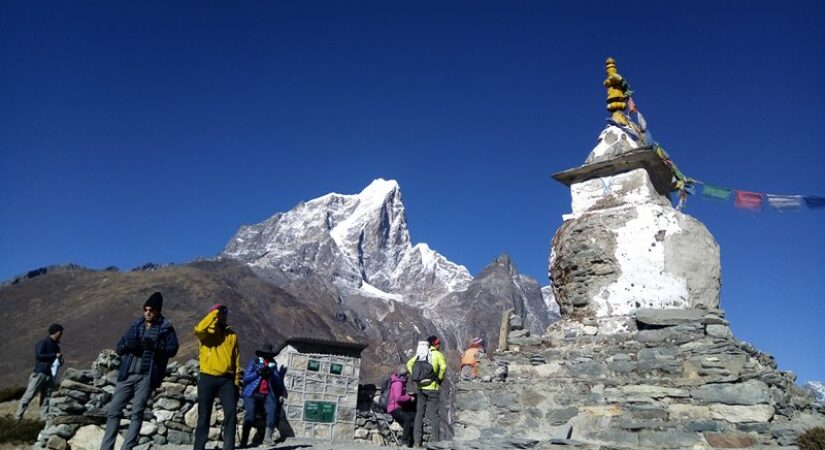
- Spectacular vistas of Mt. Everest, Ama Dablam, Lhotse, Nuptse, Thamserku, Cho Oyu, and more,
- Experience diverse cultures from the foothills to high altitudes,
- Khumbu Icefall: Witness the awe-inspiring Khumbu Icefall, a challenging part of the Everest climbing route.
- Reach the ultimate destination – Everest Base Camp.
Introduction to Everest Base Camp Trek by Road:
𝗘𝘃𝗲𝗿𝗲𝘀𝘁 𝗕𝗮𝘀𝗲 𝗖𝗮𝗺𝗽 𝗧𝗿𝗲𝗸 𝗯𝘆 𝗥𝗼𝗮𝗱 is a memorable Himalayan adventure and a great alternative to the traditional Lukla flight. The journey begins with a scenic jeep drive from Kathmandu to Salleri or Tham Danda, passing through beautiful hills, forests, rivers, and charming villages. This route allows you to enjoy Nepal’s natural beauty and authentic local culture from the beginning of your adventure.
Starting the trek at a lower elevation allows for gradual acclimatization, making the journey more comfortable in the Everest region. The trail takes you through lush forests, traditional Sherpa villages, mountain ridges, and breathtaking Himalayan landscapes. With fewer crowds than the Lukla route, travelers can enjoy a more peaceful trekking experience and discover the unique culture and traditions of the Himalayas.
Beyond Salleri, the road becomes rough and unpaved, requiring a 4WD vehicle toward Surkey or Tham Danda. Although the journey can be challenging, the spectacular mountain views and authentic village experiences make it truly rewarding. Choose the Everest Base Camp Trek by Road for an unforgettable combination of adventure, nature, culture, and Himalayan scenery, and begin your journey toward the world’s highest mountain.
Is the Everest Base Camp Trek by Road Worth It?
The Everest Base Camp Trek by Road is absolutely worth it for trekkers seeking a more complete Himalayan experience. Instead of taking a short flight to Lukla, you'll enjoy a scenic jeep journey through beautiful hills, traditional villages, and the remote landscapes of the Solu region before beginning the trek.
Starting from a lower elevation allows for better acclimatization, reducing the risk of altitude sickness and giving you more time to enjoy the journey.
With fewer crowds, authentic cultural encounters, and stunning mountain scenery, the Everest Base Camp Trek by Road offers an unforgettable adventure and excellent value for those who have a little extra time.
You May Extend Your Trek(Optional)
Want to see even more? Add Gokyo Chola Pass or Renjo-La Pass to your EBC trek. These high passes offer spectacular views of Gokyo Lakes and quiet trails with fewer tourists—perfect for experienced trekkers seeking more thrills and natural beauty.
Benefits of Trekking to Everest Base Camp Without a Flight
- Better Acclimatization – Slower ascent means safer trekking
- Diverse Scenery – Forests, rivers, mountains, and Sherpa villages
- Cultural Immersion – Meet locals and stay in authentic tea houses
- Peaceful Trails – Fewer tourists, more nature
- Improved Fitness – Longer trekking days help your body adapt
- Lower Costs – No expensive Lukla flight tickets
- More Exploration – Side treks like Gokyo or Thame are easy to include
- Eco-Friendly Option – Less impact than flying
- Stronger Group Bonding – More time on the trail with your team
Everest Base Camp Trek by Road Outline
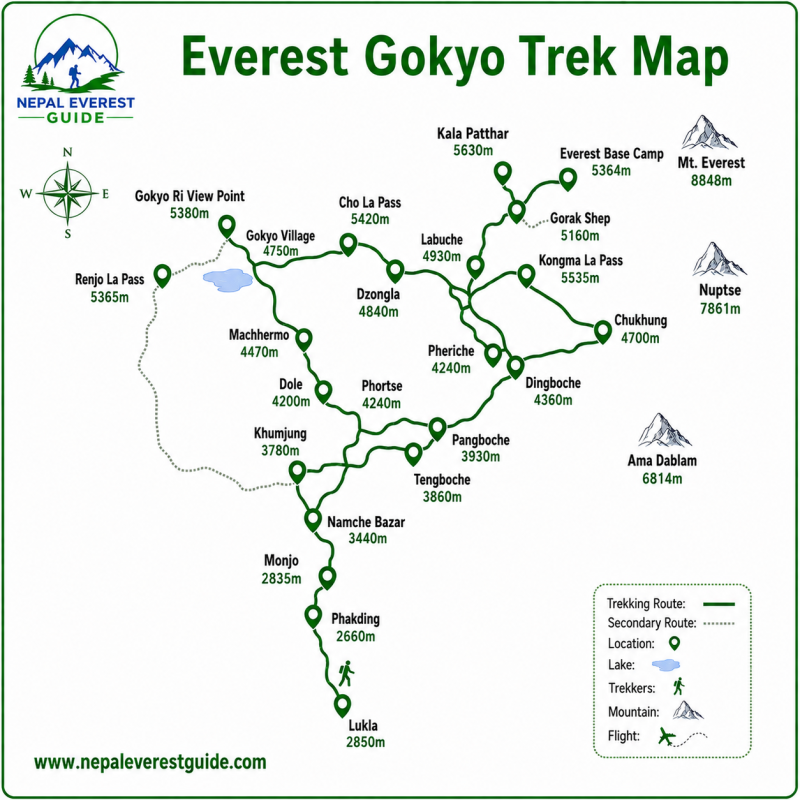
Day 1: Drive from Kathmandu to Salleri (𝐇𝐞𝐢𝐠𝐡𝐭: 𝟐,𝟑𝟗𝟎𝐦 | 𝐃𝐫𝐢𝐯𝐞: 𝟖–𝟗 𝐡𝐨𝐮𝐫𝐬) – Scenic drive through the hills and overnight stay in Salleri.
Day 2: Drive by shared jeep from Salleri to Surke (𝐇𝐞𝐢𝐠𝐡𝐭: 𝟐,𝟐𝟗𝟎𝐦 | 𝐃𝐫𝐢𝐯𝐞: 𝟓–𝟔 𝐡𝐨𝐮𝐫𝐬) – Continue toward the Everest region and begin the trek from Surke.
Day 3: Trek from Surke to Phakding (𝐇𝐞𝐢𝐠𝐡𝐭: 𝟐,𝟔𝟔𝟎𝐦 | 𝐓𝐫𝐞𝐤: 𝟕–𝟖 𝐡𝐨𝐮𝐫𝐬).
Day 4: Trek from Phakding to Namche Bazaar (𝐇𝐞𝐢𝐠𝐡𝐭: 𝟑,𝟒𝟒𝟎𝐦 | 𝐓𝐫𝐞𝐤: 𝟓–𝟔 𝐡𝐨𝐮𝐫𝐬).
Day 5: Acclimatization Day in Namche Bazaar (𝐇𝐞𝐢𝐠𝐡𝐭: 𝟑,𝟒𝟒𝟎𝐦 | 𝐇𝐢𝐤𝐞: 𝟐 𝐡𝐨𝐮𝐫𝐬).
Day 6: Trek from Namche Bazaar to Tengboche (𝐇𝐞𝐢𝐠𝐡𝐭: 𝟑,𝟖𝟔𝟎𝐦 | 𝐓𝐫𝐞𝐤: 𝟓–𝟔 𝐡𝐨𝐮𝐫𝐬).
Day 7: Trek from Tengboche to Dingboche (𝐇𝐞𝐢𝐠𝐡𝐭: 𝟒,𝟒𝟏𝟎𝐦 | 𝐓𝐫𝐞𝐤: 𝟓–𝟔 𝐡𝐨𝐮𝐫𝐬).
Day 8: Acclimatization Day in Dingboche (𝐇𝐞𝐢𝐠𝐡𝐭: 𝟒,𝟒𝟏𝟎𝐦 | 𝐇𝐢𝐤𝐞: 𝟐–𝟑 𝐡𝐨𝐮𝐫𝐬).
Day 9: Trek from Dingboche to Lobuche (𝐇𝐞𝐢𝐠𝐡𝐭: 𝟒,𝟗𝟏𝟎𝐦 | 𝐓𝐫𝐞𝐤: 𝟓–𝟔 𝐡𝐨𝐮𝐫𝐬).
Day 10: Trek to Everest Base Camp & return to Gorak Shep (𝐇𝐞𝐢𝐠𝐡𝐭: 𝟓,𝟑𝟔𝟒𝐦 / 𝟓,𝟏𝟒𝟎𝐦 | 𝐓𝐫𝐞𝐤: 𝟕–𝟖 𝐡𝐨𝐮𝐫𝐬).
Day 11: Hike to Kala Patthar & trek to Pheriche (𝐇𝐞𝐢𝐠𝐡𝐭: 𝟓,𝟓𝟒𝟓𝐦 / 𝟒,𝟐𝟖𝟎𝐦 | 𝐓𝐫𝐞𝐤: 𝟕–𝟖 𝐡𝐨𝐮𝐫𝐬).
Day 12: Trek from Pheriche to Namche Bazaar (𝐇𝐞𝐢𝐠𝐡𝐭: 𝟑,𝟒𝟒𝟎𝐦 | 𝐓𝐫𝐞𝐤: 𝟓–𝟔 𝐡𝐨𝐮𝐫𝐬).
Day 13: Trek from Namche Bazaar to Surke (𝐇𝐞𝐢𝐠𝐡𝐭: 𝟐,𝟐𝟗𝟎𝐦 | 𝐓𝐫𝐞𝐤: 𝟖–𝟗 𝐡𝐨𝐮𝐫𝐬).
Day 14: Drive by shared jeep from Surke to Salleri (𝐇𝐞𝐢𝐠𝐡𝐭: 𝟐,𝟑𝟗𝟎𝐦 | 𝐃𝐫𝐢𝐯𝐞: 𝟓–𝟔 𝐡𝐨𝐮𝐫𝐬) – Overnight stay in Salleri.
Day 15: Drive from Salleri to Kathmandu (𝐇𝐞𝐢𝐠𝐡𝐭: 𝟏,𝟓𝟐𝟐𝐦 | 𝐃𝐫𝐢𝐯𝐞: 𝟖–𝟗 𝐡𝐨𝐮𝐫𝐬).
What's included?
- Sharing Jeep Transfer: Scenic Kathmandu–Salleri transportation with private jeep options available at an extra cost.
- Accommodation: Comfortable twin/double-sharing stays in the best available tea houses and lodges.
- All Meals: Daily Breakfast, Lunch & Dinner throughout the trek as per the itinerary.
- Experienced Guide: Professional English-speaking trekking guide for a safe and enjoyable journey.
- Staff Expenses: Staff salary, insurance, equipment, medical care, and other necessary expenses included.
- National Park Fee: Sagarmatha (Everest) National Park entry fee is fully covered.
- Local Permit: Rural municipality permit fees are included in the trekking package.
- Government Taxes: All applicable government taxes are included for transparent trip pricing.
What's not included?
- Kathmandu Hotel: Hotel accommodation in Kathmandu is not included in the package.
- Visa & Airfare: Nepal visa, international flights, and departure taxes are excluded.
- Kathmandu Meals: Lunch and dinner in Kathmandu are not included.
- Personal Expenses: Wi-Fi, laundry, hot showers, charging, drinks, water, phone calls, and extra porters are excluded.
- Staff Tips: Tips for guides and trekking staff are not included.
- Unforeseen Costs: Extra expenses from bad weather, roadblocks, landslides, or delays are excluded.
- Travel Insurance: Travel insurance with high-altitude trekking coverage is mandatory and must be arranged by travelers.
Day by Day Itinerary
DAY
1
Drive from Kathmandu to Salleri (𝐇𝐞𝐢𝐠𝐡𝐭: 𝟐,𝟑𝟗𝟎𝐦)
8-9 hours Drive Dinner Tea House
After an early breakfast, begin your journey from Kathmandu to Surke by jeep. This scenic overland drive takes you through rolling hills, flowing rivers, forests, and traditional villages, offering a close look at Nepal’s rural landscapes and everyday mountain life.
The road is generally paved up to Salleri, while the route beyond Salleri becomes rougher and more challenging. Along the way, enjoy changing landscapes and occasional views of distant Himalayan peaks, making the long drive an exciting part of your Everest Base Camp adventure.
Arrive in Surke in the evening and settle into a local guesthouse or tea house. Relax after the journey and prepare for the upcoming trek toward Everest Base Camp, where spectacular mountain scenery and authentic Himalayan experiences await.
DAY
2
Drive from Salleri to Surke by Shared Jeep
6–7 hours Drive Breakfast, Lunch & Dinner Tea House
After breakfast, take a shared jeep from Salleri to Surke, following a scenic mountain road through the rugged landscapes of the Solukhumbu region. The journey takes around 5–6 hours, with changing views of hills, forests, rivers, and traditional mountain settlements along the way. Surke is located at approximately 2,290 m, making it a convenient starting point for the Everest Base Camp trekking route. After reaching Surke, meet your trekking team, prepare your gear, and get ready to begin your trek toward Phakding.
DAY
3
Trek from Surke to Phakding (2,680m)
5–6 hours trek Breakfast, Lunch & Dinner Guest House
Begin your trek after breakfast, descending through beautiful Rhododendron and oak forests crossing small streams and following the Khari Khola River. The trail passes through traditional Sherpa villages, green farmland, and fields of barley and wheat, offering a peaceful introduction to the Everest region.
After a gradual descent, the trail climbs toward Phakding, a lively mountain village and an important gateway to the Everest Base Camp route. Along the way, enjoy lush landscapes, local village life, and your first glimpses of the high Himalayas, making this a scenic and memorable day of trekking.
Upon reaching Phakding, settle into a comfortable tea house or lodge and relax after the day’s hike. Enjoy the welcoming mountain atmosphere and prepare for the next stage of your Everest Base Camp adventure.
DAY
4
Trek from Phakding to Namche Bazaar (3,450m)
12 km, 6-7 Hrs Trek Breakfast, Lunch & Dinner Guest House
After breakfast, follow the Dudh Koshi River through beautiful pine and rhododendron forests, crossing several suspension bridges decorated with prayer flags. Enter Sagarmatha National Park, a UNESCO World Heritage Site, and continue along scenic mountain trails toward the heart of the Everest region. As the trail becomes steeper, enjoy glimpses of the surrounding Himalayan peaks and peaceful Sherpa settlements.
Continue climbing toward Namche Bazaar, the vibrant gateway to Everest and an important trading center for the Khumbu region. Surrounded by impressive mountains, Namche offers local markets, shops, cafés, and Sherpa culture. After reaching the village, settle into your lodge and take time to rest and acclimatize before continuing higher into the Everest Base Camp trekking route.
DAY
5
Acclimatization Day at Namche Bazaar (3,450m)
2-3 Hrs Side walk Breakfast, Lunch & Dinner Guest House
Spend a valuable acclimatization day in Namche Bazaar to help your body adjust to the increasing altitude. Take a short hike to the Everest View Hotel or visit the Sherpa Museum while enjoying spectacular views of Everest, Lhotse, Ama Dablam, and surrounding Himalayan peaks.
Use the day to rest, stay hydrated, and explore local Sherpa culture at a comfortable pace. This important rest day prepares you for higher elevations and makes your Everest Base Camp Trek safer, more enjoyable, and better paced. Overnight at a lodge in Namche Bazaar.
DAY
6
Trek from Namche Bazaar to Tengboche (3,780m)
10 km, 5–6 hours trek Breakfast, Lunch & Dinner Guest House
The Namche Bazaar to Tengboche trek takes around 5–6 hours and covers approximately 10–12 km, offering one of the most scenic sections of the Everest Base Camp route. Starting from Namche Bazaar (3,440 m), the trail climbs through beautiful rhododendron and pine forests, following the Dudh Koshi Valley and passing traditional villages, farms, streams, and suspension bridges. The well-marked trail includes some steep sections but rewards you with spectacular Himalayan scenery.
As you approach Tengboche (3,860 m), the landscape opens to breathtaking views of Mount Everest, Ama Dablam, and surrounding peaks. The highlight of the day is the famous Tengboche Monastery, an important cultural and spiritual landmark in the Khumbu region. After exploring the monastery and enjoying the mountain views, settle into a local tea house or lodge. This rewarding brings you closer to Everest Base Camp while combining natural beauty, Sherpa culture, and Himalayan adventure.
DAY
7
Tengboche to Dingboche (4,410m)
11 km / 5-6 Hrs Trek Breakfast, Lunch & Dinner Guest Hosue
The trek from Tengboche to Dingboche takes around 5–6 hours and covers approximately 10–12 km. Begin your day at Tengboche (3,860 m), enjoying the beautiful surroundings and mountain views before descending through peaceful rhododendron and pine forests.
Continue toward Pangboche (3,900 m), one of the oldest Sherpa villages in the region. After a short break, the trail gradually climbs through an open alpine valley, passing small streams, yak pastures, and rocky trails as the landscape becomes increasingly rugged.
Arrive at Dingboche (4,410 m), an important stop for altitude acclimatization. From the village, enjoy spectacular views of Island Peak and Lhotse, then relax at a local tea house or lodge and prepare for the higher elevations ahead
DAY
8
Acclimatization day at Dingboche
3–4 hours trek Breakfast, Lunch & Dinner Guest house
Today is an important acclimatization day in Dingboche, giving your body time to adjust to the increasing altitude before continuing toward higher elevations. You can relax in the village or enjoy a gentle hike while taking in the spectacular Himalayan mountain scenery.
For a rewarding short hike, Nagarjun Hill offers panoramic views of Dingboche, Ama Dablam, Makalu, Lobuche East, and surrounding peaks. Alternatively, the scenic Chhukung Valley provides beautiful views of Island Peak, Lhotse, Nuptse, and the impressive Imja Valley.
Stay well hydrated, eat nutritious meals, and maintain a comfortable walking pace throughout the day. Proper acclimatization is an important part of a safe and enjoyable Everest Base Camp Trek. After exploring the area, return to Dingboche for a relaxing overnight stay.
DAY
9
Trek from Dingboche to Lobuche (4,940m)
7.5 km, 5–6 hours trek Breakfast, Lunch & Dinner Guest House
Today, you will walk from Dingboche to Lobuche. The distance is about 12 kilometers, and it will take around 5 to 6 hours.
At the start, the trail is gentle. But as you walk, the path becomes rocky and dry because you are going higher. Trees disappear, and you see small plants and stones around you.
On the way, you will pass a place called Thukla. Here, there are many memorials and stone walls built to remember the climbers who died on Mount Everest. It is a quiet and respectful place.
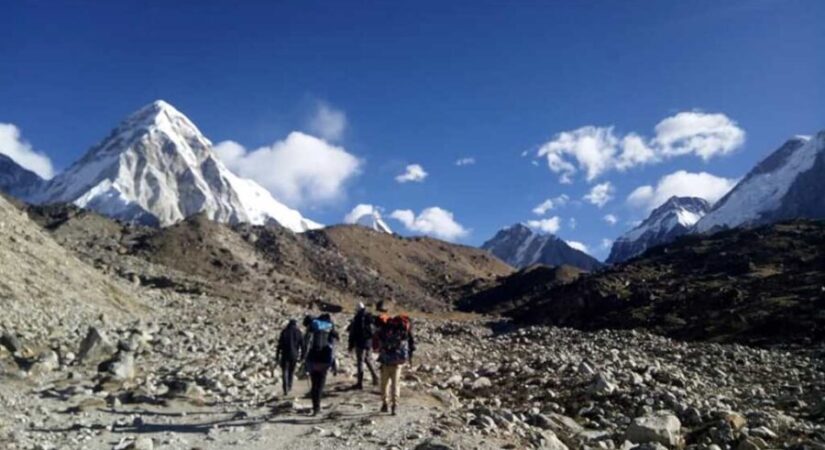
After Thukla, the trail goes up a little more. You will see very big mountains all around you. Some of the mountains are Khumbutse, Lingtren, and Pumori. These are tall, beautiful, and covered with snow.
Finally, you reach Lobuche, a small village high in the mountains. Lobuche has some tea houses and lodges where you can stay. It is cold here, so be sure to wear warm clothes.
Rest well in Lobuche because tomorrow you will walk even higher.
DAY
10
Trek from Lobuche to Everest Base Camp (5,364m) and back to Gorak Shep (5,140m)
14 km, 7–8 hours trek Breakfast, Lunch & Dinner Guest House
Today is one of the most exciting days of your Everest Base Camp Trek. Hike from Lobuche to Everest Base Camp (5,364 m) to Gorak Shep. The journey covers around 14 km and takes approximately 7–8 hours.
The trail passes through rocky and uneven terrain, leading toward the impressive Khumbu Glacier. Along the way, enjoy colorful prayer flags, dramatic landscapes, and spectacular views of the surrounding Himalayan peaks.
At Everest Base Camp, take time to enjoy the incredible scenery, see the famous Khumbu Icefall, and capture memorable photographs. After exploring Base Camp, begin the descent toward Gorak Shep (5,140 m).
Arrive at Gorak Shep and relax at a local tea house with a warm meal. Remember to stay hydrated and rest well, as tomorrow brings an early hike to Kala Patthar for breathtaking sunrise views.
DAY
11
Hike to Kala Patthar (5,545m) and trek to Pheriche (4,280m)
18 km, 7–8 hours trek Breakfast, Lunch & Dinner Guest House
Today starts very early. You will hike up to Kala Patthar, which is 5,545 meters high. This is a special place to see the sunrise.
The hike up to Kala Patthar takes about 2 to 3 hours. The path is steep and rocky, so walk slowly and carefully. When you reach the top, you will see amazing views of Mount Everest, Nuptse, and Pumori. The sunrise makes the mountains glow with beautiful colors. It is one of the best views on the whole trek.
After enjoying the sunrise and taking photos, you walk back down to Gorak Shep. Here, you can have a good breakfast and rest a little.
Next, you start walking down through peaceful Sherpa villages. The trail goes down from the high mountains into green valleys. You will see farms, small houses, and prayer flags along the way.
Today, you will walk about 18 kilometers, and it will take around 7 to 8 hours. Your final stop is Pheriche, a quiet village at 4,280 meters. Pheriche has cozy tea houses where you can rest and eat dinner.
Make sure to drink plenty of water and rest well after this long day.
DAY
12
Trek from Pheriche to Namche Bazaar (3,440m)
15 km, 7–8 hours trek Breakfast, Lunch & Dinner Guest House
After breakfast, begin your descent toward Namche Bazaar, following peaceful mountain trails through green forests filled with birds and fresh Himalayan air. Along the way, cross several wooden suspension bridges over rushing rivers while enjoying the surrounding mountain scenery.
The trail is mostly downhill, making this section more relaxed after the challenging high-altitude days. Take your time to enjoy the peaceful nature, fresh air, and beautiful mountain views as you gradually leave the higher elevations behind.
This day provides a great opportunity to rest your legs and reflect on your Everest Base Camp adventure. The changing landscapes and familiar trails offer a refreshing contrast to the rugged terrain of the higher mountains.
Upon reaching Namche Bazaar, enjoy the lively atmosphere of this famous Sherpa town, with its shops, restaurants, and friendly local people. Relax at your lodge and enjoy a comfortable overnight stay before continuing your journey.
DAY
13
Trek from Namche Bazaar to Surke (2,421m)
Breakfast Hotel In Kathmandu
Today, begin the long descent from Namche Bazaar to Surke, covering approximately 25 km in around 8–9 hours. The trail passes through lush green forests, traditional villages, and farmland, where you can see local crops and animals such as cows and yaks.
Continue downhill through peaceful mountain landscapes while enjoying the fresh air, birdsong, and surrounding scenery. Stop for lunch in Phakding, a riverside village that provides a pleasant place to rest and recharge before continuing the trek.
After lunch, follow the river through more forests and farmland toward Surke. Although mostly downhill, some sections can be rocky, so maintain a steady pace and walk carefully.
By late afternoon, arrive at Surke, a quiet mountain village with local guesthouses and tea houses. Relax, enjoy a warm meal, and prepare for your final day of trekking through the beautiful Everest region.
Departure Dates
Sorry, No fixed departure dates are listed to group join, please request private trip
Skip the Lukla flight and begin your Everest adventure by scenic road. Enjoy peaceful villages, stunning Himalayan landscapes, and a gradual approach to higher altitudes before joining the classic Everest Base Camp trekking route.
Limited-Time: 10% OFF
Book your Everest adventure with Nepal Everest Guide.
Reviews
Kevin David
Canada
Everest Base Camp Trek by Road – 14 Days
2025Our 14-day Everest Base Camp trek by road with NepalEverestGuide was truly unforgettable! Our guide, Dharma, demonstrated exceptional knowledge, professionalism, and friendliness, ensuring every part of our journey was smooth and memorable.
Our porter, Prem, was equally amazing—attentive, hardworking, and full of warmth and positivity throughout the trek. We were joined by Kevin David from Canada and his family, whose energy and camaraderie made the experience even more enjoyable. From breathtaking mountain views to the rich Sherpa culture, every moment felt safe, comfortable, and inspiring thanks to the dedication of our guide and porter.
We highly recommend this trek to anyone seeking a once-in-a-lifetime Himalayan adventure with the support of experienced, caring local guides.
David Rio
Australia
Everest Base Camp Trek by Road – Guided Adventure of a Lifetime (14 Days)
2024I recently completed the 14-day Everest Base Camp Trek by road, and it was truly the adventure of a lifetime. Traveling by road instead of flying into Lukla gave me more time to enjoy the diverse landscapes along the way. The trek was well-paced, and the views of the Himalayas were simply breathtaking. What made the journey even more special was my experienced independent guide, who was not only knowledgeable but also caring and attentive throughout the trek. He ensured everything ran smoothly, from accommodations to meals, and shared a great deal about local culture and traditions. This trek is ideal for those seeking a balance of adventure and comfort without rushing the experience. I highly recommend it.
Essential Information
How Difficult is the Everest Base Camp Trek by Road?
The Everest Base Camp Trek by Road is a moderate to challenging adventure suitable for anyone with a reasonable level of fitness. Daily walks usually last 5–7 hours on mountain trails with gradual altitude gain.
Starting from a lower elevation allows your body to acclimatize naturally, reducing the risk of altitude sickness compared to flying directly to Lukla. This makes the trek safer and more comfortable for many trekkers.
With proper preparation, a steady walking pace, and an experienced local guide, most healthy trekkers can complete the Everest Base Camp Trek by Road while enjoying the spectacular Himalayan scenery.
Weather and Temperature on the Trek by Road
The Everest Base Camp Trek by Road passes through different climate zones, from the warmer hills near Salleri to the cold alpine environment near Everest Base Camp. Weather changes quickly at higher elevations, so trekkers should prepare for both sunny days and cold mornings.
During spring (March to May) and autumn (September to November), the weather is stable with clear mountain views. Daytime temperatures are comfortable, while nights become colder as you gain altitude. Winter is colder with possible snowfall, and the monsoon season brings rain and cloudy conditions.
Approximate temperatures:
- Lower Solukhumbu (Salleri–Namche): 10°C to 20°C during the day
- Higher areas (Dingboche–Everest Base Camp): 5°C to -10°C depending on season
- Early mornings and nights at high altitude: Can drop below freezing
Packing warm layers, a good down jacket, and waterproof clothing helps you stay comfortable throughout the Everest Base Camp Trek by Road.
Jeep Ride from Kathmandu to Surke Explained:
The jeep ride from Kathmandu to Surke is an exciting journey through the breathtaking landscapes of the Himalayas. The trip usually begins with a drive from Kathmandu to Salleri (2,362 m), passing through scenic hills, winding rivers, and traditional Nepalese villages. As the journey is long and can be tiring, many trekkers—especially those traveling by shared jeep—choose to spend the night in Salleri before continuing to Surke the following day.
The next morning, the journey continues from Salleri to Surke (2,290 m). This section follows a more remote mountain road with rough and off-road conditions; the drive can be slower and more adventurous. Experienced local drivers carefully navigate the mountain trails, allowing you to enjoy spectacular landscapes while traveling safely toward the starting point of the Everest Base Camp Trek by Road.
Solo Everest Base Camp Trek by Road:
A Solo Everest Base Camp Trek by Road is possible with good preparation, but hiring a local guide is highly recommended for safety and a better experience. The road route offers gradual altitude gain, fewer crowds, and cultural experiences. A guide helps with navigation, accommodation, permits, and emergencies throughout the Himalayan journey.
Everest Base Camp Trek by Road for Beginners:
The Everest Base Camp Trek by Road is an excellent option for beginners who want to experience the Himalayas through a more gradual, comfortable, and well-acclimatized journey. Instead of flying directly to Lukla (2,860 m), this route begins in the lower Solukhumbu region, allowing your body to adjust naturally to the increasing altitude.
Beginning the trek at a lower elevation gives your body ample time to adjust naturally to the increasing altitude, greatly reducing the risk of altitude sickness associated with rapid decreases in oxygen levels. Along the way, you'll enjoy breathtaking mountain views, peaceful villages, and the opportunity to experience authentic Sherpa culture before joining the classic Everest trekking trail.
With proper preparation, a steady walking pace, and the support of an experienced local guide, beginners can complete the Everest Base Camp Trek by Road. This route is not only achievable but also a safer, smarter, and more immersive choice for anyone seeking an unforgettable Himalayan adventure.
Can You Drive All the Way to Everest Base Camp?
No, you cannot drive all the way to Everest Base Camp. The road currently ends at Surke, a small village below Lukla. From Surke, you must continue on foot along the famous Everest trekking trail to reach Everest Base Camp.
The Everest Base Camp Trek by Road combines a scenic jeep journey from Kathmandu to Surke with a classic Himalayan trek. This route lets you avoid the Lukla flight while enjoying a gradual ascent, better acclimatization, and a more authentic trekking experience through the beautiful Everest region.
Internet, Wi-Fi, and Mobile Network on the Everest Base Camp Trek by Road:
Wi-Fi and mobile network coverage are available at most tea houses along the Everest Base Camp Trek by Road, slower at higher elevations. NCELL and Nepal Telecom (NTC) provide the best coverage. Most lodges charge a small fee for Wi-Fi and device charging.
Altitude Sickness on the Everest Base Camp Trek by Road:
One of the biggest advantages of the Everest Base Camp Trek by Road is the gradual gain in altitude. Instead of flying directly to Lukla (2,860 m), you begin trekking from Surke (2,290 m) after a scenic jeep journey. Starting from a lower elevation gives your body more time to adjust naturally as you climb higher each day.
This slower ascent helps reduce the risk of acute mountain sickness (AMS) compared with starting at Lukla. As you walk through the lower valleys, your body gradually adapts to the decreasing oxygen levels, making the trek safer and more comfortable.
Although altitude sickness remains a possibility on any high-altitude trek, starting from a lower elevation provides a greater opportunity for proper acclimatization, reducing the likelihood of altitude-related complications.
To stay healthy during the Everest Base Camp Trek by Road, walk at a steady pace, drink plenty of water, eat nutritious meals, avoid alcohol, and follow your guide's advice. If symptoms such as a persistent headache, nausea, dizziness, or unusual fatigue become worse, it is important to stop ascending and descend if necessary. With a gradual itinerary and sensible acclimatization, most trekkers can safely enjoy this incredible Himalayan adventure.
Packing List for the Everest Base Camp Trek by Road:
Packing the right gear is essential for a safe and comfortable Everest Base Camp Trek by Road. Weather in the Everest region can change quickly, so dressing in layers is the best approach.
- Backpack (35–45L) and rain cover
- Warm down jacket
- Waterproof jacket and pants
- Moisture-wicking base layers
- Fleece jacket or warm mid-layer
- Comfortable trekking pants and T-shirts
- Warm hat, sun hat, gloves, and neck buff
- Sturdy waterproof trekking boots
- Extra socks and lightweight camp shoes
- Sleeping bag (rated for cold temperatures)
- Reusable water bottle or hydration bladder
- Water purification tablets or water filter
- Sunglasses with UV protection
- Sunscreen and lip balm
- Headlamp with spare batteries
- Personal toiletries and quick-dry towel
- Basic first-aid kit and personal medications
- Trekking poles (highly recommended)
- Power bank and charging cables
- Passport, permits, travel insurance, and cash
Packing light but carrying all the essentials will make your Everest Base Camp Trek by Road more comfortable and enjoyable while preparing you for changing mountain conditions.
Food and Drinking Water on the Everest Base Camp Trek by Road:
The Everest Base Camp Trek by Road offers a wide variety of fresh and nutritious meals at local tea houses. Popular dishes include Dal Bhat, fried rice, noodles, pasta, momos, soups, potatoes, eggs, pancakes, and seasonal vegetables.
Safe drinking water is available throughout the trek. You can refill your water bottle with boiled or filtered water at tea houses for a small fee. Carrying a reusable bottle and water purification tablets or a filter is also recommended.
Eating freshly prepared food and staying well hydrated are essential for maintaining energy and helping your body adjust to the increasing altitude during the Everest Base Camp Trek by Road.
Accommodation and Tea Houses on the Everest Base Camp Trek by Road:
Accommodation on the Everest Base Camp Trek by Road is provided in traditional tea houses run by local families. Most lodges offer clean twin-sharing rooms with comfortable beds, warm blankets, and welcoming dining halls where trekkers can relax after a day of hiking. Facilities become simpler as you gain altitude, but the hospitality remains exceptional.
The tea houses also serve a variety of fresh meals, including Dal Bhat, noodles, fried rice, soups, pasta, eggs, and hot drinks. Staying in these family-run lodges allows you to experience Sherpa culture, enjoy authentic mountain hospitality, and support local communities throughout your Everest Base Camp Trek by Road.
Everest Base Camp Trek by Road vs Flight: Which Is Better?
The Everest Base Camp Trek by Road is the better choice for trekkers who want a slower, more natural journey into the Himalayas. Starting by jeep from Kathmandu allows gradual altitude gain, better acclimatization, and a chance to explore beautiful villages, forests, and local culture before reaching the main trekking trail.
The Everest Base Camp Trek by Flight is faster and saves time, but flights to Lukla are often delayed or cancelled due to changing mountain weather. Flying also takes you directly to a higher altitude, giving your body less time to adjust and increasing the risk of altitude sickness.
If you have enough time and want a more authentic adventure, the Everest Base Camp Trek by Road offers better value, fewer crowds, and a richer cultural experience. If your schedule is limited, flying to Lukla is a convenient option. Both routes reach the same destination, but the road journey provides a more complete Himalayan experience.
Kathmandu to Surke Jeep Journey: What to Expect
The Kathmandu to Surke jeep journey is a scenic overland adventure that takes around 12–15 hours. Leaving Kathmandu (1,400 m), the road passes through Dhulikhel (1,550 m), Khurkot (646 m), Ghurmi (1,130 m), and Okhaldhunga (1,561 m) before climbing into the beautiful Solu region.
Continuing onward, the route reaches Salleri (2,362 m), the district headquarters of Solukhumbu, followed by Phaplu (2,413 m). From there, the road becomes more rugged as it passes through Kharikhola (2,040 m) and Paiya (2,730 m) before descending to Surke (2,290 m), where the trekking trail toward Everest Base Camp begins. The drive offers spectacular mountain scenery, traditional villages, and a gradual gain in altitude, making it an excellent alternative to flying to Lukla.
Best Time for Everest Base Camp Trek by Road:
The best time for the Everest Base Camp Trek by Road is during spring (March to May) and autumn (September to November). These seasons offer clear mountain views, pleasant temperatures, colorful rhododendron forests, and stable weather, making trekking safer and more enjoyable.
Winter treks are possible with proper preparation, while the summer monsoon brings heavy rain and slippery trails. For the best Himalayan scenery and comfortable trekking conditions, spring and autumn remain the ideal seasons.
Everest Base Camp Trek by Road Cost Breakdown:
The Everest Base Camp Trek by Road costs USD 850 per person for a 14-day trip, offering excellent value for travelers who prefer to avoid the Lukla flight. The package includes transportation, permits, accommodation, meals during the trek, and the services of an experienced local guide.
- Ground Transportation (Kathmandu – Salleri/Thamdanda – Kathmandu by Jeep): USD 120
- Experienced Local Trekking Guide (14 Days): USD 280
- Accommodation in Tea Houses (13 Nights): USD 130
- Meals During the Trek (Breakfast, Lunch & Dinner): USD 220
- Trekking Permits (Sagarmatha National Park & Khumbu Pasang Lhamu Rural Municipality): USD 70
- Guide Insurance & Administrative Costs: USD 30
- Total Package Cost: USD 850 per person
This price covers the essential services needed for a safe, comfortable, and memorable Everest Base Camp Trek by Road. Personal expenses such as travel insurance, drinks, hot showers, charging electronic devices, Wi-Fi, tips, and personal trekking gear are generally not included.
Everest Base Camp Trek by Road – 16 FAQs
What is the Everest Base Camp Trek by Road?
It is an alternative route with a scenic drive toward the Everest region instead of flying to Lukla. You then continue the journey on foot toward Everest Base Camp.
Where does the road journey to Everest Base Camp start?
Most road-based itineraries begin from Kathmandu and travel toward the Everest region. The exact starting and stopping points depend on current road conditions and the chosen itinerary.
How long does the Everest Base Camp Trek by Road take?
The duration depends on the starting point, acclimatization days, and itinerary. Most travelers should allow extra days compared with the traditional Lukla-based trek.
Is the road route to Everest Base Camp safe?
The route can be safely completed with proper preparation and a reliable itinerary. Mountain roads can be rough, so experienced local support is highly recommended.
Can I skip the Lukla flight?
Yes. The road-based option lets you skip the Lukla flight and enjoy a scenic overland journey before beginning the main trek.
Does the road route help with acclimatization?
A longer approach can provide a more gradual increase in elevation. However, proper acclimatization days are still essential for a comfortable and safer trek.
What kind of vehicle is used?
The vehicle depends on road conditions and group size. Local jeeps are commonly used for sections where roads are rough or less accessible.
How difficult is the Everest Base Camp Trek by Road?
The trek remains physically demanding, even though you avoid the Lukla flight. Long walking days, steep climbs, and high altitude require good preparation.
What scenery can I see on the road journey?
You can enjoy green hills, rivers, villages, terraced farmland, and changing Himalayan landscapes before reaching the high mountain region.
Is the road journey comfortable?
Some sections are smooth, while mountain roads can be bumpy and winding. Travelers should expect a genuine Himalayan road experience rather than a luxury journey.
Is the road route cheaper than flying to Lukla?
It can reduce flight-related costs, but the final price depends on transportation, itinerary, accommodation, meals, permits, and trek duration.
Can I take the road route in every season?
Road conditions can change due to monsoon rain, landslides, snowfall, and . Your itinerary should be checked and adjusted according to current conditions.
Do I need a guide for the road-based Everest trek?
A local guide is strongly recommended, especially for first-time trekkers. A guide can assist with navigation, accommodation, altitude awareness, and unexpected situations.
Where do I stay during the trek?
Accommodation is generally available in local teahouses and lodges along the trekking route. Facilities become simpler as you reach higher elevation.
What should I pack for the road-based trek?
Pack warm layers, trekking shoes, a sleeping bag, a water bottle, personal medication, sunscreen, and essential trekking gear. Keep your luggage practical because you will be moving frequently.
Why choose the Everest Base Camp Trek by Road?
The road option is ideal for travelers who want to skip the Lukla flight, experience more of rural Nepal, and enjoy a longer approach to Everest. It offers a different and memorable way to reach the world's highest mountain.
Cancellation Note
- Free cancellation up to 60 days prior departure
- 30% of the total cost of the trip will be charged if cancelled between 60 to 30 days prior to departure date
- 60% of total cost of the trip will be charged if cancelled in between 30 to 14 days prior to departure date.
Web design & Developed by Wildstone Solution
