

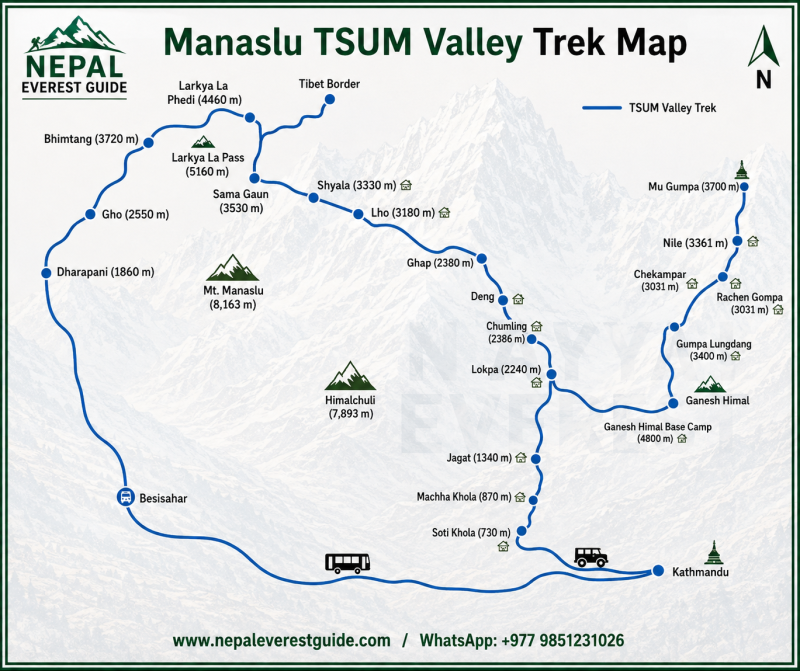
Kathmandu → Jagat → Lokpa → Chumling → Chokhangparo → Nile → Chumling → Lokpa → Jagat → Kathmandu


Why Licensed Guide for Short Tsum Valley Trek?
Explore Nepal’s Sacred Hidden Valley and experience the peaceful beauty of the remote Tsum Valley away from crowded trekking routes.
- Experience Authentic Tibetan Buddhist Culture through traditional customs, ancient beliefs, monasteries, prayer flags, and centuries-old Himalayan traditions.
- Discover Ancient Monasteries and Sacred Sites that reflect the deep spiritual heritage and unique religious traditions of the Tsum Valley.
- Visit the Spiritual Landmark of Mu Gompa and experience the peaceful atmosphere of one of the valley’s most significant Buddhist sites.
- Enjoy Magnificent Views of Ganesh Himal along with dramatic Himalayan landscapes, deep valleys, forests, and rugged mountain scenery.
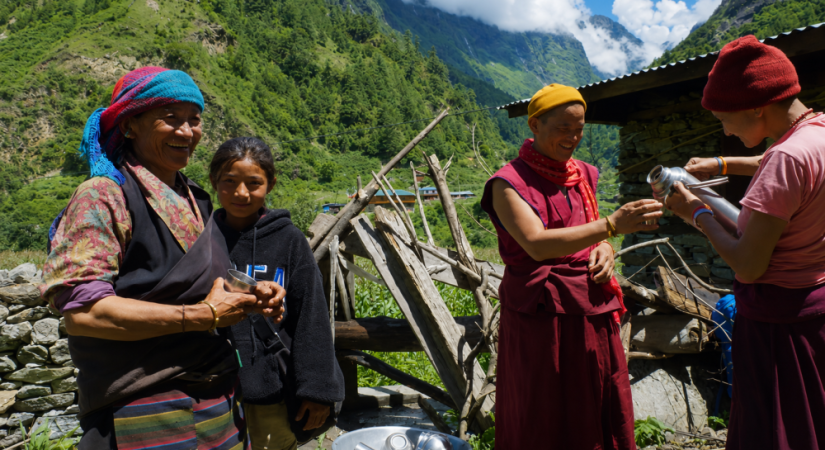
- Experience Traditional Tsumba Village Life as you walk through remote settlements where traditional architecture, local customs, and Himalayan lifestyles remain deeply preserved.
- Walk Through Peaceful Pine and Himalayan Forests while following quiet mountain trails surrounded by waterfalls, rocky landscapes, and natural beauty.
- Experience the Remote and Unspoiled Himalayan Landscape where fewer trekkers, peaceful surroundings, and isolated mountain communities create a truly authentic journey.
- Witness Buddhist Mani Walls, Chortens, and Prayer Flags scattered throughout the trail, adding cultural and spiritual character to your Himalayan adventure.
- Trek with a Local Expert Guide who helps you understand the valley’s culture, traditions, landscapes, and hidden stories along the journey.
Introduction to Short Tsum Valley Trek:
Tsum Valley Trek – 9 Days is a compact Himalayan journey into one of Nepal’s most culturally distinctive and peaceful mountain valleys. Designed for trekkers with limited time, this itinerary combines the natural beauty of the Manaslu region with the traditional way of life, Buddhist heritage, and remote mountain landscapes of Tsum Valley. From the riverside settlement of Jagat to the high Himalayan village of Nile, the route offers a rewarding mix of adventure, culture, and spectacular mountain scenery in just nine days.
The journey begins with a scenic drive from Kathmandu to Jagat, passing through Nepal’s countryside, river valleys, terraced hills, and mountain settlements. From Jagat, trekkers follow the trail toward Lokpa, the gateway to Tsum Valley, before continuing to the peaceful village of Chumling in the Lower Tsum Valley. As the trail climbs higher, forested hills gradually give way to rugged mountain terrain and increasingly impressive Himalayan views.
From Chumling, the route ascends to Chokhangparo at 3,010 meters, a beautiful mountain settlement where the unique cultural character of Tsum Valley becomes even more apparent. Traditional houses, Buddhist monuments, prayer flags, and surrounding Himalayan scenery create an atmosphere far removed from Nepal’s busier trekking routes.
The following day takes trekkers deeper into the valley toward Nile at 3,361 meters, with a visit to the revered Mu Gompa area. This journey through the upper valley offers an opportunity to experience the region’s spiritual traditions, remote communities, and dramatic mountain environment. It is the cultural and scenic centerpiece of the itinerary, providing a deeper connection with the heritage for which Tsum Valley Trek is known.
After reaching the northern end of the route, the trek turns back toward the lower valley. Trekkers retrace the trail through Chumling and Lokpa, enjoying familiar landscapes from a new perspective as the elevation gradually decreases. The final day brings you back to Jagat, marking the end of this rewarding Tsum Valley trekking adventure.
On Day 9, a scenic drive from Jagat to Kathmandu completes the journey. Although short, the 9-day Tsum Valley Trek offers a meaningful Himalayan experience with remote trails, traditional villages, Buddhist culture, stunning mountain scenery, and authentic rural life. It is particularly suited to trekkers who want to explore the distinctive character of Tsum Valley but have limited time for a longer trekking program.
Why Trek the Short Tsum Valley Trek with a Local Expert Guide?
- A local guide knows the remote trails and helps you navigate the route safely and efficiently.
- A licensed guide handles the restricted-area trekking and helps keep your journey properly organized.
- A local expert explains the Buddhist culture, monasteries, traditions, and history that make Tsum Valley unique.
- Your guide monitors your pace and physical condition as the trek climbs to 3,361 meters.
- A local guide can communicate with villagers and teahouses, making accommodation, meals, and other arrangements easier in remote areas.
- With only nine days available, an experienced guide helps you manage the itinerary efficiently and deal with unexpected changes along the trail.
Licensed Guide for Short Tsum Valley Trek Outline
Day 1: Kathmandu → Jagat (1,300 m) — Drive, 10–12 hours
Day 2: Jagat → Lokpa (1,800 m) — Trek, 5–6 hours
Day 3: Lokpa → Chumling / Lower Tsum (2,390 m) — Trek, 5–6 hours
Day 4: Chumling → Chokhangparo (3,010 m) — Trek, 4–5 hours
Day 5: Chokhangparo → Nile / Mu Gompa area (3,361 m) — Trek, 5–6 hours
Day 6: Nile → Chumling (2,386 m) — Trek, 6–7 hours
Day 7: Chumling → Lokpa (1,800 m) — Trek, 5–6 hours
Day 8: Lokpa → Jagat (1,300 m) — Trek, 5–6 hours
Day 9: Jagat → Kathmandu — Drive, 10–12 hours
What's included?
- 2 nights’ hotel accommodation in Kathmandu with daily breakfast
- Bed-and-breakfast (B&B) accommodation during the trek at local teahouses/lodges
- Public bus transportation from Kathmandu to Jagat at the beginning of the trek
- Public bus transportation from Jagat to Kathmandu at the end of the trek
- Experienced, English-speaking trekking guide throughout the trekking portion
- Tsum Valley restricted-area trekking permit and other required trekking permits
- Trekking guide’s salary, meals, accommodation, insurance, and necessary expenses
- Government/local taxes and applicable service charges
- Basic trekking assistance and trip coordination from our team.
What's not included?
- International flights and Nepal entry visa fees.
- Meals and drinks in Kathmandu, except the included hotel breakfasts.
- Lunch and dinner during the trek unless specifically mentioned in the package.
- Personal expenses such as snacks, beverages, laundry, phone calls, and Wi-Fi.
- Travel insurance, including emergency evacuation and medical expenses.
- Personal trekking equipment and clothing, including sleeping bags, trekking poles, and suitable footwear.
- Porter service, unless specifically added to the package.
- Tips and gratuities for the trekking guide, driver, or other staff.
- Private transportation or additional vehicle costs if you choose to upgrade from public transport.
- Costs arising from delays, natural disasters, road blockages, flight cancellations, or other circumstances beyond our control.
- Any services or expenses not specifically mentioned under “What’s Included.”
Day by Day Itinerary
DAY
01
Kathmandu to Jagat (1,300 m) — Drive, 10–12 hours
Approximately 210–220 km by road Lodge/ Jagat
- Walking hours: No trekking
- Starting altitude: Kathmandu, approximately 1,400 m
- Ending altitude: Jagat, approximately 1,300 m
- Elevation gain: Minimal overall; the road crosses several valleys and passes
- Trail character: Long mountain drive on paved and rough, winding roads
- Overnight: Jagat
Your Tsum Valley adventure begins with a scenic drive from Kathmandu toward northern Gorkha. The route follows the Trishuli River before reaching remote hills, waterfalls, rivers, and mountain villages.
After Arughat, the road becomes rougher and more winding as you head toward the Manaslu and Tsum Valley region. The drive to Jagat can be long and bumpy, but the changing scenery and mountain communities make the journey worthwhile.
By late afternoon or evening, you arrive at Jagat, a traditional mountain settlement and gateway to the Manaslu and Tsum Valley regions. Check into your lodge, rest, and prepare for your first day of trekking.
What travelers should expect: A long, sometimes bumpy travel day. Be patient and enjoy the changing mountain scenery along the way.
DAY
02
Jagat to Lokpa (1,800 m)
Trek, 5–6 hours Breakfast Lodge
- Distance: Approximately 13–14 km
- Walking hours: 5–6 hours
- Starting altitude: 1,300 m
- Ending altitude: 1,800 m
- Elevation gain: Approximately 500 m
- Trail character: Gradual uphill walking, forested sections, stone steps, suspension bridges, and riverside trails
- Overnight: Lokpa
After breakfast, the trek officially begins. Leaving Jagat behind, you follow the Budhi Gandaki valley along a trail that winds through terraced farmland, small settlements, and forested hillsides. The route gradually gains altitude, but the pace is generally manageable as you settle into the rhythm of trekking.
The trail crosses several streams and suspension bridges through a landscape that becomes increasingly wild as you move farther from the road. You will notice the distinctive architecture of the mountain villages, with stone houses and cultivated terraces clinging to steep slopes.
As the day progresses, the trail enters greener forest, with sections of rhododendron, pine, and other Himalayan vegetation. The final approach to Lokpa involves some uphill walking, rewarding you with a more remote mountain atmosphere.
What travelers should expect: This is your first ful a good opportunity to find a comfortable walking pace. The trail is varied rather than extremely difficult, although the stone steps and several uphill sections can make the day feel longer than the distance suggests.
DAY
03
Lokpa to Chumling / Lower Tsum (2,390 m) — Trek, 5–6 hours
5-6 Hrs Breakfast Lodge
- Distance: Approximately 8–9 km
- Starting altitude: 1,800 m
- Ending altitude: 2,390 m
- Elevation gain: Approximately 590 m
- Trail character: Narrow mountain paths, forest, steep sections, suspension bridges, & increasingly dramatic valley views
- Overnight: Chumling
Today the trail leaves the main Budhi Gandaki route and heads deeper toward the Tsum Valley. The landscape quickly feels more isolated, with fewer settlements and a stronger sense of entering a hidden Himalayan valley.
The trail climbs through dense forest and follows steep hillsides before reaching viewpoints where the surrounding mountains are more prominent. Depending on conditions, some sections can be rough or uneven, requiring careful footing.
After several hours of walking, you reach Chumling, one of the first important settlements in the Lower Tsum Valley. Traditional houses, prayer flags, mani walls, and the surrounding forest give the village a distinctly Tibetan-influenced character.
There is usually time in the afternoon to walk around the settlement and enjoy the quieter atmosphere. The views toward Ganesh Himal and the surrounding peaks can be particularly impressive when the weather is clear.
What travelers should expect: The trail becomes more remote today, with some steeper sections. Take your time on the climbs and enjoy the changing scenery rather than the journey.
DAY
04
Chumling to Chokhangparo (3,010 m)
4-5 Hrs Breakfast Lodge
- Distance: Approximately 9 km
- Starting altitude: 2,390 m
- Ending altitude: 3,010 m
- Elevation gain: Approximately 620 m
- Trail character: Uphill Himalayan trail, forested slopes, stone paths, traditional villages, and mountain viewpoints
- Overnight: Chokhangparo.
- The morning begins with a steady climb farther into the Tsum Valley. As you gain altitude, vegetation becomes thinner and the surrounding Himalayan scenery becomes more impressive. The trail passes traditional villages and farmland, where you may see locals working in the fields or tending livestock.Along the way, mani walls, prayer flags, and Buddhist landmarks reflect the valley’s strong Tibetan Buddhist culture. Today’s destination is Chokhangparo, a beautiful settlement at around 3,010 meters, surrounded by traditional stone houses and Himalayan peaks.Although the walking distance is relatively short, the steady elevation gain makes this an important acclimatization day. Rest after arrival, drink plenty of water, and give your body time to adjust to the higher altitude.What travelers should expect: A shorter trek with noticeable altitude gain. Walk slowly, take regular breaks, and stay well hydrated.
DAY
05
Chokhangparo to Nile / Mu Gompa Area (3,361 m)
5-6 hrs Breakfast Lodge
- Distance: Approximately 10–11 km
- Starting altitude: 3,010 m
- Ending altitude: 3,361 m
- Elevation gain: Approximately 350 m
- Trail character: High Himalayan trail, open valley landscapes, Buddhist monuments, stone paths, and gradual climbs
- Overnight: Nile / Mu Gompa area
Today, trekkers head toward the upper Tsum Valley, where the landscape becomes more alpine and Tibetan Buddhist culture is increasingly visible. From Chokhangparo, the trail passes small settlements, mani walls, chortens, prayer flags, and traditional houses, with impressive views of the surrounding mountains.
The walking is generally moderate, but the higher altitude can make even gradual climbs feel more demanding. Walk at a steady pace, stay hydrated, and take time to enjoy the mountain scenery, local villages, and rich cultural heritage along the trail.
Eventually, you reach Nile, one of the highest settlements in the valley. Depending on the itinerary and trail conditions, trekkers may also visit Mu Gompa, an important Buddhist monastery farther up the valley. This upper section feels cooler, quieter, and more rugged than the lower valley.
What travelers should expect: A rewarding day of cultural and high-altitude trekking. Walk slowly, stay hydrated, and listen to your body.
DAY
06
Nile to Chumling (2,386 m)
6-7 Hrs Breakfast Lodge
- Distance: Approximately 18–19 km
- Starting altitude: 3,361 m
- Ending altitude: 2,386 m
- Elevation change: Approximately 975 m of descent
- Trail character: Long downhill route, stone paths, forest sections, villages, and familiar valley landscapes
- Overnight: Chumling
After spending time in the upper Tsum Valley, today the return journey. The trail retraces much of the route through the valley, but walking in the opposite direction gives you a completely different perspective of the surrounding landscape.
The biggest feature of the day is the substantial descent. As you lose altitude, the air gradually becomes warmer, and vegetation becomes greener. The high, open landscapes around the Nile give way to forests and more sheltered sections of the valley.
Although descending is generally easier on the lungs than climbing at altitude, the long downhill sections can be demanding on the knees and legs. Good footwear and trekking poles can be particularly useful today.
After several hours of walking, you return to Chumling, where you can enjoy a well-earned rest at the lodge.
What travelers should expect: This is a longer day, but much of the elevation change is downhill. Take care on steep or uneven sections and avoid rushing simply because the trail is descending.
DAY
07
Chumling to Lokpa (1,800 m)
5-6 Hrs Breakfast Lodge
- Distance: Approximately 8–9 km
- Starting altitude: 2,386 m
- Ending altitude: 1,800 m
- Elevation change: Approximately 586 m of descent
- Trail character: Forest trail, steep descents, suspension bridges, rocky paths, and riverside sections
- Overnight: Lokpa
Leaving Chumling after breakfast, you continue your descent through the Lower Tsum Valley. The route passes back through forests and along steep mountainsides, with the sound of rivers and streams accompanying much of the walk.
The trail includes several uneven and rocky sections, as well as suspension bridges and stone steps. Because you have already walked this section in the opposite direction, some places may look familiar, but the downhill perspective allows you to appreciate the valley from a new angle.
As you descend, the vegetation becomes noticeably thicker and the temperature generally feels warmer. By the time you reach Lokpa, you will once again be surrounded by a greener, more humid Himalayan environment.
The afternoon can be spent relaxing at the lodge or taking a short walk around the village.
What travelers should expect: Compared with the higher sections, today's altitude is much more comfortable. The main challenge is the uneven downhill terrain, so maintain controlled steps and give your legs regular breaks.
DAY
08
Lokpa to Jagat (1,300 m)
5-6 hrs Breakfast Lodge
- Distance: Approximately 13–14 km
- Starting altitude: 1,800 m
- Ending altitude: 1,300 m
- Elevation change: Approximately 500 m of descent
- Trail character: Forest paths, riverside walking, stone steps, suspension bridges, and mountain villages
- Overnight: Jagat
Your final follows the trail back toward Jagat. The route gradually loses altitude as you move through forested hillsides and along the Budhi Gandaki River.
There are several sections where the trail rises and falls rather than simply descending, so today's walk should not be considered an entirely downhill day. You will cross suspension bridges and pass through small settlements before eventually returning to the familiar surroundings of Jagat.
Reaching Jagat marks the completion of the trekking portion of your Tsum Valley journey. After several days in the mountains, it can be a rewarding moment to look back on the landscapes, villages, monasteries, and trails you have experienced.
Once in Jagat, settle into the lodge and enjoy your final evening in the Himalayan trekking environment.
What travelers should expect: The walking is moderate but can feel tiring after several days on the trail. Enjoy the final day and appreciate the return to the lower valley.
DAY
09
Jagat to Kathmandu
11 Hrs Drive Breakfast Hotel
- Distance: Approximately 210–220 km by road
- Starting altitude: Approximately 1,300 m
- Ending altitude: Kathmandu, approximately 1,400 m
- Elevation gain: Minimal overall
- Trail character: Long mountain road journey with winding and sometimes rough sections
- Overnight: Kathmandu
After breakfast, you leave Jagat and begin the long drive back to Kathmandu. The route follows the mountain valleys and gradually transitions from the remote Himalayan landscape toward more populated areas.
During the journey, you will once again pass through small settlements, terraced hillsides, rivers, and roadside communities. As the road approaches Kathmandu, traffic and development gradually increase, marking a clear contrast with the quiet Tsum Valley you have just left behind.
The journey normally takes around 10–12 hours depending on road and traffic conditions. Although it is a long day on the road, it provides time to reflect on the trek and enjoy the final views of the Nepalese countryside.
You arrive in Kathmandu later in the day, bringing your Tsum Valley trekking adventure to an end.
What travelers should expect: The return drive can be tiring, particularly after the trek, and road conditions may affect the journey time. Once in Kathmandu, you can relax and enjoy the after your time in the mountains.
Departure Dates
Sorry, No fixed departure dates are listed to group join, please request private trip
Dear Trekkers, if you’re contacting us for the first time, we’re happy to offer 20% off for groups of five or more people. We also have significantly lower-cost options available during the off-season, making it easier to enjoy an authentic Himalayan trekking experience.
Reviews
Oliver Harris
Australia
Amazing Short Tsum Valley Trek – Highly Recommended!
2026My family and I had an unforgettable 9-day Short Tsum Valley Trek in Nepal. Everything was well organised, safe, and enjoyable. Our licensed guide Rupesh was excellent—friendly, knowledgeable, patient, and always attentive to our family’s needs. He shared wonderful information about the local culture, villages, monasteries, and Himalayan landscape.
Our porter, Prem, was also hardworking, helpful, and cheerful throughout the trek. The peaceful Tsum Valley, traditional villages, beautiful monasteries, and spectacular mountain views made this a truly memorable family adventure. Thank you, Rupesh, Prem, and the entire team, for an amazing experience. Highly recommended!
Essential Information
Tsum Valley Trek Difficulty: How Hard Is the Trek?
The Tsum Valley Trek is generally considered a moderate trek in Nepal, making it suitable for trekkers with a reasonable level of fitness and some preparation. You do not need advanced mountaineering skills, but the trek requires the ability to walk for several hours a day on uneven mountain trails, steep sections, stone steps, and changing terrain.
The main challenge is not technical climbing but the duration of daily walks and increasing altitude as you move deeper into the valley. Some days involve long uphill and downhill sections, while the higher areas can feel more demanding because of thinner air and colder conditions.
For most healthy and active trekkers, the Tsum Valley Trek is achievable with proper preparation, a comfortable walking pace, adequate rest, and good acclimatization. Beginners can also attempt the trek if they regularly exercise before the journey and are comfortable with several consecutive days of mountain walking.
What makes the trek rewarding is that the physical effort leads to remote Himalayan villages, ancient monasteries, peaceful trails, and spectacular mountain scenery. With the right preparation, the Tsum Valley Trek offers a challenging but manageable adventure for travelers seeking an authentic Himalayan experience.
Short Tsum Valley Trek Updated Cost (Price):
The Tsum Valley Trek depends on factors such as trek duration, group size, season, accommodation, transportation, permits, and guide services. Our package offers a simple and affordable way to explore Tsum Valley, including B&B accommodation, two nights in Kathmandu with breakfast, public transportation between Kathmandu and Jagat, required permits, and an experienced trekking guide for a comfortable and memorable trekking experience.
The package price does not cover lunch and dinner, international flights, Nepal visa fees, travel insurance, personal expenses, porter service, tips, private transportation, or other services not specifically the total cost can also vary according to your travel dates and group requirements, we recommend checking the package details before booking your Short Tsum Valley Trek.
9 Days Tsum Valley Trek Distance:
The 9-day Tsum Valley Trek covers approximately 70–80 km (43–50 miles) of trekking, depending on the exact route and daily itinerary. Trekkers typically walk around 5–7 hours per day, passing through remote villages, forests, rivers, and beautiful Himalayan landscapes.
The distance is manageable for reasonably fit trekkers, with some steep ascents descents and uneven mountain trails. Proper preparation and a steady pace make the 9-day Tsum Valley Trek more comfortable and enjoyable.
Best Time for the Short Tsum Valley Trek: When Should You Go?
The best time for the Short Tsum Valley Trek is during spring (March to May) and autumn (September to November). These months usually offer stable weather, clear mountain views, comfortable daytime temperatures, and favorable trail conditions, making them ideal for exploring the valley.
Autumn is especially popular for clear skies and excellent Himalayan views, while spring brings warmer weather and colorful rhododendron forests. Winter can be very cold at higher elevations, and the monsoon season brings rain, clouds, and slippery trails, so these periods are generally less suitable for the trek.
For the best overall trekking experience, October, November, April, and May are excellent choices for the Short Tsum Valley Trek.
How Much Does the Tsum Valley Trek Permit Cost?
The Tsum Valley Restricted Area Permit (RAP) is charged according to the trekking season:
- September–November: USD 40 per person for the first 7 days
- December–August: USD 30 per person for the first 7 days
- Extra days: USD 7 per person per day after the first 7 days.
Example: A 10-day Tsum Valley trek in October costs USD 61 per person for the Tsum Valley RAP: USD 40 for the first week + USD 21 for 3 additional days.
This permit covers the designated Tsum Valley restricted area, including Sirdibas, Lokpa, Chumling, Chekampar, Nile and Chule.
Note: The Tsum Valley RAP is only one of the permits/fees that may apply to your trek. Your total permit cost be higher depending on other required conservation-area or trekking permits.
What Are Tea Houses and Meals Really Like in Tsum Valley?
Tsum Valley offers a simple, authentic tea-house experience rather than the comfort of luxury mountain lodges. Most villages have small family-run guesthouses where trekkers can rest, eat, and experience local Himalayan hospitality.
Accommodation:
Tea houses generally provide basic twin-sharing rooms with beds, mattresses, blankets, and limited furniture. Rooms are usually unheated, while the communal dining area is often the warmest place in the lodge, heated by a traditional stove. Hot showers and charging facilities may be available in larger villages, but they can be limited or come at an extra cost. Wi-Fi and mobile connectivity are also unreliable, particularly in remote sections of the valley.
Food:
Meals are simple, filling, and designed to provide energy for long trekking days. Typical options include dal bhat (rice, lentils, and vegetables), noodles, Tibetan-style thukpa, fried rice, momos, potatoes, soups, eggs, porridge, pancakes, and basic pasta. Tea, coffee, and hot drinks are widely available.
Because Tsum Valley is a remote and culturally preserved region, food choices become more limited as you travel deeper into the valley. Prices also tend to increase with altitude because supplies be transported from lower areas.
What to expect: Think warm hospitality, basic rooms, hearty food, and a genuine village experience—not hotel-style luxury. Booking ahead is useful during the main trekking seasons, especially for larger groups.
Are Internet, Mobile Network, and Electricity Available in Tsum Valley?
Internet and mobile networks are limited and unreliable in Tsum Valley. Some tea houses offer Wi-Fi, usually for an additional charge, but connections can be slow or unavailable in remote villages. Mobile signals may work in certain areas but should not be relied upon throughout the trek.
Most tea houses provide electricity for charging, particularly in larger villages. However, charging may cost extra and power can be limited. Carrying a power bank or solar charger is strongly recommended for phones, cameras, and other essential devices.
How Do You Travel to and From Tsum Valley?
Transportation to Tsum Valley involves a combination of road travel and trekking. The journey generally begins with a scenic drive from Kathmandu to Machha Khola or Soti Khola, depending on road conditions and trekking itinerary. Local or private jeeps are commonly used, as the mountain roads can be rough and winding. From the roadhead, trekkers continue on foot through the beautiful landscapes and traditional villages of the Tsum Valley. After completing the trek, travelers retrace the route to the roadhead and take a jeep or bus back toward Kathmandu. As road conditions can change with weather and seasonal maintenance, allowing some flexibility in the travel schedule is recommended.
What Should You Pack for the Tsum Valley Trek?
Packing for the Tsum Valley Trek requires a balance between staying warm, traveling comfortably, and keeping your backpack manageable. The following essentials are recommended:
- 40–50L trekking backpack
- Sturdy, comfortable trekking boots
- Lightweight trekking shoes or sandals
- Thermal base layers
- Fleece or warm mid-layer
- Down or insulated jacket
- Waterproof jacket and trousers
- Quick-drying trekking shirts and trousers
- Warm socks and extra pairs
- Warm hat, gloves, and sun hat
- Sunglasses and sunscreen
- Sleeping bag suitable for cold mountain nights
- Reusable water bottle or hydration system
- Water purification tablets or filter
- Headlamp with spare batteries
- Personal first-aid kit and essential medicines
- Basic toiletries and hand sanitizer
- Power bank and charging cables
- Trekking poles
- Passport, permits, travel insurance, and sufficient cash
- Toilet paper and personal hygiene supplies
Pack according to the season and trekking duration, and avoid unnecessary items. Tea houses provide basic accommodation and meals, so carrying only essential personal gear will make the trek more comfortable.
What Weather and Temperature Can You Expect on the 9-Day Tsum Valley Trek?
The 9-day Tsum Valley Trek takes you from warmer lower valleys into cooler Himalayan terrain, so the weather changes noticeably as you gain altitude. Spring and autumn usually offer the most comfortable trekking conditions, with pleasant daytime temperatures, clear mountain views, and colder mornings and evenings. Higher sections can feel quite chilly, especially after sunset.
During summer, rainfall can make the trails wet and muddy, while winter brings colder temperatures and possible snowfall at higher elevations. Temperatures can generally range from around 10–20°C during the daytime in lower areas to near or below 0°C at higher elevations at night. Packing adaptable layers is the best way to stay comfortable throughout the trek.
How Can You Prevent Altitude Sickness on the Tsum Valley Short Trek?
Preventing altitude sickness on the Tsum Valley Short Trek starts with gradual ascent and proper acclimatization. Avoid rushing to higher elevations, even if you feel fit and energetic. Take enough breaks during the walk, spend a little extra time at higher places before going higher, and listen to your body. Staying hydrated throughout the trek is also important, but avoid excessive alcohol and smoking, as they can make altitude-related problems worse.
Your pace matters just as much as your itinerary. Walk slowly and steadily, especially on steep sections, and keep your daily effort manageable. Eating regular, nutritious meals gives your body the energy it needs to adjust. A good night’s sleep and keeping yourself warm can also support your body during acclimatization.
Most importantly, know the warning signs of altitude sickness. Headache, dizziness, unusual tiredness, nausea, and loss of appetite can be early symptoms. If symptoms appear, do not continue ascending until you feel better. If they become severe, including confusion, difficulty walking, or serious breathing problems, descending to a lower altitude is the appropriate response. With proper acclimatization and awareness, the Tsum Valley Trek can be enjoyed more safely and comfortably.
Is the Tsum Valley Trek Suitable for Beginners?
Yes, the Tsum Valley Trek is suitable for beginners with reasonable fitness and proper preparation. The trek does not require technical climbing, but the long walking days, steep sections, uneven trails, and increasing altitude can still be challenging for first-time trekkers.
Beginners should train with regular walking and uphill hikes before the trek and maintain a slow, comfortable pace. Proper hydration, nutritious meals, sufficient rest, and gradual acclimatization are important for adjusting to the altitude.
With a well-planned itinerary and an experienced guide, beginners can enjoy Tsum Valley’s beautiful mountain scenery, traditional villages, ancient monasteries, and peaceful Himalayan atmosphere.
Cancellation Note
- Free cancellation up to 60 days prior departure
- 30% of the total cost of the trip will be charged if cancelled between 60 to 30 days prior to departure date
- 60% of total cost of the trip will be charged if cancelled in between 30 to 14 days prior to departure date.
Web design & Developed by Wildstone Solution
