

KATHMANDU - SOTI KHOLA - JAGAT - NAMRUNG - SAMAGAON - DHARMASALA - BIMTHANG - DHARAPANI

Why Authentic Manaslu Circuit Trek?
- Variety of terrain, from lush forests to high mountain passes.
- Breathtaking views of the Himalayas.
- Unique culture of the local people.
- Diverse wildlife of the area.
- Relatively safe trek with experienced guides and porters.
- Unforgettable experience that will stay with you long after returning home.
- Opportunity to experience Buddhist culture and Tibetan influences.
- Chance to observe diverse wildlife.
- Explore traditional Nepalese cuisine.
- Tailor your trek to suit different levels of experience.
- Variety of accommodation options, from teahouses to camping.
- Climb to the highest point of the trek, at 5,160m.
Introduction to Authentic Manaslu Circuit Trek – 14 Days
The Authentic Manaslu Circuit Trek – 14 Days is one of Nepal’s most rewarding Himalayan adventures, taking you on a spectacular journey around Mount Manaslu (8,163 m), the world’s eighth-highest mountain. This remote and scenic trekking route combines dramatic Himalayan landscapes, traditional mountain villages, Tibetan-influenced Buddhist culture, diverse flora and wildlife, and the thrilling challenge of crossing Larkya La Pass (5,106 m). From the lush lower valleys to the high alpine terrain surrounding the Manaslu massif, the trek offers an extraordinary change of scenery within a single journey.
Located within the Manaslu Conservation Area, the route follows the historic Budhi Gandaki River Valley through deep gorges, waterfalls, suspension bridges, terraced hillsides, dense forests, and traditional settlements before reaching the high mountains. The landscape changes dramatically with altitude, beginning with subtropical vegetation around Soti Khola and Machha Khola and gradually leading into pine and rhododendron forests, alpine meadows, glacial valleys, and rugged Himalayan terrain. This remarkable geographical diversity is one of the reasons the Manaslu Circuit Trek has become a favorite among trekkers looking for a more remote and authentic experience in Nepal.
The journey passes through a fascinating succession of Himalayan villages, including Soti Khola, Machha Khola, Jagat, Deng, Namrung, Lho, Samagaon, Samdo, Dharamsala, Bimthang, and Dharapani. Each settlement has its own character, landscape, and cultural identity. Around Jagat and Deng, the trail moves through narrow river gorges and traditional villages, while Namrung and Lho mark the transition into the higher mountain environment, with increasingly impressive views of Manaslu and surrounding peaks. The beautiful village of Lho is particularly memorable for its mountain scenery and Buddhist atmosphere, while Samagaon, one of the major settlements of the Nubri Valley, provides a spectacular setting beneath the Manaslu range.
The upper section of the trek offers a deeper cultural experience, with mani walls, chortens, prayer flags, monasteries, traditional stone houses, and Buddhist practices reflecting the strong Tibetan influence of the region. From Samagaon, trekkers can experience the remarkable combination of mountain culture and high Himalayan scenery, with optional side trips such as the area around Birendra Lake and Manaslu Base Camp depending on the itinerary, weather, fitness, and trail conditions. Continuing toward Samdo, the landscape becomes increasingly barren and alpine as you approach the high mountain pass.
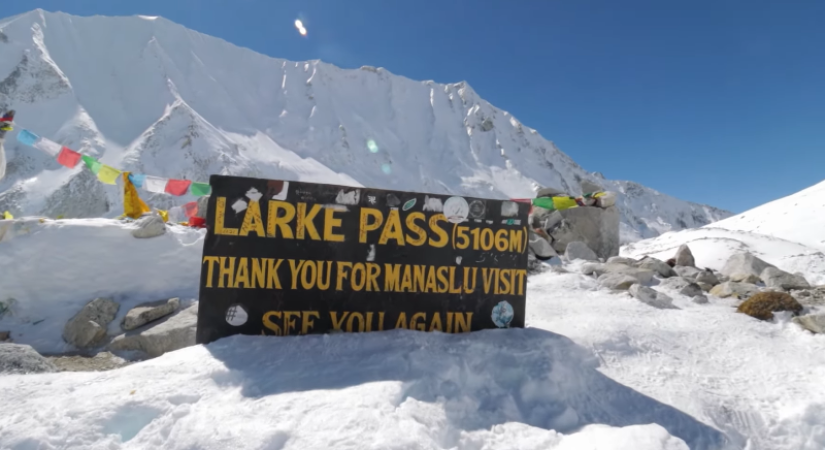
One of the defining highlights of the Manaslu Circuit Trek 14 Days is the crossing of Larkya La Pass at approximately 5,106 meters. The pass is the highest point of the journey and provides an unforgettable high-altitude experience surrounded by spectacular Himalayan scenery. The route toward and across Larkya La reveals panoramic views of Manaslu, Himlung Himal, Cheo Himal, Kang Guru, and other surrounding peaks before descending toward Bimthang. The dramatic change from the barren high-altitude landscape to the forests and greener valleys around Bimthang makes the descent particularly rewarding.
Although the Manaslu Circuit is considered a challenging Himalayan trek, the 14-day route is designed to provide a gradual ascent with an important acclimatization day in Samagaon before moving toward Samdo and Dharamsala. Because the trek reaches more than 5,000 meters, proper acclimatization, a steady walking pace, hydration, adequate rest, and awareness of symptoms of altitude sickness are essential. Trekking with an experienced and licensed guide provides additional support with route navigation, accommodation, local conditions, altitude awareness, and emergency decision-making.
Accommodation on the Manaslu Circuit Trek is mainly in local tea houses and mountain lodges, giving trekkers an opportunity to experience genuine Himalayan hospitality. Rooms are generally simple, with basic facilities that become more limited at higher elevations. Meals provide the energy needed for long trekking days and commonly include dal bhat, rice, vegetables, noodles, pasta, soups, potatoes, eggs, Tibetan bread, momos, tea, coffee, and other hot drinks. The combination of simple mountain accommodation, local food, and welcoming communities adds to the authentic character of the journey.
The Manaslu region is also valued for its relatively peaceful trails and rich natural environment. The Manaslu Conservation Area covers a wide range of elevations and habitats, supporting diverse vegetation and wildlife, while the route provides an impressive transition from lower Himalayan forests to high mountain landscapes.
The Authentic Manaslu Circuit Trek – 14 Days is therefore much more than a journey around an eight-thousander. It is an immersive Himalayan experience combining mountain scenery, remote villages, Buddhist culture, traditional lifestyles, dramatic river valleys, high-altitude landscapes, tea-house hospitality, and the unforgettable crossing of Larkya La Pass. For trekkers seeking a genuine alternative to Nepal’s busier Himalayan routes, this 14-day Manaslu adventure offers an exceptional opportunity to explore one of the country’s most spectacular and culturally rich trekking regions.
Why Choose the Authentic Manaslu Circuit Trek?
- Remote Himalayan Experience – Trek through one of Nepal’s less-crowded and naturally preserved mountain regions.
- Mount Manaslu (8,163 m) – Enjoy close and spectacular views of the world’s eighth-highest mountain.
- Authentic Mountain Villages – Experience traditional communities such as Namrung, Lho, Sama Gaon, Samdo and Bimthang.
- Rich Tibetan Buddhist Culture – Discover ancient monasteries, mani walls, prayer wheels, chortens and prayer flags.
- Diverse Landscapes – Walk from lush river valleys and forests to alpine meadows, glaciers and high Himalayan terrain.
- Nubri Valley – Explore the culturally distinctive upper valley with its strong Tibetan heritage and traditions.
- Sama Gaon – Experience the heart of the upper Manaslu region and its surrounding Himalayan landscapes.
- Larkya La Pass (5,100+ m) – Challenge yourself with one of the most spectacular high-pass crossings in Nepal.
- Manaslu Base Camp Area – Explore the dramatic high-altitude surroundings beneath Mount Manaslu.
- Birendra Lake & Pungyen Gompa – Add memorable cultural and natural highlights during acclimatization.
- Teahouse Experience – Stay in local mountain lodges and experience genuine Himalayan hospitality.
- Changing Mountain Scenery – Experience a remarkable transformation in climate, vegetation, architecture and culture throughout the trek.
- Less Crowded Alternative – Enjoy a more peaceful Himalayan journey compared with Nepal’s busiest classic trekking routes.
- A Complete Himalayan Adventure – Combine spectacular mountains, local culture, remote villages and a challenging high-pass crossing in one journey.
Authentic Manaslu Circuit Trek Outline
Day 01: Drive from Kathmandu to Soti Khola (5,50 m.)- 6 Hrs,
Day 02: Trek to Machha Khola (8,85 m.)- 6 Hrs,
Day 03: Machha Khola to Jagat (1,350 m.)- 6 Hrs,
Day 04: Jagat to Deng (1,860 m.)-7 Hrs,
Day 05: Trek to Namrung (2,625 m)-6 Hrs,
Day 06: Namrung to Lho-gaon (3,100 m.)-4 Hrs walk,
Day 07: Lhogaon to Samagaon (3,400 m.)-4 Hrs,
Day 08: Acclimatization day at Samagaon,
Day 09 : Samagaon to Samdo (3,690 m) 4 to 5 Hrs,
Day 10: Samdo to Dharmasala (4,480 m)- 5 Hrs,
Day 11: Cross Larkya La (Pass) (5135 m) then trek to Bimthang (3,59o m.)-7 Hrs,
Day 12: Bumthang to Dharapani (1,860 m.) 6 to 7 Hrs,
Day 13: Dharapani to Kathmandu via Besishahar- 8 Hrs,
Day 14: Depart way Home.
What's included?
- Transportation: Local public bus transportation for the trekking route; private transportation is available at an additional cost upon request.
- Meals During the Trek: Three meals daily, including breakfast, lunch, and dinner.
- Trekking Permits: All required permits, including the Manaslu Conservation Area Permit (MCAP), Annapurna Conservation Area Permit (ACAP), and TIMS card, as applicable.
- Professional Trekking Guide: A licensed, experienced Manaslu trekking guide with good English communication skills.
- Porter Service: Strong and experienced local porters provided on a 2:1 porter-to-client ratio, with each porter carrying the appropriate load.
- Emergency Support: Emergency helicopter evacuation coordination and management in case of a serious emergency, subject to weather conditions, availability, and travel insurance coverage.
What's not included?
- Travel Insurance: Personal travel insurance covering trekking, medical treatment, and emergency helicopter evacuation is not included.
- Airfare: International and domestic flights are not included unless specifically mentioned in your package.
- Personal Expenses: Personal costs such as alcoholic beverages, soft drinks, laundry, snacks, telephone calls, Wi-Fi, and other personal purchases are not included.
- Nepal Entry Visa: The Nepal tourist visa fee is not included and must be paid by the traveler.
- Meals in Kathmandu: Lunch and dinner in Kathmandu are not included unless specifically mentioned in the itinerary.
- Tips: Tips for the trekking guide and porters are not included; tipping is customary and greatly appreciated for good service.
Day by Day Itinerary
DAY
01
Drive from Kathmandu to Soti Khola (550 m.)
7 Hrs Lunch & Dinner Local Lodge
Your Manaslu Circuit Trek begins with a scenic drive from Kathmandu to Soti Khola, taking approximately 7 hours by local jeep or private vehicle. The journey initially follows a paved road before passing through Dhading Besi and continuing alongside the Trishuli River and Budhi Gandaki River. As the road leaves the main highway, the landscape becomes more rural and the road rougher, with views of green hills, terraced farmland, waterfalls, forests, and traditional villages along the way.
Arriving at Soti Khola, a peaceful riverside settlement surrounded by forested hills, you will check into a local teahouse for your overnight stay. Take the evening to relax, enjoy the tranquil mountain surroundings, and prepare for the first day of trekking into the Manaslu region the following morning.
DAY
02
Trek to Machha Khola (885 m.) About
6 Hrs Breakfast, Lunch & Dinner Lodge
Today, you begin your first full day of trekking on the Manaslu Circuit Trek, following a scenic trail through lush forests, terraced fields, traditional villages, and narrow valleys. The route gradually leads deeper into the Budhi Gandaki Valley, with changing landscapes, local settlements, traditional houses, and views of the surrounding hills. Along the way, you will experience the peaceful rural lifestyle of the communities living in this remote part of Nepal.
The trail becomes more adventurous as you continue toward Machha Khola, with several suspension bridges, winding paths, rocky sections, and cliffside trails along the Budhi Gandaki River. After completing the day's walk, you will arrive at Machha Khola, a small riverside settlement where you will spend the night at a local teahouse or lodge, ready for the next stage of your Manaslu adventure.
DAY
03
Machha Khola to Jagat (1350 m.)
About 6 Hrs Breakfast, Lunch & Dinner Local Tea House
Today, the Manaslu Circuit Trek continues from Machha Khola to Jagat, following the Budhi Gandaki River through a changing landscape of forests, rocky trails and mountain valleys. The trail passes through Thado Khola and Khorlabeshi before reaching Tatopani, meaning “hot water.” Here, you can take a refreshing break and, conditions permitting, enjoy the natural hot spring before continuing toward the higher sections of the trail.
From Tatopani, the route climbs through winding trails and crosses suspension bridges over the Budhi Gandaki before reaching the ridge above the river. The trail then continues through rugged landscapes and traditional settlements toward Jagat (1,350 m), an important village and checkpoint on the Manaslu Circuit. After arriving in Jagat, you will check into a local teahouse or lodge and rest for the night.
DAY
04
Jagat to Deng (1860 m.) Approximate
7 Hrs Breakfast, Lunch & Dinner Lodge
Today, the Manaslu Circuit Trek continues from Jagat toward the remote mountain village of Deng. The trail passes through Salleri and Sirdibas before following the Budhi Gandaki Valley toward Ghatte Khola. After crossing a long suspension bridge, we reach Philim, a beautiful Gurung village surrounded by green hills and farmland.
From Philim, the trail becomes more remote as we walk through bamboo forests, rocky paths, narrow valleys, and several suspension bridges. The changing landscape makes this section of the Manaslu trek especially scenic and rewarding. After several hours of walking, we arrive at Deng, a traditional Himalayan village where we spend the night in a local teahouse and enjoy the peaceful mountain surroundings.
DAY
05
Trek to Namrung (2625 m).
6 Hrs Walk Breakfast, Lunch & Dinner Tea House
The trail begins with an easy walk from Gap before crossing a bridge over the Budi Gandaki River and climbing gradually toward Rana. Beyond Rana, the route enters the wide western valley of the Gandaki River, surrounded by peaceful forests and impressive Himalayan landscapes.
Much of the trail winds through pine and rhododendron forests, passing colorful Buddhist mani walls, prayer stones, and traditional monasteries along the way. The scenery becomes increasingly spectacular as the valley opens up, with excellent views of Ganesh Himal, Siring Himal, and Hiunchuli.
Continuing through the valley, the route reaches the final uphill section before arriving at Namrung Village, an important stop on the Manaslu Circuit Trek. Namrung is known for its Tibetan-influenced culture, traditional stone houses, Buddhist heritage, and beautiful mountain surroundings. The village provides an ideal place to rest and enjoy the peaceful atmosphere of the Manaslu region.
DAY
06
Namrung to Lho Gaon (3,180 m) – Into the Upper Nubri Valley
4 Hrs Walk Breakfast, Lunch & Dinner Lodge
Leaving Namrung, the trail climbs gradually through the beautiful upper Budi Gandaki Valley, marking a clear transition into the higher and more culturally Tibetan-influenced landscape of the Manaslu Circuit Trek. The route passes through Banjam and continues toward Lihi, a traditional Nubri village surrounded by terraced barley fields, stone houses, Buddhist chortens, and colorful prayer flags.
Beyond Lihi, the trail follows a scenic section of forest and open hillside before reaching Sho, another traditional Himalayan settlement with a strong Tibetan Buddhist character. As the elevation increases, the landscape becomes more alpine and the views of the surrounding mountains become increasingly impressive. On clear days, you can enjoy spectacular views of Manaslu, Simnang Himal, Ganesh Himal, and Himalchuli along this section of the trek.
From Sho, the route continues through pine and fir forests, passing long mani walls and traditional Buddhist features before a final gradual ascent brings you to Lho Gaon at 3,180 meters. Lho is one of the most scenic villages on the Manaslu Circuit, with traditional stone houses, a large mani wall, and the impressive Ribung Gompa overlooking the settlement. The village also offers some of the first truly dramatic close-up views of Mount Manaslu, making it a memorable overnight stop in the upper Nubri Valley.
Overnight at a local teahouse or lodge in Lho Gaon.
DAY
07
Lho to Samagaon (3,530 m) – Through Shyala and the Upper Nubri Valley
4 Hrs Breakfast, Lunch & Dinner Lodge
Leaving Lho Village, the trail gradually climbs through pine and rhododendron forests toward the higher reaches of the Budi Gandaki Valley. The scenery changes noticeably as the dense forest begins to thin, revealing wider views of the Himalayan landscape. Along the route, prayer flags, chortens, mani walls, and traditional mountain settlements reflect the strong Tibetan Buddhist culture of the upper Nubri Valley.
After around two hours of walking, the trail reaches Shyala Village (approximately 3,500 m), one of the most scenic viewpoints on the Manaslu Circuit Trek. Shyala sits in a broad mountain amphitheater, surrounded by spectacular peaks including Mount Manaslu, Himalchuli, Ngadi Chuli (Peak 29), and other snow-covered summits. The open landscape and dramatic mountain backdrop make this one of the best sections of the trek for photography.
From Shyala, the route continues across open alpine terrain and passes the junction for Pungyen Gompa and Pungyen Glacier. Trekkers with extra time and energy can take this as a side excursion, while the main trail continues toward Samagaon. The valley gradually opens into broad yak pastures and fields as you approach the settlement.
A final easy section leads through mani walls, cultivated fields, and traditional stone houses before reaching Samagaon (3,530 m), the largest village in the upper Nubri Valley and an important acclimatization stop on the Manaslu Circuit Trek. With the towering Manaslu massif rising above the valley, Samagaon is an ideal place to spend the night and prepare for the higher elevations ahead.
DAY
08
Acclimatization day at Samagaon
Breakfast, Lunch & Dinner Lodge
Today is an important acclimatization day on the Manaslu Circuit Trek, giving your body time to adjust to the increasing altitude before continuing toward the Larkya La Pass. Rather than spending the entire day resting at the teahouse, you can take a gradual hike around Samagaon with your guide.
If you are feeling strong, we recommend walking to Birendra Tal, a beautiful glacial lake surrounded by the dramatic peaks and landscapes of the Manaslu region. The hike provides an excellent opportunity to enjoy the Himalayan scenery while keeping active at altitude. Your guide will advise whether this excursion is suitable based on your fitness, acclimatization, weather, and trail conditions.
For a shorter and more relaxed outing, you can visit Nun (Nyingma) Gompa, where you can experience the peaceful atmosphere and learn more about the Buddhist traditions and way of life of the local Himalayan communities.
After exploring the area, return to Samagaon for a well-earned rest and another night at the teahouse. This acclimatization day helps prepare you for the higher elevations ahead while allowing you to enjoy the unique culture and mountain scenery around Samagaon.
DAY
09
Samagaon to Samdo (3690 m)
4 to 5 Hrs Breakfast, Lunch & Dinner Tea House
Today, the Manaslu Circuit Trek continues deeper into the high Himalayas as you follow the scenic upper Budi Gandaki Valley toward Samdo. The trail crosses a bridge and gradually climbs through beautiful juniper vegetation, with spectacular views of the surrounding mountains.
Along the way, you’ll pass small teahouses and open alpine landscapes before reaching Samdo, a traditional Tibetan-influenced village near the Nepal–Tibet border. Overnight at a local teahouse in Samdo.
DAY
10
Samdo to Dharmasala (4,460 m) – The Final Approach to Larkya La
5 Hrs Breakfast, Lunch & Dinner Hotel
The morning begins with a gradual descent from Samdo, following the ancient trading trail toward Tibet. After crossing a small bridge over the upper Budhi Gandaki River, the route climbs steadily across open hillsides toward the remote remains of Larkya Bazaar. The surrounding landscape becomes increasingly barren, with rugged mountains replacing the greener scenery experienced earlier on the Manaslu Circuit.
Further ahead, the trail traverses a high, exposed valley where the vegetation becomes sparse and the air noticeably thinner. Along the way, you can enjoy increasingly close views of the Larkya Glacier, Manaslu North, and surrounding Himalayan peaks. There are no permanent settlements between Samdo and Dharmasala, giving this section a particularly remote and adventurous character.
By the afternoon, the trail reaches Dharmasala, also known as Larkya Phedi, at approximately 4,460 meters. This is the final overnight stop before the demanding crossing of Larkya La Pass (5,106 m). Accommodation is basic, so the evening is best spent eating a warm meal, drinking plenty of water, organizing your daypack, and resting early for the long and challenging pass-crossing ahead.
DAY
11
Cross Larkya La (Pass) (5135 m) then trek to Bimthang (3590 m)
7 Hrs Breakfast, Lunch & Dinner Tea House
The most challenging and rewarding day of the Manaslu Circuit Trek begins before dawn at Dharmasala. After a very early breakfast, usually around 3:00–3:30 AM, you set off with headlamps into the cold darkness. The first hours involve a slow, steady climb across rocky and glacial terrain toward Larkya La Pass. The altitude makes every step demanding, so the key is to maintain a comfortable pace, take short breaks, and stay together with your guide and group.
As daylight reaches the mountains, the surrounding Himalayan panorama gradually appears. Reaching the top of Larkya La at around 5,135 m is an unforgettable moment, with colorful prayer flags marking the pass and spectacular views stretching across the high Himalayas. On a clear day, you can see Himlung Himal, Cheo Himal, Gyaji Kang, Kang Guru, Ratna Chuli, Nemjung, and Annapurna II, while the Manaslu range remains visible toward the east. The combination of thin air, freezing morning temperatures, strong winds, and the huge mountain panorama makes standing at the pass both physically demanding and deeply rewarding.
The character of the trek changes completely after the pass. A long and steep descent begins over loose rocks, moraine, and possible snow or icy sections, requiring careful footing and making this part particularly tiring for the knees. The trail gradually drops into a wider valley, where the landscape becomes more welcoming and greener as you approach Bimthang. After approximately 8–10 hours of trekking, you reach Bimthang at about 3,590 m, feeling the relief of having crossed the highest point of the circuit. Here, the spectacular west face of Manaslu, Himlung Himal, and surrounding peaks provide a magnificent reward at the end of one of the biggest days of your Himalayan adventure.
DAY
12
Bumthang to Dharapani (1860 m.)
6 to 7 Hrs Breakfast, Lunch & Dinner Tea House
Today, the trail continues from Bumthang toward Dharapani, following forested hills, mountain streams, and peaceful Himalayan villages. The changing landscape offers views of the surrounding mountains while you gradually make your way through the valley.
Along the route, you’ll encounter traditional settlements, prayer flags, and local mountain life before reaching Dharapani. Once there, you can relax at the teahouse and prepare for the next stage of your Himalayan trek.
DAY
13
Dharapani to Kathmandu via Besishahar
8 Hrs Breakfast Hotel in Kathmandu
After breakfast, drive from Dharapani to Besisahar by jeep, following the Marsyangdi River through mountain villages, waterfalls, and terraced hillsides. The journey takes around 3–5 hours, depending on road conditions.
From Besisahar, continue by private vehicle toward Kathmandu, passing through Dumre and Mugling. The drive takes approximately 6–7 hours, bringing you back to Kathmandu in the late afternoon or evening.
Your Manaslu Circuit Trek officially comes to an end as you arrive in Kathmandu, with time to relax and celebrate the completion of your Himalayan adventure.
Departure Dates
Sorry, No fixed departure dates are listed to group join, please request private trip
"Explore the breathtaking beauty of Manaslu with a freelance guide in 2023. Experience a once-in-a-lifetime trekking adventure in Nepal with personalized service and flexible itinerary."
Essential Information
How much Manaslu trek cost?
The cost of the Manaslu Base Trek package can vary depending on the number of days, the route taken, and the services included. On average, the cost of the Manaslu Base Trek package can be around $1,10-$1500 for a 15-day trek. Prices may vary depending on the season, the provider, and the services included in the package.
What is the shortest time & longest time to complete Manaslu trek?
The shortest time to complete the Manaslu trek is usually around 10-12 days, while the longest time can be up to 20 days. However, the duration of the trek will depend on the route you take, the number of rest days, and the weather conditions. It is generally recommended to give yourself at least 14 days to complete the Manaslu trek to ensure you have enough time to adjust to the altitude and enjoy the scenery.
How to find best Manaslu Guide?
Finding the best guide for the Manaslu trek can enhance your overall experience and ensure a safe and successful journey. Here are some tips to help you find the right guide:
Research and compare different guides and trekking companies: Look for recommendations from friends, read reviews and testimonials online, and compare the services, experience, and credentials of different guides and companies.
Consider the guide's qualifications and experience: Look for guides who are licensed and insured, and who have a good track record of leading successful treks in the Manaslu region.
Check references: Ask for references from past clients and contact them to get their feedback on the guide's performance.
Evaluate communication skills: Make sure the guide speaks a language you understand and is able to effectively communicate with you and answer any questions you may have.
Santosh Gauli is a freelance guide in Nepal and you can consider him as a potential guide for your Manaslu trek.
Remember to communicate your expectations, interests, and any specific requirements to the guide before you start the trek to ensure that you have the best possible experience.
How much Manaslu permit cost?
As of 2021, the cost of the Manaslu trek permit is around US$70 per person for the first 7 days and US$10 per person per additional day. The permit fee is subject to change and it is recommended to check the latest fees and regulations with the Nepalese immigration office or a trekking agency before starting your trek.
Please note that the Manaslu trek permit fee is only one of several costs associated with trekking in the region. Other costs may include gear and equipment, transportation, accommodation, food, and insurance. It is recommended to budget accordingly and to consider all potential costs before embarking on the trek.
Can I go to Manaslu trek myself?
As you know that the Manaslu region is restricted area trek, where you should hire Guide or Porter then per the rules of Nepal Tourism Board. The geographical features of Manaslu trek are quite dangerous as it has deep gorge. Landslide area, very narrow path and many small alternative paths so having a guide are more secure, and less risk while you walking.
Where is Manaslu trekking located?
The Manaslu trekking route is located in the Gorkha District of Nepal. It stretches for 177 kilometers (110 miles) and skirts around the Manaslu massif , crossing over the pass down to Annapurna. The trek is popular due to its stunning scenery, intimate encounters with local people and their ancient cultures, and a breathtaking view of the eighth-highest mountain in the world.
Useful tips before heading to Manaslu trekking
Here are some useful tips for before heading to the Manaslu trek:
- Make sure you have the right clothing and equipment for the trek. You will need a good quality waterproof jacket, insulated layers, and a warm hat, gloves, and boots.
- Make sure you have enough food and water for the duration of your trek.
- Get acclimatized to the altitude before you begin the trek. Spend a few days in the area before starting the trek to give your body time to adjust.
- Make sure your insurance covers you for trekking in the mountains.
- Check the latest weather report and be aware of any potential hazards or risks.
- Make sure you have the correct permits and documents before you start your trek.
- Pack light and be prepared to carry your own gear.
- Familiarize yourself with the route and plan your rest days in advance.
- Be aware of the culture and customs of the local people and respect their way of life.
- Research the area and be aware of any potential problems, such as landslide risk.
Why manaslu trek is restricted area trek?
Manaslu trek is considered a restricted area trek because it is located in the Manaslu Conservation Area, which is a protected wilderness region that requires special permits to enter. This is to help preserve the natural environment and cultural heritage of the region, as well as to regulate the number of visitors in order to minimize the impact of tourism on the local community and ecosystem. Additionally, the region is remote and has limited infrastructure, making it important to have a guide who is familiar with the terrain and can help ensure the safety of trekkers.
Where is the starting and ending place of Manaslu trekking?
The starting point of the Manaslu trekking route is Arughat, located in the Gorkha district of Nepal, and the ending point is Besisahar, located in the Lamjung district. The trek is usually done in a clockwise direction, beginning at Arughat and ending at Besisahar. The total distance of the trek is 177 kilometres (110 miles).
How difficult is Manaslu trekking?
The Manaslu Trek is considered to be a strenuous trek due to the steep inclines and declines, high altitudes, and long distances that need to be covered. Additionally, trekkers should be prepared for the unpredictable weather and the potential for landslides. However, the trek is very rewarding and the views are spectacular. It is recommended to be in good physical condition and have some prior trekking experience before attempting the Manaslu Trek.
How much is private jeep from Kathmandu to Aarughat?
The cost of a private jeep from Kathmandu to Aarughat is typically around 15,000 NPR (approximately $140 USD). The exact cost will depend on the type of vehicle, the number of passengers, and the season.
Cancellation Note
- Free cancellation up to 60 days prior departure
- 30% of the total cost of the trip will be charged if cancelled between 60 to 30 days prior to departure date
- 60% of total cost of the trip will be charged if cancelled in between 30 to 14 days prior to departure date.
Web design & Developed by Wildstone Solution
