

POKHARA-NAYAPUL-THIKHEDUNGA-ULLERI-GHOREPANI-POONHILL-BANTHATI-NAYAPUL-POKHARA
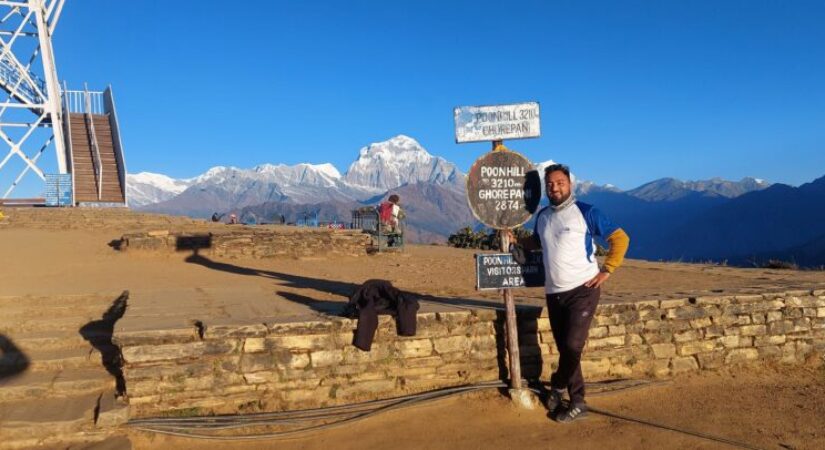
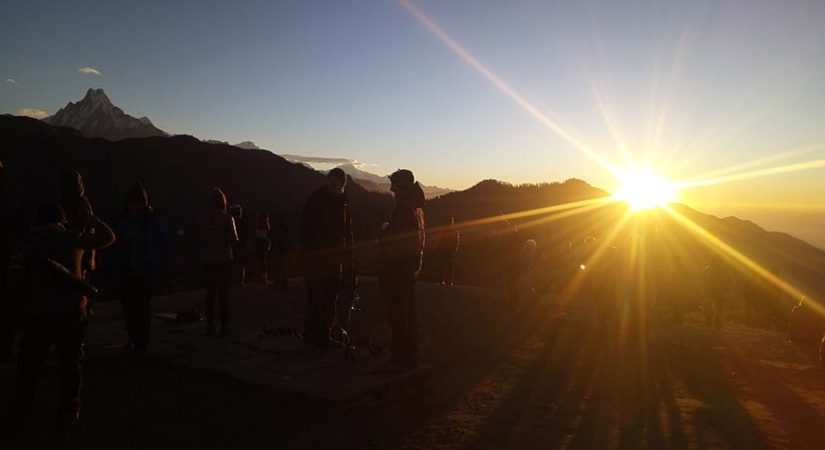
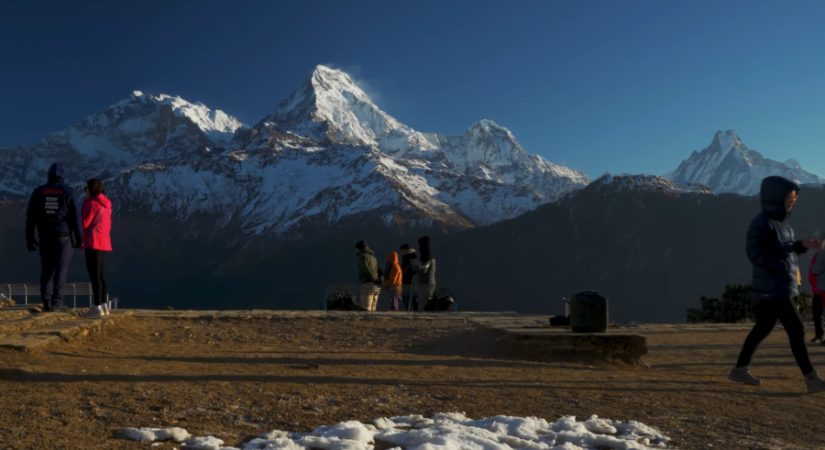


Why Poon Hill Trek 3 Days from Pokhara?
- Stunning sunrise and sunset views over the spectacular Himalayan mountain range.
- A shorter and more manageable trek for those with limited time.
- Accessible for beginner trekkers who want to experience trekking in Nepal.
- Beautiful natural scenery along the trekking trail, including rhododendron forests and waterfalls.
- Opportunity to experience local culture and interact with locals in traditional villages.
- Affordable Poon Hill Trek cost compared to longer, more challenging treks in the region.
- The trek is open, except during heavy snowfall in winter.
- Fewer crowds and quieter trails than some of the more popular treks in the region.
- A chance to challenge yourself physically and mentally in a beautiful natural setting.
- The sense of achievement and satisfaction that comes with completing a trek in the Himalayas.
Poon Hill Trek 3-Day Trip Facts:
- Trek Duration: 3 days
- Trekking Distance: Approximately 23–25 km, depending on the exact route
- Starting Point: Nayapul, from Pokhara
- Highest Point: Poon Hill – 3,210 m
- Main Stops: Ulleri, Ghorepani, and Poon Hill
- Trek Difficulty: Easy to moderate
- Daily Walking: Approximately 4–6 hours
- Accommodation: Local tea houses and guesthouses
- Food: Nepali, Indian, Chinese, and Western meals are available
- Best Seasons: Spring (March–May) and autumn (September–November)
- Guide & Permits: Required according to current trekking regulations
- Starting City: Pokhara
- Main Highlight: Sunrise and panoramic Himalayan views from Poon Hill
𝗣𝗼𝗼𝗻 𝗛𝗶𝗹𝗹 𝗧𝗿𝗲𝗸 𝗢𝘃𝗲𝗿𝘃𝗶𝗲𝘄:
The Poon Hill Trek 3 Days is popular and relatively easy in the beautiful Annapurna region. It is named after Poon Hill, a viewpoint at an altitude of 3,210 meters (10,531 feet) with breathtaking Himalayan views. The trek is known for its scenic beauty, cultural diversity, and stunning mountain views, making it an excellent choice for beginner trekkers and travelers with limited time.
The trek typically starts from Nayapul and follows a well-trodden path through charming villages, lush forests, and rhododendron-filled hillsides. Along the way, trekkers pass through traditional Gurung and Magar villages, experiencing local culture, traditions, and warm hospitality. The best time for the 3-Day Poon Hill Trek is from March to May and September to November, when the weather is generally dry and the skies are clear, providing excellent mountain views. The Short Poon Hill Trek itinerary also includes a visit to Ghorepani, a beautiful village known for its charming atmosphere and spectacular scenery.
The trek is easily accessible from Kathmandu and Pokhara, with transportation options including buses, flights, jeeps, and taxis to Nayapul (1,075 m). For budget-conscious travelers, the Poon Hill Trek is an affordable option with relatively low costs for accommodation, food, and transportation. The highlight is reaching Poon Hill at sunrise, where the golden Himalayan peaks create an unforgettable experience and make this short Nepal trekking adventure truly special.
How to Prepare for the Poon Hill Trek 3 Days:
Preparing for the 3-Day Poon Hill Trek starts with building basic fitness and endurance. Regular walking, hiking, stair climbing, or light cardio in the weeks before the trek can help you manage the daily uphill and downhill sections more comfortably.
Pack comfortable trekking shoes, warm layers, a waterproof jacket, a small backpack, trekking poles, sunscreen, sunglasses, and a reusable water bottle. Weather in the Annapurna region can change quickly, so carrying suitable layers and rain protection is important.
It is also helpful to arrange your permits, transportation, accommodation, and guide in advance. Carrying some snacks and electrolytes can provide extra energy during the trek. With proper preparation and sensible pacing, the 3-Day Poon Hill Trek is a manageable, rewarding, and unforgettable Himalayan trekking experience.
What Is the Best Time to Trek Poon Hill?
The best time to trek Poon Hill is spring (March to May) and autumn (September to November). These months generally offer stable weather, clear mountain views, and comfortable trekking conditions. March to April is especially beautiful when rhododendrons bloom across the hills, while October and November often bring excellent visibility of the Annapurna range.
Winter (December to February) brings colder temperatures and occasional snow, but the trails are quieter, and mountain views can be excellent on clear days. (June to August) is the least favorable period, with frequent rain, slippery trails, clouds, and possible landslides. For the best Poon Hill trekking experience, October–November and March–April are my top recommendations.
Why Choose Us for the Poon Hill 3 Days?
- Experienced Local Guides – Trek with knowledgeable local guides who understand the Poon Hill route, weather, villages, and trail conditions.
- Well-Planned 3-Day Itinerary – A carefully designed 3-Day Poon Hill Trek itinerary covering the key highlights while keeping the trekking pace realistic.
- Private and Flexible Trekking – Customize your departure, walking pace, transportation, and trekking arrangements according to your needs.
- Local Knowledge and Support – Get practical assistance with permits, transportation, accommodation, meals, and other trekking arrangements.
- Comfortable Tea House Stays – Stay in selected local lodges and tea houses along the Poon Hill trekking route.
- Pokhara Transportation Included – Enjoy convenient transportation between Pokhara and the trekking trailhead.
- Clear and Transparent Pricing – Know what is included in your Poon Hill Trek package before you start your trek, with no unnecessary surprises.
- Personalized Service – Receive direct personalized support before and during your trek rather than being treated as just another group member.
- Safety-Focused Trekking – Your guide monitors trail conditions, weather, and your overall trekking experience throughout the journey.
- Local Experience, Not Just a Trek – Experience traditional Gurung and Magar villages, local culture, mountain scenery, and the famous Poon Hill sunrise for a truly memorable Nepal trekking experience.
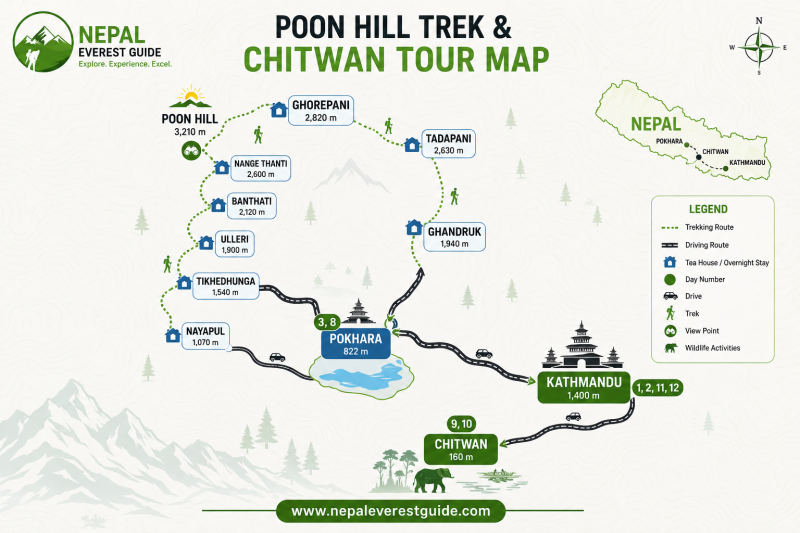
Poon Hill Trek 3 Days from Pokhara Outline
Day 1: Pokhara – Nayapul – Ulleri: (8.5 km / 5–6 hours).
Day 2: Ulleri – Ghorepani: \ (9 km / 4–5 hours),
Day 3: Ghorepani – Poon Hill – Ulleri – Pokhara: (6 km / 3–4 hours trekking).
What's included?
- Round-trip transportation between Pokhara and Nayapul
- All necessary trekking permits and fees
- Teahouse or lodge accommodation along the trekking route
- Three meals a day – breakfast, lunch, and dinner
- Experienced & Licensed Trekking Guide
- 𝗚𝘂𝗶𝗱𝗲’𝘀 𝗜𝗻𝘀𝘂𝗿𝗮𝗻𝗰𝗲, 𝗠𝗲𝗮𝗹𝘀, 𝗔𝗰𝗰𝗼𝗺𝗺𝗼𝗱𝗮𝘁𝗶𝗼𝗻 & 𝗧𝗿𝗲𝗸𝗸𝗶𝗻𝗴 𝗦𝘂𝗽𝗽𝗼𝗿𝘁 𝗜𝗻𝗰𝗹𝘂𝗱𝗲𝗱.
- First aid kit and basic medical supplies
What's not included?
- Personal trekking equipment such as a sleeping bag, trekking poles, and a headlamp
- Extra meals and drinks beyond the standard three meals a day
- Snacks, energy bars, and electrolyte supplements
- Travel insurance, including evacuation insurance
- Tips for the trekking guide
- Additional activities such as sightseeing tours in Pokhara or a visit to a hot spring after the trek.
Day by Day Itinerary
DAY
1
Pokhara – Nayapul – Birethanti – Ulleri (8.5 km)
5-6 hours Breakfast, Lunch & Dinner Guest House
After breakfast, we drive from Pokhara to Nayapul, about one hour away, and begin our Poon Hill Trek. From Nayapul, we walk through Birethanti and continue along the scenic Modi Khola valley, passing suspension bridges, terraced fields, and traditional Gurung and Magar villages.
The route gradually climbs through green hills and peaceful mountain settlements before reaching Ulleri (2,050 m). The final section includes the famous stone staircase, making this a rewarding first day of trekking. On a clear day, you may catch your first impressive views of Annapurna South (7,219 m) and Hiunchuli (6,441 m).
After reaching Ulleri, we check into a local tea house, enjoy a warm meal, and relax in the mountain surroundings. Tomorrow, we continue toward Ghorepani, getting closer to the famous Poon Hill sunrise viewpoint.
DAY
2
Ulleri to Ghorepani - 9 km
4-5 Hours Breakfast, Lunch & Dinner Guest House
Today, we leave Ulleri (2,050 m) after breakfast and begin our walk toward Ghorepani (2,750 m). The route takes us through beautiful rhododendron and oak forests, with stone steps, small streams, and quiet mountain settlements along the way. In spring, the Rhododendrons add bright colors to the forest.
As we gain altitude, the scenery gradually opens up, with possible views of the Annapurna range on clear days. We will pass through Banthanti and Nangge Thanti before reaching Ghorepani, a beautiful mountain village and the gateway to tomorrow’s Poon Hill sunrise.
Once we arrive, we check into our tea house, enjoy a warm meal, and have a good rest. We will start early the next morning for the famous Poon Hill viewpoint at 3,210 m.
DAY
3
Ghorepani to Poon Hill Than Trek down to Ulleri & Drive to Pokhara
7 Hours Breakfast, Lunch & Dinner Guest house
We will start early from Ghorepani and hike up to Poon Hill (3,210 m) for the sunrise and mountain views. After enjoying the viewpoint, we return to Ghorepani for breakfast and begin our descent, retracing the same trail through Nangethanti and Banthanti before reaching Ulleri (2,050 m).
From Ulleri, we take local public transportation, depending on availability, and begin the drive toward Pokhara. The road passes through Tikhedhunga, Hille, Sudame, Ramghai, Birethanti, and Nayapul before continuing to Pokhara.
This final section gives you a different perspective of the villages and valleys we passed during the trek. After reaching Pokhara, our Poon Hill Trek officially comes to an end, with plenty of memories from the Annapurna region.
Departure Dates
Sorry, No fixed departure dates are listed to group join, please request private trip
For an authentic Poon Hill Trek experience, choose a local licensed guide who knows the region, culture, trails, and mountain views. I customize your trek according to your time and budget. Groups of 5+ receive special rates, while first-time trekkers get 15% off.
Reviews
Devendra Adhikari
Nepal
Poon hill trek
2024We had a fantastic trekking experience with the Safe Holiday Adventure team. They provided full support throughout the trip and took care of everything we needed. The staff were kind, responsive, and always ready to help. Thank you so much for the wonderful service!
Alejandro Roman
Canada
Memorable Hike: What Made My 3-Day Poon Hill Trek an Exceptional Expedition
2022, DecemberWow a best trip Ever!!!
The three-day Poon Hill trek with Ram was an unforgettable experience that left an indelible impression on me. The landscape was a stunning combination of verdant gardens, dense forests, and breathtaking alpine views that took my breath away. However, what truly set the journey apart was Ram’s exemplary leadership skills. His extensive experience put everyone at ease, and his familiarity with the mountains was second to none. He was always ready with detailed responses to our queries, which was impressive. His compassion and friendly demeanor made the trip all the more enjoyable, and we were grateful to have him as our guide.
Alejandro Roman
Dhat Bhat Power 24 Hour-NEPAL!!!
Essential Information
Poon Hill Trek Weather:
The Poon Hill Trek with the season and altitude. During spring (March to May), daytime temperatures are generally around 10°C to 20°C, while early mornings and evenings can drop to about 2°C to 8°C. Autumn (September to November) is cooler and usually clearer, with daytime temperatures around 10°C to 18°C and early mornings often between 0°C and 8°C.
In winter (December to February), Poon Hill can be quite cold, particularly during the pre-dawn hike. Daytime temperatures may range from 5°C to 12°C, while early mornings can fall below 0°C, with snowfall possible around the higher sections. During the monsoon season (June to August), daytime temperatures are roughly 18°C to 24°C, but rain, clouds, and wet trails are common.
For the sunrise viewpoint, start with warm layers, gloves, and a hat, even during spring and autumn. A waterproof jacket is important during the rainy months, while winter trekkers should carry warmer insulated clothing. Weather can change quickly in the mountains, so these temperatures should be treated as approximate rather than exact.
Poon Hill Trek Accommodation: Tea Houses and Lodges
Accommodation on the Poon Hill Trek is mainly available in local tea houses and mountain lodges in villages such as Ghorepani and Tadapani. Rooms are usually simple, clean, and comfortable, with twin beds, blankets, and shared bathrooms. Most tea houses provide hot meals, hot drinks, and charging facilities, while Wi-Fi and hot showers may be available for an additional fee.
During the busy spring and autumn seasons, accommodation can fill quickly, so booking in advance is recommended. Staying in local tea houses also gives you a chance to experience Nepali hospitality, traditional food, and mountain village life along the Poon Hill trekking route.
Poon Hill Trek Difficulty: Is This Trek Right for You?
The Poon Hill Trek is considered a moderate trek with some challenging uphill sections. The trail is well-maintained and relatively easy to follow, but there are some steep ascents and descents, especially on the second day of the trek.
The highest point on the trek is Poon Hill, at an altitude of 3,210 meters, and some trekkers may experience mild altitude sickness symptoms such as headache or fatigue.
However, with proper preparation and acclimatization, most trekkers should be able to complete the trek without any major issues.
It is recommended to have a moderate level of fitness and good endurance for a comfortable trekking experience.
Poon Hill Trek Permits and Entry Requirements:
The Poon Hill Trek passes through the Annapurna Conservation Area, so trekkers need the required conservation-area permit before starting the trek. A TIMS card may also be required depending on the current trekking regulations and whether you trek independently or with a registered agency.
If you book your trek with Travel/Trekking Company, we can arrange the required permits and paperwork before you begin the trek, so you can focus on enjoying the trail without dealing with the permit process yourself.
What kind of Trekking Arrangements do We Provide?
Nepal Everest Guide provides a comprehensive range of trekking arrangements to ensure that you have a comfortable and enjoyable trip. Here are some of the things that we provide:
- Experienced trekking guides: Our experienced and knowledgeable trekking guides will accompany you throughout your trek, providing valuable insights into the local culture, history, and geography of the area.
- Accommodation: We provide comfortable and clean accommodation in tea houses and lodges along the trekking route.
- Transportation: We arrange transportation to and from the trekking trailhead, either by private vehicle or public transportation.
- Permits and paperwork: We take care of obtaining all necessary trekking permits and paperwork, including the Annapurna Conservation Area Permit (ACAP) and the Trekkers’ Information Management System (TIMS) card.
- Meals and water: We provide three nutritious meals a day along with boiled or purified water to ensure that you stay healthy and well-nourished throughout your trek.
- Safety equipment: We provide essential safety equipment such as first aid kits, oxygen cylinders, and communication devices.
- Porter service: We can arrange for porter service to carry your luggage and lighten your load.
- At Nepal Everest Guide, we strive to make your trekking experience as comfortable and enjoyable as possible. We take care of all the details, leaving you free to focus on the stunning scenery and amazing cultural experiences that the Poon Hill trek has to offer.
Poon Hill Trek Packing list:
When packing for the Poon Hill Trek, it's important to bring the essentials while keeping your pack as light as possible. Some key items to consider include:
- Good quality hiking boots
- Warm layers for cold nights
- Lightweight, quick-dry clothing for hiking
- Rain gear
- Sun protection, including a hat and sunscreen
- First aid kit
- Headlamp or flashlight
- Trekking poles
- Water bottle and water purification tablets
- Personal toiletries, including hand sanitizer and wet wipes. Keep in mind that you'll be staying in tea houses, so you won't need to carry a tent or sleeping bag. Packing smartly will ensure you have everything you need without weighing you down on the trail.
Poon Hill Trek Solo vs. Guided Trek: Which Is Better?
Choosing between a solo and guided Poon Hill Trek depends on your trekking experience, budget, and preferred travel style. Poon Hill is a relatively accessible trek with established trails and teahouse accommodation, making it suitable for independent trekkers as well as those who prefer professional support.
A solo trek offers greater flexibility and independence, but you are responsible for planning your route, arranging accommodation, managing permits and handling unexpected situations along the trail.
A guided Poon Hill Trek provides local expertise, route assistance, cultural insights and support with daily logistics. It can be especially convenient for first-time trekkers, families and travelers who prefer a more organized and relaxed experience.
For most first-time visitors to Nepal, a guided Poon Hill Trek is a convenient choice, while experienced independent trekkers may prefer the flexibility of traveling without a guide.
How to Get to Nayapul for Poon Hill Trek?
Nayapul is the starting point for the Poon Hill trek, and it is located about an hour's drive from Pokhara, a popular city in Nepal. Here are some ways to get to Nayapul for the Poon Hill trek:
- Private Car or Jeep: You can hire a private car or jeep from Pokhara to Nayapul. This is a convenient option as you can choose your own pick-up time and the car will drop you off at the trekking starting point.
- Public Bus: You can take a public bus from the Pokhara bus station to Nayapul. Buses depart frequently, and this is a budget-friendly option.
- Shared Jeep: You can also take a shared jeep from Pokhara to Nayapul. This is a cost-effective option as the fare is shared among the passengers.
It is recommended to book transportation in advance, especially during peak trekking seasons. Additionally, it's important to note that the road to Nayapul is bumpy and winding, so be prepared for a rough ride.
Make Sure you are Safe during the 3 days poon hill Trek
Trekking in the mountains can be a wonderful experience, but it is important to take safety precautions to ensure that you have a safe and enjoyable journey. Here are some tips to help you stay safe during your 3-day Poon Hill trek:
- Hire a Guide: It is always recommended to hire a guide who is familiar with the trail and can help you in case of an emergency.
- Acclimatize Properly: Altitude sickness can be a real danger, especially if you are not used to trekking at high altitudes. It is important to take your time and acclimatize properly before attempting to climb higher.
- Stay Hydrated: Dehydration can be a problem at high altitudes, so make sure you drink plenty of water throughout your trek.
- Dress Appropriately: The weather in the mountains can be unpredictable, so make sure you bring appropriate clothing for all types of weather conditions.
- Pack a First Aid Kit: It is always a good idea to pack a small first aid kit with essentials such as bandages, pain relievers, and any necessary medications.
- Be Aware of the Trail: Make sure you are aware of the trail and any potential hazards such as steep drops, loose rocks, or slippery surfaces.
- Stay on the Trail: Always stay on the marked trail to avoid getting lost or injured.
- Carry Enough Food: Make sure you carry enough food for your trek. Eating well can help you stay energized and avoid fatigue.
- Stay Connected: It is a good idea to bring a mobile phone and keep it charged in case of an emergency.
- Respect the Mountains: Remember that the mountains are a fragile environment and should be treated with respect. Do not leave any trash behind and do not damage any vegetation or wildlife.
Total ascent on the Poon Hill trek
The total ascent on the Poon Hill trek varies depending on the starting point and the route taken, but it typically ranges between 3,500 and 4,000 meters (11,500-13,100 feet). The ascent is spread out over the course of the trek, with daily gains of around 1,000 meters (3,280 feet) in elevation. The steepest part of the ascent is the climb up to Ulleri, which involves a staircase of over 3,000 steps. It's important to take your time and acclimatize properly to avoid altitude sickness, which can be a serious concern at higher elevations.
Cost of the Poon Hill trek
The cost of the Poon Hill trek can vary depending on various factors such as the duration of the trek, the level of accommodation, the mode of transportation, and the inclusion of a guide and porter services.
On average, a 3-day Poon Hill trek with basic accommodation and meals can cost around $200-$250 per person. However, the cost can increase up to $400-$500 per person with the inclusion of a guide, porter, better accommodation, and transportation.
It is important to note that the cost may also vary based on the season and the travel agency you choose to go with.
Views on the Poon Hill trek
The views on the Poon Hill trek are breathtaking and among the best in the world. Trekkers will see stunning panoramic views of the Himalayan mountain range, including Annapurna South, Annapurna I, Dhaulagiri, Machhapuchhre (Fishtail), and Hiunchuli. The sunrise view from Poon Hill is particularly famous and is considered one of the best in the world. Along the way, trekkers will also see lush forests, terraced fields, and traditional Nepalese villages. Overall, the Poon Hill trek is a spectacular journey through some of the most beautiful landscapes in Nepal.
Is it possible to do the Poon Hill trek in the monsoon season?
While it is possible to do the Poon Hill trek during the monsoon season, which typically runs from June to September, it is not recommended due to the heavy rainfall and increased risk of landslides and flooding. The trail can become very slippery and muddy, making it more difficult and dangerous to navigate. Additionally, the clouds and fog may obstruct the panoramic views that are one of the highlights of the trek. It is generally recommended to do the Poon Hill trek during the dry season, which runs from October to May, for the best experience.
Poon hill Trek FAQs
What is the Poon Hill trek?
A: The Poon Hill trek is a short and relatively easy trek in the Annapurna region of Nepal, known for its stunning mountain views and unique cultural experiences.
How long does the Poon Hill trek take?
A: The Poon Hill trek can be completed in as little as 3 days, but many people opt for a 4-5 day itinerary to allow for more time to explore.
What is the difficulty level of the Poon Hill trek?
A: The Poon Hill trek is considered a moderate trek, suitable for people with average fitness levels and some hiking experience.
What is the best time of year to do the Poon Hill trek?
A: The best time to do the Poon Hill trek is from September to November and from March to May, when the weather is clear and dry.
Is it possible to do the Poon Hill trek in the monsoon season?
A: While it is possible to do the Poon Hill trek in the monsoon season (June to August), the trails can be muddy and slippery, and mountain views may be obstructed by clouds.
Do I need a permit to trek to Poon Hill?
A: Yes, you need to obtain an Annapurna Conservation Area Permit (ACAP) and a Trekkers’ Information Management System (TIMS) card to trek to Poon Hill.
How much does the Poon Hill trek cost?
A: The cost of the Poon Hill trek varies depending on factors such as the duration of the trek, the type of accommodation, and whether you hire a guide or porter. On average, a 3-5 day trek can cost anywhere from $150 to $500.
Do I need a guide for the Poon Hill trek?
A: It is not mandatory to hire a guide for the Poon Hill trek, but it is recommended, especially for first-time trekkers. A guide can provide valuable assistance with navigation, safety, and cultural insights.
Can I trek to Poon Hill without a porter?
A: Yes, you can trek to Poon Hill without a porter, but it is important to be mindful of your physical capabilities and pack lightly.
What should I pack for the Poon Hill trek?
A: Some essential items to pack for the Poon Hill trek include a good quality trekking backpack, sturdy hiking shoes, warm clothing, a sleeping bag, a water bottle, and sunscreen.
What kind of accommodation is available on the Poon Hill trek?
A: There are several tea houses and lodges along the Poon Hill trek route, offering basic but comfortable accommodation and meals.
How do I get to the starting point of the Poon Hill trek?
A: The starting point of the Poon Hill trek is Nayapul, which can be reached by a 1-2 hour drive from Pokhara.
Is altitude sickness a concern on the Poon Hill trek?
A: Altitude sickness is not a major concern on the Poon Hill trek, as the maximum altitude reached is only around 3,210 meters. However, it is still important to be aware of the symptoms and take precautions.
Are there any side trips or extensions I can do on the Poon Hill trek?
A: Yes, you can do side trips to places like Tadapani and Ghandruk, or extend your trek to include destinations like Annapurna Base Camp or the Khopra Danda trek.
Cancellation Note
- Free cancellation up to 60 days prior departure
- 30% of the total cost of the trip will be charged if cancelled between 60 to 30 days prior to departure date
- 60% of total cost of the trip will be charged if cancelled in between 30 to 14 days prior to departure date.
Web design & Developed by Wildstone Solution
