

KATHMANDU - DHUNCHE - LANGTANG VALLEY - KANJIN - KANJIN GOMPA - KELDANG - TENTEDCAMP - KATHMANDU

Why Langtang Ganjala Pass Trek?
- Get unique walking experiences through Lush Rhododendron forest and picturesque water falls,
- Visit Langtang villages of Tamang ethnicity, where you get to see Tibetan influenced Interesting cultures,
- Don’t miss to see the traditional farmlands and incredible Terrace field.
- You may also see some rare wild animals and beautiful faunas,
- Trek up to Ganjala pass situated at 5,122 m as it is a challenging high pass of Langtang trek,
- Enjoy such an implausible High Mountain view of Mount Langtang, Langtang Lirung, Shisha Pangma, Dorje Lakpa, Naya Kangma, Yala Peak, and Kangchenpo around Langtang Himalayan range,
- Go and visit the cultural and historical Milarepa cave at Tarkeghyang and Beautiful kyanjin Gompa.
Langtang Ganjala Pass Trek Overview:
The Langtang Ganjala Pass Trek is an epic journey through the heart of Langtang National Park in Nepal. The trek starts in the village of Syabrubesi, located in the Rasuwa District of Nepal. From here, the trail follows the Langtang River, passing through lush forests, picturesque meadows, and traditional Tamang villages.
As you make your way deeper into the park, the landscape becomes increasingly rugged and remote, with towering peaks and glaciers coming into view. One of the highlights of the trek is the Ganja La Pass, which offers panoramic views of the surrounding mountains. The pass is located at an altitude of 5,122 meters (16,798 ft) and requires a challenging climb, but the effort is well worth it for the spectacular Himalayan scenery from the top.
After crossing the pass, the trail descends through remote valleys and dense forests, eventually reaching the village of Melamchigaun. This village lies in the Helambu region and is known for its traditional stone houses and rich cultural heritage. The trek ends here, but not before leaving a lasting impression on all who undertake this remarkable journey.
Overall, the Langtang Ganjala Pass Trek is an unforgettable Himalayan adventure that combines natural beauty, cultural richness, and challenging high-altitude trekking. Whether you are a seasoned trekker or a first-time adventurer, this trek promises an experience that will leave a lasting impact and memories to cherish for years to come.
Food and Accommodation on the Langtang Ganja La Pass Trek:
Here is your text with important words and phrases in bold, while keeping it professional and easy to read:
During the Langtang Ganjala Pass Trek, accommodation is provided in teahouses and mountain lodges, offering simple but comfortable facilities along the route. Meals are usually served at the lodges and consist of hearty dishes such as dal bhat (rice and lentil soup), fried noodles, and potato dishes. As the journey progresses, trekkers also have the opportunity to sample more local specialties and experience the unique flavors of the Himalayan region.
The teahouses and lodges provide basic amenities including beds, blankets, and shared toilet facilities. Since accommodation becomes more limited in remote areas, trekkers are recommended to carry a sleeping bag and, for certain sections, necessary camping equipment. Meals are freshly prepared using locally sourced ingredients, with popular options including dal bhat, thukpa (Tibetan noodle soup), momos (dumplings), and traditional homemade breads. A variety of hot drinks, including tea, coffee, and hot lemon, are also available to keep trekkers warm and refreshed.
In addition to regular meals, trekkers can purchase snacks and refreshments such as biscuits, chocolates, energy bars, and soft drinks at selected villages along the trail. However, due to the remoteness of the region, trekkers are advised to carry their own energy snacks, water purification tablets, or a reusable water bottle to ensure proper hydration throughout the trek.
Overall, the food and accommodation on the Langtang Ganjala Pass Trek are basic yet adequate for this adventurous journey. While facilities become more limited at higher elevations, the warmth and hospitality of the local communities make the experience both enjoyable and memorable. Trekkers should be prepared for simple mountain living and carry essential personal items to ensure a safe and comfortable trek.
Physical fitness and Difficulties:
The Langtang Ganjala Pass Trek is a physically demanding journey that requires a fit individual. The trek involves a lot of uphill climbing with steep sections, and it also entails high altitude hiking, with the Ganjala Pass standing at 5,122 meters.
Physical fitness is a crucial aspect of the trek as it involves:
- Endurance: Long days of hiking and steep uphill climbs require physical endurance.
- Altitude: High altitude can pose a challenge for those not acclimatized to it.
- Physical Strength: Good overall fitness, including strong legs and lungs, is necessary to tackle the tough terrain.
It's important to be prepared both physically and mentally for the Langtang Ganjala Pass Trek, which can be challenging and isolated. This includes preparing your body through regular exercise and being prepared for high altitude-related difficulties such as altitude sickness.
In case of medical conditions or concerns, it is advisable to consult with a doctor before embarking on the trek. It is also recommended to hire a local guide and to be equipped with the necessary gear and supplies for the trek.
Langtang Ganjala Pass Trek Outline
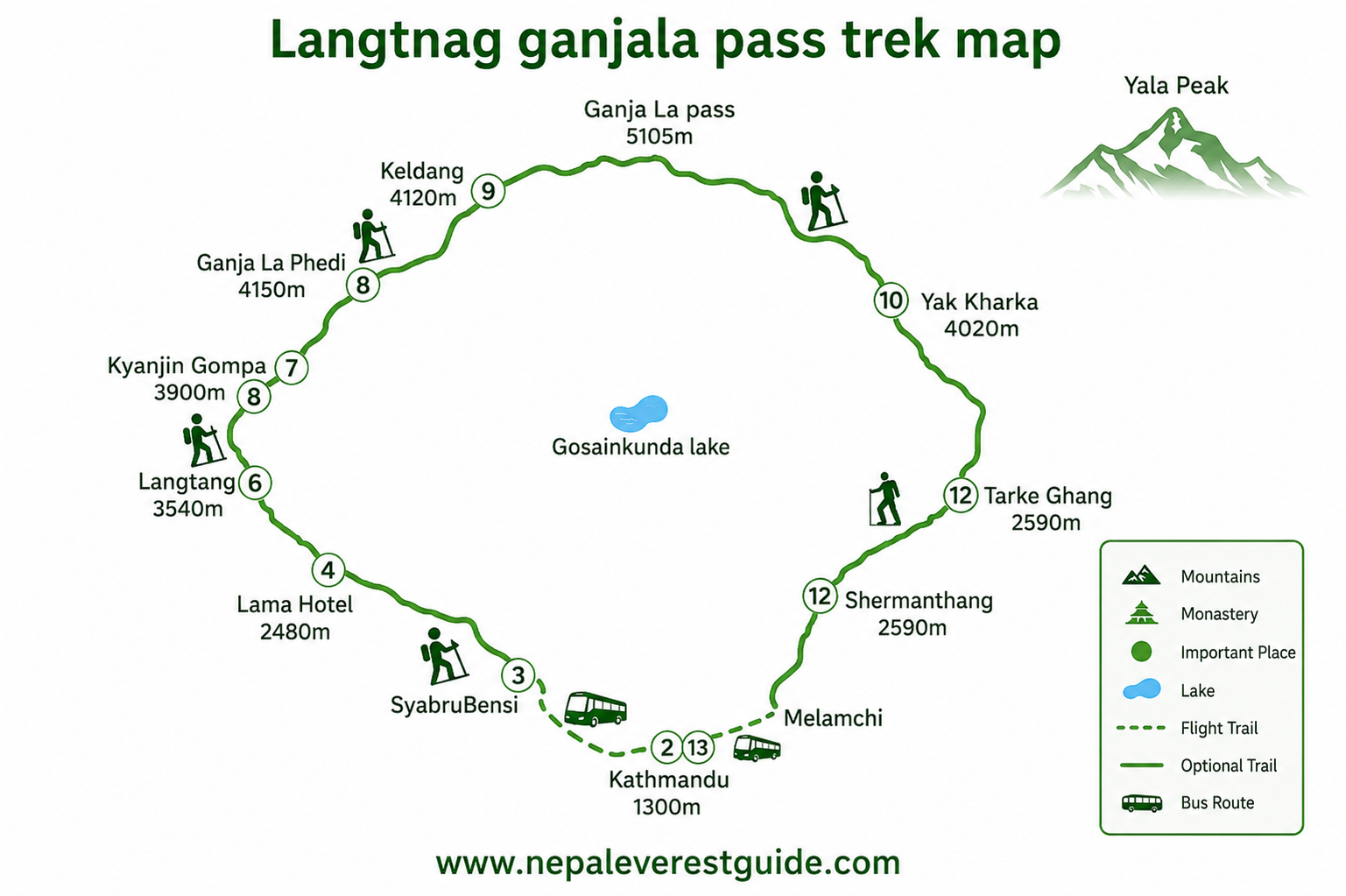
Day 1: Drive from Kathmandu to Syabrubesi (1,503 m / 4,931 ft.) – 7–8 hours.
Day 2: Trek from Syabrubesi to Lama Hotel (2,380 m / 7,830 ft.) – 6–7 hours.
Day 3: Trek from Lama Hotel to Mundu (3,543 m / 11,621 ft.) – 6–7 hours.
Day 4: Trek from Mundu to Kyanjin Gompa (3,870 m / 12,697 ft.) – 3–4 hours.
Day 5: Acclimatization day at Kyanjin Gompa with optional hike to Kyanjin Ri (4,773 m / 15,659 ft.).
Day 6: Trek from Kyanjin Gompa to Ngegang Kharka (4,000 m / 13,123 ft.) – 5 hours.
Day 7: Cross Ganja La Pass (5,122 m / 16,798 ft.) and descend to Keldang (3,660 m / 12,008 ft.) – 8–10 hours.
Day 8: Trek from Keldang to Dukpu (4,100 m / 13,451 ft.) – 5–6 hours.
Day 9: Trek from Dukpu to Tarke Gyang (2,400 m / 7,874 ft.) – 5–6 hours.
Day 10: Drive from Tarke Gyang to Kathmandu (1,450 m / 4,429 ft.) – 5–7 hours.
What's included?
- Airport/Hotel/Airport picks up and drops by private car/van/Heice,
- Hotel in Kathmandu With BB plan,
- All Grounded transportation as per program,
- experience tour guide for Kathmandu valley sightseeing,
- Meals (Breakfast/Lunch/Dinner) and all accommodations during the trekking,
- A highly experienced well-trained government license holder guide required porters (1 porter between 2 people) and their meal, accommodation, salary, insurance, and equipment,
- Sleeping bag, Down Jacket, and Walking Pole (if needed),
- All government taxes.
What's not included?
- Your Travel insurance,
- Nepal entry Visa fees,
- Your Travel Insurance,
- Drinks and main meals in cities,
- Tip for guide and Poter,
- Alcoholic and non-alcoholic drink.
Day by Day Itinerary
DAY
01
Drive from Kathmandu to Syabrubesi (1,550 m/5,100 ft.): 145 km
7 hrs. Drive Breakfast , Launch & Dinner Hotel
Today after great breakfast at the Hotel we take bus/jeep to Syabrubesi following the northern hill of Kathmandu Valley. We will be going through the zigzag road along the beautiful local villages, forest, landscapes and rivers then reach to Syabrubesi after 7 hours long drive. Before Reaching Sybrubesi you will stop for bathroom and lunch break. Overnight stay will be at Syabrubesi.
DAY
02
Trek from Syabrubesi to Lama Hotel (2,380 m/7830 ft.):
5 to 6 Hrs walk Breakfast ,Launch & Dinner
Your Langtang Ganja La Pass Trek begins with a scenic hike from Syabrubesi, following the banks of the Langtang Khola. The trail winds through lush forests of oak, maple, bamboo, and rhododendron, crossing several suspension bridges and passing small settlements such as Bamboo and Rimche. Along the way, you may spot langur monkeys and colorful birds inhabiting the dense woodland.
As you gradually ascend deeper into Langtang National Park, the peaceful surroundings and the sound of the rushing river accompany you throughout the day. The trail features a combination of gentle sections and steady climbs, offering a pleasant introduction to the trek while showcasing the rich biodiversity and natural beauty of the Langtang region.
By late afternoon, you reach Lama Hotel (2,380 m), a small settlement nestled amidst thick forests beside the river. Surrounded by tranquil mountain scenery, this cozy stop provides a comfortable place to rest and prepare for the higher alpine landscapes that await in the days ahead.
DAY
Trek from Lama Hotel to Mundu (3543 m/ 11,621 ft):
6 to 7 hrs walk Breakfast , Launch & Dinner Tea House
Leaving Lama Hotel after breakfast, the trail follows the Langtang Khola through beautiful forests of pine, oak, and rhododendron. As you steadily gain altitude, the valley begins to open up and the first magnificent views of Langtang Lirung (7,227 m) and the surrounding Himalayan peaks come into sight. Passing through Ghodatabela, you can observe grazing yaks and traditional stone-built houses scattered across the landscape.
Continuing deeper into the valley, the route traverses alpine meadows and charming Tamang settlements influenced by Tibetan culture. Prayer wheels, mani walls, and colorful prayer flags line the trail, creating a peaceful atmosphere as you make your way through Langtang Village, which was rebuilt after the 2015 earthquake.
A short climb beyond Langtang Village brings you to Mundu (3,543 m), a small and quiet settlement surrounded by dramatic mountain scenery. The village offers excellent views of the Langtang range and serves as a comfortable stop for acclimatization as you gradually approach the higher elevations and the adventurous crossing of Ganja La Pass.
DAY
04
Trek From Mundu to Kyangjin Gompa (3,870 m/12,697 ft.)
3 hrs. Breakfast ,Launch & Dinner Tea House
Leaving Mundu behind, the trail gradually ascends through the upper Langtang Valley, passing yak pastures, stone-built houses, mani walls, and small streams. As the valley widens, spectacular views of Langtang Lirung (7,227 m), Gang Chhenpo, and surrounding snow-capped peaks become increasingly impressive.
After a relatively short and scenic trek, you arrive at Kyanjin Gompa (3,870 m), the spiritual center of the Langtang region. Surrounded by towering Himalayan peaks, this peaceful village is home to an ancient monastery and a traditional yak cheese factory, making it an ideal place to relax and acclimatize before continuing toward the challenging Ganja La Pass.
DAY
05
Acclimatization Day at Kyanjin Gompa (3,870 m / 12,697 ft.)
6 Hrs Breakfast, Launch & Dinner Tea house
A well-deserved acclimatization day at Kyanjin Gompa helps your body adjust to the increasing altitude before the challenging Ganja La Pass crossing. Instead of complete rest, you can take a short hike to nearby viewpoints such as Kyanjin Ri (4,773 m) or explore the surrounding glacial landscapes, enjoying breathtaking panoramas of Langtang Lirung, Dorje Lakpa, and other Himalayan giants.
After returning to the village, spend the afternoon relaxing, visiting the ancient monastery, or exploring the local yak cheese factory. The tranquil setting and stunning alpine scenery make Kyanjin Gompa an ideal place to recharge and prepare for the more demanding sections of the Langtang Ganja La Pass Trek ahead.
DAY
06
Trek from Kyanjin Gompa to Ngegang Kharka (4,000 m / 13,123 ft.)
5-6 Hours Trek Breakfast, Launch & Dinner Tented Camp
Leaving the comforts of Kyanjin Gompa behind, today's journey marks the beginning of the remote and adventurous section of the Langtang Ganja La Pass Trek. The trail gradually leaves the main Langtang Valley and climbs into a less-traveled wilderness of alpine meadows and rocky terrain. As you gain elevation, the views become increasingly dramatic, with towering peaks, glaciers, and vast open landscapes surrounding you.
Unlike the villages encountered earlier in the trek, Ngegang Kharka is a seasonal yak pasture with limited facilities and a truly isolated atmosphere. The campsite sits beneath the imposing slopes leading to Ganja La Pass, offering an unforgettable setting under the Himalayan sky. An early dinner and adequate rest are essential as you prepare for the challenging pass crossing the following day.
DAY
07
Cross Ganja La Pass (5,122 m / 16,798 ft.) and Descend to Keldang (3,660 m / 12,008 ft.)
6-7 Hours Trek Breakfast, Launch & Dinner Tented Camp
Today is undoubtedly the most demanding and rewarding day of the entire trek. Before dawn, you begin the steep ascent toward Ganja La Pass, carefully navigating rocky slopes and, depending on the season, sections of snow and ice. Reaching the summit at 5,122 meters rewards you with breathtaking panoramas of the Langtang Himal, Dorje Lakpa, Shishapangma, and countless snow-covered peaks stretching across the horizon.
After celebrating your achievement at the top, a long and sometimes steep descent leads into the remote Helambu region. The scenery changes dramatically as barren alpine terrain gives way to grassy slopes and isolated valleys. By late afternoon, you arrive at Keldang, a peaceful campsite nestled amidst rolling hills, where a well-earned rest awaits after one of Nepal's finest high-pass adventures.
DAY
08
Trek from Keldang to Dukpu (4,100 m / 13,451 ft.)
8-9 km Breakfast, Launch & Dinner Tea House
The trail from Keldang to Dukpu follows a series of high ridges and alpine meadows with magnificent views extending toward the Jugal Himal range. Compared to the previous day's challenge, today's walk is more relaxed, allowing time to appreciate the untouched beauty and solitude of this remote corner of the Himalayas.
As you descend gradually, you may encounter yak herders and seasonal grazing areas scattered along the route. Arriving at Dukpu, a small settlement known for its ancient Buddhist chorten and peaceful surroundings, you'll enjoy a quiet evening amid spectacular mountain scenery and traditional highland culture.
DAY
09
Trek from Dukpu to Tarke Gyang (2,400 m / 7,874 ft.)
7-8 Hours Trek Breakfast, Launch & Dinner Tea House
Today's descent brings a dramatic change in both scenery and culture. Leaving the high alpine landscape behind, the trail winds through forests of rhododendron and pine before reaching the fertile valleys of the Helambu region. Traditional stone houses, prayer flags, and terraced fields begin to appear, reflecting the rich heritage of the Hyolmo people.
By afternoon, you arrive at Tarke Gyang, one of the largest and most beautiful villages in Helambu. Home to ancient monasteries and friendly local communities, the village offers a wonderful opportunity to experience authentic mountain life while enjoying comfortable lodges and stunning views of the surrounding hills.
DAY
10
Drive from Tarke Gyang to Kathmandu (1,450 m / 4,429 ft.)
4 hrs walk / 2 hrs drive Breakfast, Launch & Dinner Hotel in ktm
After breakfast, you bid farewell to the mountains and begin the scenic drive back to Kathmandu. The journey passes through traditional villages, terraced farmlands, and lush hillsides, offering one final glimpse of rural Nepal before reaching the bustling capital.
Upon arrival in Kathmandu, the Langtang Ganja La Pass Trek comes to a memorable conclusion. From the serene Langtang Valley and sacred Kyanjin Gompa to the thrilling crossing of Ganja La Pass and the cultural treasures of Helambu, the adventure leaves you with unforgettable memories of one of Nepal's most spectacular and less-traveled trekking routes.
Departure Dates
Sorry, No fixed departure dates are listed to group join, please request private trip
Join our 10-Day Langtang Ganja La Pass Trek with an experienced freelance local guide in Nepal! Enjoy breathtaking Himalayan scenery, authentic teahouse stays, and a unique tented camping experience while crossing the spectacular Ganja La Pass (5,122 m). Special offer: only US$800 per person. Adventure, culture, and unforgettable memories await!
Essential Information
What type of equipment do I need to bring for the trek?
The trekking equipment will depend on where you are going if you are trekking to Everest base camp or Annapurna base camp trek you should bring proper equipment such as down Jacket, Sleeping Bag, Windproof pant so no. You have to bring this trekking equipment which is as below:
- Sleeping bag, torch,
- Down Jacket,
- Trekking pools, a pair of t-shirt and pair Pant,
- Pair of suck and Sun Glass,
- General medicine,
- Rucksack and day bag,
- Windproof jacket, Gloves, warm hat,
- Inner drawer and thermal,
Which season is the best to travel to Nepal?
Nepal is a rich in biodiversity as it has many different temperature and climate within a few hour drives. So, as we have four seasons in a year we trek mostly in winter (Sep. to Dec) and spring (Mar. to June). The best season of the year is Sep to Dec, you will have clear weather and spectacular view each day this is why people used to call the best season of the year.
Where is the best area to trek in Nepal?
There are so many trekking routes in Nepal, but few of them are really popular as it is nicer than many other treks in n Nepal. Everest base camp trekking, Gokyo lake trekking, Annapurna base camp trekking, Annapurna circuit trek, Poon hill trek these are the most popular trekking route in Nepal. If you prefer to visit restricted area or, rural area to explore the localities of Nepal there are so many options that we have and you can visit safely.
How Can I get Nepal visa?
To get visa for Nepal is a easy once you arrive In TIA Kathmandu you can get visa within 20 minute, you just need to get 2 p.p size photo, your passport and some money such as 15 Days stay in Nepal cost 25 USD per person, 30 USD for 30 Days and 100 USD for 3 month tourist visa. All service you will get easier when you arrive at Kathmandu airport.
Is Nepal safe to make holiday?
Yes, it is safe country since 10 years especially when rebel party involves in election and peace agreement in 2006 than all political party is already in parliament and doing their best, it means where ever you go to Nepal you are safe. if you feel scared still you can have your authorized guide who will take care of you and give you much information.
Mountain sickness and Acclimatization:
Altitude sickness is a significant risk when trekking on any trails above about 2,500m. However good health, proper care and drinking plenty of water will definitely help you to prevent from altitude sickness. Every trekker needs to be familiar with the heights so, for this, we have life-saving acclimatization days during the trek, peak climbing, and expedition. We also provide certain medical support for your relief and emergency rescue through helicopter whenever guest require.
Experience & Fitness:
You should be fit enough to make those trekking because it is situated on quite a high region however certain training like running, walking, exercising, balanced diet all those things definitely will help to make it easy this trek.
Best Season to Trek in Nepal:
Autumn (September - November) and Spring (March-May) is the best trekking season for the trekking and mountaineering in Nepal Because by that time the Weather is mostly clear and the temperature is moderate which offers the magic view of snow cap mountains and valley each day. Spring Season is such a beautiful time to see many different flowers, plants, and rare animals especially Rhododendron flower along the way is a major attraction. Walking and trekking are also very suitable for this season.
Summer (June - August) and winter (December - February). This season provides a different scenic views each hours unpredictable weather ,heavy monsoon rainfall mostly in Annapurna region it is very much clear to trek around Mustang by summertime because of altitude you can skip the rain if you go those areas., so, Everest, Langtang, and Annapurna are always comfortable to trek even in winter season.
Clothing:
- Liner socks, Trekking shirts short sleeve,
- Thermal underwear, fleece sweaters lightweight,
- one heavier Easy drying long sleeved base layer shirts,
- Woolen blends trekking socks, pair trekking pants with zipping off bottoms
- Outer layers
- Down vest, wind/rain proof over layer - jacket and pants,
- Peak hat, headband, Warm winter hat, lightweight thermal layer hat,
- Pair gloves, down jacket,
- Pair down booties Great for keeping feet warm intent and while sleeping and for in the tent. Pair flips flops, it is practice.
What to take with you for the trek:
As a guide myself for 14 years, I give first priority to cloths which are most important in the cold mountain area. Equipment does matter to make your trek easy and comfortable. Carrying excessive quantity of trekking equipment doesn’t make your trip more interesting but the disadvantage. So, we request you to carry only selected and recommended items and we have our potential porters. Warm Clothes, Down Jacket, Trouser, T-shirt, Hiking Boot, Sunglasses, Sun cream, Knife, Walking Steak, day backpack, Head Light, Sleeping Bag etc. These are the equipment's which you must carry during the trek.
Meals:
There are so many different tastes in food and international standard restaurants in Kathmandu where you can try your own taste in food and lots of choices. But in the trek mostly we can have Indian, Nepali, continental, via menu especially each settlement provides Pasta, momo, soup items, potato item, rice, hot drink, cold drink etc.
Accommodations:
Safe holiday adventure gives the first priority to our guest service that is what makes us today safe holiday adventure. For the city accommodation in Kathmandu we have been providing at list 3-star category hotel at the location and also on request, we can provide comfortable but cheap accommodation too for budget travelers.
During the trekking, we provide a standard guest house, calm environment and local healthy food for our guest.
Required Documents and Permits for Ganjala pass trek in langtang
To trek in Langtang National Park, including the Langtang Ganjala Pass, you will need the following documents and permits:
- Passport: A valid passport is required for entry into Nepal.
- Visa: You can obtain a visa for Nepal at the Nepalese embassy in your home country or upon arrival at the airport in Kathmandu.
- TIMS (Trekkers' Information Management System) Card: This card is required for all trekkers in Nepal and can be obtained from the Nepal Tourism Board or through a trekking agency.
- Langtang National Park Permit: This permit is required to enter Langtang National Park and can be obtained from the park headquarters in Dhunche or through a trekking agency.
- Local Permits: If you are trekking through Tamang villages, you may also need to obtain additional permits from the local authorities.
It is important to note that trekking in Langtang Ganjala Pass is considered a challenging and remote adventure, and it is advisable to hire a local guide and to be properly prepared for the trek.
How long is the Langtang Ganjala Pass Trek?
The length of the Langtang Ganjala Pass Trek varies depending on the itinerary and route taken, but it typically takes anywhere from 8 to 12 days to complete the trek. The total distance of the trek is around 70-80 kilometers, and the trekkers typically cover between 5-10 kilometers per day.
The trek starts in Syabrubesi and follows the Langtang River to the Langtang Valley, passing through forests, meadows, and villages along the way. The trek then reaches the high point at the Ganjala Pass and descends to the Helambu region before returning to Syabrubesi.
The trek can be customized to suit individual needs and interests, and some trekkers may choose to add additional days for acclimatization or to explore the surrounding areas. It's important to have a flexible itinerary and to be prepared for unexpected weather or trail conditions.
What is the difficulty level of the trek?
The Langtang Ganjala Pass Trek is considered a strenuous trek with a high level of difficulty. The trek involves a significant amount of uphill hiking, with some sections requiring steep ascents and descents. The trek also involves high-altitude hiking, with the Ganjala Pass located at an altitude of 5,122 meters, which can be challenging for those who are not acclimatized.
The difficulty of the trek is influenced by various factors, including the trekker's physical fitness, the altitude, and the weather conditions. The trek requires a good level of physical fitness and endurance, as well as a positive attitude and the ability to adapt to challenging situations.
What kind of accommodation and meals are provided during the trek?
Accommodation and meals during the Langtang Ganjala Pass Trek vary depending on the itinerary and route taken, but typically, trekkers stay in teahouses or lodges along the trail.
Teahouses are simple lodges that provide basic accommodation and food, typically in shared rooms. The rooms are basic but clean and provide a place to sleep and store gear. Some teahouses may also have private rooms available for an additional cost.
Meals are typically served in the teahouses and consist of traditional Nepalese cuisine, such as dal bhat (lentils and rice), momos (dumplings), and various types of soups and curries. Some teahouses may also offer western-style dishes, such as pasta and pizza.
What kind of views and wildlife can I expect to see on the trek? during langtang ganjaplapass rek
The Langtang-Ganja La Pass trek offers a range of breathtaking views of the Langtang mountain range, including Langtang Lirung (7,234 m), Gangchenpo (6,388 m), and Naya Kanga (5,846 m). During the trek, you can also expect to see diverse wildlife, such as Himalayan black bears, red pandas, snow leopards, and a variety of bird species such as Danphe, Impeyan and Blood Pheasants. Additionally, the trek passes through forests of rhododendron, oak, and bamboo, offering stunning views of the surrounding vegetation.
Is the trek suitable for solo travelers?
The Langtang-Ganja La Pass trek can be done solo, but it's important to keep in mind that trekking in the Himalayas involves some degree of risk and requires preparation. Solo travelers should have experience in hiking and be well-equipped with proper gear and supplies. It's also advisable to be in good physical condition and have a good understanding of the trail and potential hazards.
In addition, it's always a good idea to inform someone about your itinerary and estimated return time. It's recommended to hire a guide or join a group for added safety and support. With adequate preparation and awareness, solo trekking in Langtang-Ganja La Pass can be a rewarding and fulfilling experience.
Is it possible to customize the itinerary?
Yes, it is possible to customize the itinerary for the Langtang-Ganja La Pass trek. Many trekking agencies and tour operators offer customizable itineraries to suit the specific needs and interests of trekkers. For example, you can choose to extend or shorten your trek, add or remove certain destinations, or adjust the daily walking distance to suit your fitness level.
It's important to keep in mind that customization may affect the cost of the trek, as well as the logistics and arrangements for transportation, accommodations, and meals. When requesting a customized itinerary, make sure to communicate your specific needs and preferences to the trekking agency or tour operator, who will then work with you to design a personalized trekking plan.
What kind of equipment do I need for the trek?
Here is a general list of essential equipment you'll need for the Langtang-Ganja La Pass trek:
- Backpack: A sturdy and comfortable backpack with a capacity of at least 45 liters to carry your gear and supplies.
- Clothing: Warm and waterproof clothing, including a down jacket, thermal base layers, fleece sweater, hat, gloves, and waterproof pants and jacket.
- Footwear: A good pair of hiking boots with good ankle support and waterproofing.
- Sleeping gear: A warm sleeping bag rated for sub-zero temperatures, and a comfortable sleeping pad.
- Headlamp: A headlamp with extra batteries for use in the evenings and early mornings.
- First-aid kit: A personal first-aid kit that includes basic items such as pain relievers, band-aids, antiseptic wipes, and any prescription medications you may need.
- Hydration: A hydration system, such as a hydration bladder or water bottles, to stay properly hydrated during the trek.
- Sun protection: Sunglasses, sun hat, and a high SPF sunscreen to protect your skin from the strong sun.
- Miscellaneous items: A trekking pole, a camera, a power bank, and a small towel.
This is a general list and you may also want to consider other items based on your personal needs and preferences. Before your trek, make sure to check the weather forecast and pack accordingly, and always carry extra clothing and gear for emergencies.
Are there any health and safety considerations for the trek?
Yes, there are several health and safety considerations for the Langtang-Ganja La Pass trek:
Altitude sickness: The trek takes you to high altitudes, so it's important to acclimate gradually and be aware of the symptoms of altitude sickness, such as headache, dizziness, and shortness of breath. If you experience these symptoms, it's important to descend to a lower altitude immediately.
Hydration: Staying properly hydrated is crucial for good health during the trek. Make sure to drink plenty of water and avoid alcohol and caffeine, which can dehydrate you.
Food and water safety: Only drink boiled or treated water and make sure to wash your hands regularly. Avoid raw or undercooked foods, especially meat and dairy products.
Injuries and accidents: Be cautious when crossing streams, bridges, and when hiking on steep and slippery trails. Make sure to wear proper footwear with good grip, and use a trekking pole for added stability.
Natural hazards: Be aware of the potential hazards in the mountains, such as rock falls, avalanches, and landslides. Always follow the guidance of your guide and local authorities, and be prepared for sudden changes in weather and trail conditions.
Emergency preparedness: Make sure to carry a personal first-aid kit, a charged mobile phone, and a whistle for emergencies. It's also a good idea to inform someone about your itinerary and estimated return time.
By being prepared and taking the necessary precautions, you can greatly reduce the risk of health and safety issues during the Langtang-Ganja La Pass trek.
How many days should I plan for the trek?
The length of the Langtang-Ganja La Pass trek typically ranges from 12 to 19 days, depending on your starting point, itinerary, and pace. A standard itinerary for the trek typically takes around 15 to 17 days, which includes time for acclimatization and exploring the surrounding area.
However, you can customize the length of your trek based on your physical fitness, time constraints, and personal preferences. If you're an experienced hiker and have limited time, you may opt for a shorter trek of 12 to 14 days, while if you're looking for a more relaxed pace and want to explore more of the surrounding area, you may opt for a longer trek of 18 to 19 days.
Regardless of the length of the trek, it's important to be well-prepared, physically fit, and to allow enough time for acclimatization to minimize the risk of altitude sickness.
What are the visa and permit requirements for the trek?
For the Langtang-Ganja La Pass trek, the following visas and permits are required:
Tourist visa: Most foreign nationals visiting Nepal require a tourist visa, which can be obtained upon arrival at the Tribhuvan International Airport in Kathmandu or at a Nepalese embassy or consulate abroad. The visa fee is based on the length of your stay, with a maximum validity of 150 days per year.
Langtang National Park permit: The Langtang-Ganja La Pass trek takes you through the Langtang National Park, for which you need to obtain a park permit. The park permit fee is approximately USD 30 for a period of seven days, and USD 50 for a period of 14 days. The permit can be obtained in Kathmandu or at the park entrance.
TIMS (Trekkers' Information Management System) card: The TIMS card is a permit issued by the Nepal Tourism Board that provides information on trekkers and helps the government monitor trekking activities. The TIMS card fee is approximately USD 10, and can be obtained in Kathmandu or at the park entrance.
It's important to note that the requirements for visas and permits may change, so it's best to check the latest information before your trek. Many trekking agencies and tour operators can assist you with obtaining the necessary visas and permits, as well as arranging transportation and accommodations.
Cancellation Note
- Free cancellation up to 60 days prior departure
- 30% of the total cost of the trip will be charged if cancelled between 60 to 30 days prior to departure date
- 60% of total cost of the trip will be charged if cancelled in between 30 to 14 days prior to departure date.
Web design & Developed by Wildstone Solution
