

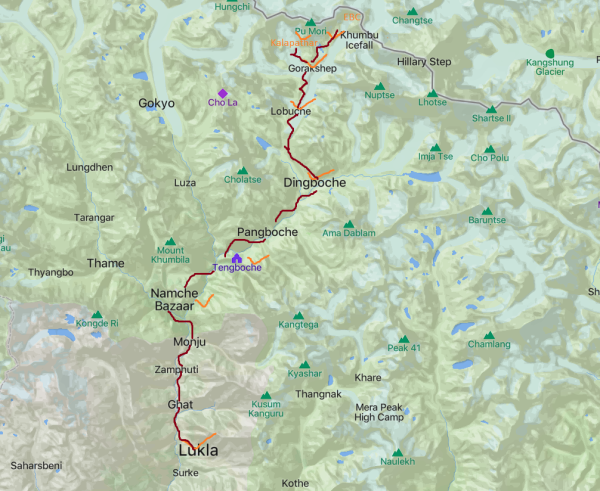
𝐊𝐀𝐓𝐇𝐌𝐀𝐍𝐃𝐔 → 𝐒𝐔𝐑𝐊𝐄 → 𝐏𝐇𝐀𝐊𝐃𝐈𝐍𝐆 → 𝐍𝐀𝐌𝐂𝐇𝐄 → 𝐓𝐄𝐍𝐆𝐁𝐎𝐂𝐇𝐄 → 𝐃𝐈𝐍𝐆𝐁𝐎𝐂𝐇𝐄 → 𝐋𝐎𝐁𝐔𝐂𝐇𝐄 → 𝐆𝐎𝐑𝐀𝐊𝐒𝐇𝐄𝐏 → 𝐄𝐁𝐂 → 𝐏𝐀𝐍𝐆𝐁𝐎𝐂𝐇𝐄 → 𝐍𝐀𝐌𝐂𝐇𝐄 → 𝐒𝐔𝐑𝐊𝐄


Why Everest Base Camp Trek by Road with Experienced Independent Guide?
- Scenic 4WD drive from Kathmandu to Surke,
- Explore the wilderness of Sagarmatha National Park,
- Discover Namche Bazaar, the cultural heart of the Everest region,
- Immerse yourself in the Sherpa community culture and traditions,
- Stunning views from Hotel Everest View, the highest-placed hotel,
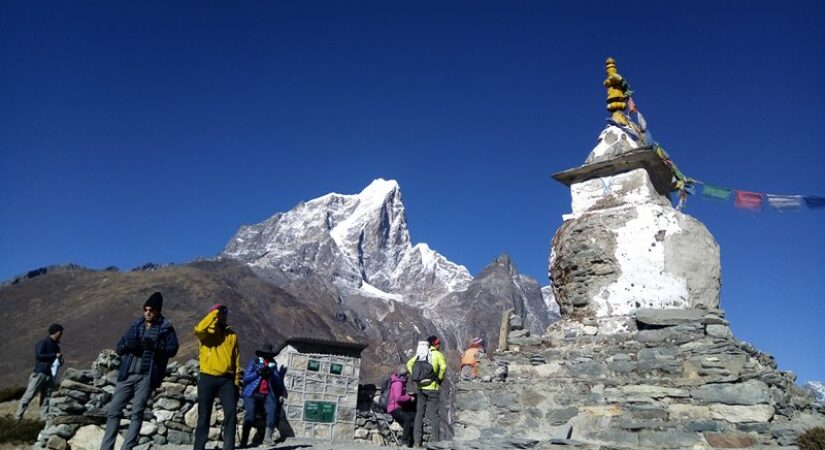
- Visit Tengboche and Pangboche Monastery, the oldest monastery in the Everest region,
- See the Khumbu glacier and Khumbu icefall up close,
- Trek to Kala Patthar (5,555 m) and Nangkartshang Peak (5,083 m) for panoramic mountain views,
- Spectacular vistas of Mt. Everest, Ama Dablam, Lhotse, Nuptse, Thamserku, Cho Oyu, and more,
- Experience diverse cultures from the foothills to high altitudes,
- Khumbu Icefall: Witness the awe-inspiring Khumbu Icefall, a challenging part of the Everest climbing route.
- Reach the ultimate destination – Everest Base Camp.
Explore Everest Base Camp Trek by Road: A Unique Journey
Take an amazing journey to Everest Base Camp Trek by Road. Instead, begin with a scenic Jeep ride from Kathmandu to Salleri or Thamdanda. This route offers a peaceful, gradual ascent through beautiful villages and forests, allowing you to form a deeper connection with nature and culture. Discover the mighty Himalayas in a way that few travelers do.
Why Choose the Everest Base Camp Trek by Road?
Trekking to Everest Base Camp Trek by Road is perfect for those who want to avoid flying and enjoy a more authentic adventure. Our journey begins with a road trip that slowly takes you into the mountains. This scenic drive passes through charming towns, lush hills, and rivers, allowing you to experience the real Nepal before the trek even begins.
Unlike the usual Lukla route, this alternative offers less crowded trails, deeper cultural experiences, and better physical preparation. Our experienced guides ensure your safety and provide insights into the local culture and environment.
Gradual Acclimatization Advantage
Starting the trek from a lower elevation, such as Salleri, allows your body to adapt more slowly. With fewer chances of altitude sickness, the journey becomes safer and more enjoyable. As you hike higher, your body gets used to the change in oxygen levels, making the trek easier and healthier.
Scenic Beauty and Cultural Experiences
This route to Everest Base Camp takes you through stunning landscapes—green forests, mountain ridges, and traditional villages. You’ll meet friendly locals, observe ancient customs, and even share meals in Sherpa homes. These cultural experiences add unforgettable depth to your trekking journey.
Road Condition from Kathmandu to Phaplu and Surkey via Salleri
The road from Kathmandu to Salleri is mostly a paved road. It is a long drive, about 8 to 10 hours, but the road is good until Salleri. It goes through hills, small towns, and forests. You will see nice views along the way.
After Salleri, the road to Phaplu and Surkey becomes rough and off-road. Only 4WD jeeps can go on this part. The road is bumpy, narrow, and sometimes steep. During the rainy season, it can be slippery and difficult.
From Kathmandu to Salleri, the road is better and more comfortable. From Salleri to Surkey or Tham Danda, the road is more difficult, but it is a beautiful drive with mountain views and local villages.
Required Trekking Permits
To trek to Everest Base Camp from Salleri, you will need the following permits:
- Pasang Lhamu Village Municipality entry fee (payable in Lukla)
- Sagarmatha National Park permit (can be arranged in Monjo or Kathmandu)
These permits are mandatory and support the conservation of the region while ensuring your safety.
Packing list for the Everest Base Camp trek by road
For the Everest Base Camp trek by road, pack light but smart. Bring warm clothes like fleece jackets, thermal layers, and a waterproof shell for cold and rainy weather. Good trekking boots with a strong grip are essential. Don’t forget a hat, gloves, and sunglasses to protect against the sun and wind. Carry a sturdy backpack, water bottles, snacks, and a basic first aid kit. A sleeping bag rated for cold weather is important. Include sunscreen, lip balm, and a headlamp with extra batteries. Keep your passport, permits, and cash safe. Packing these essentials ensures a comfortable and safe trek.
Extend Your Adventure (Optional)
Want to see even more? Add Gokyo Chola Pass, or Renjo-La Pass, to your EBC trek. These high passes offer spectacular views of Gokyo Lakes and quiet trails with fewer tourists—perfect for experienced trekkers seeking more thrills and natural beauty.
Benefits of Trekking to Everest Base Camp Without a Flight
- Better Acclimatization – Slower ascent means safer trekking
- Diverse Scenery – Forests, rivers, mountains, and Sherpa villages
- Cultural Immersion – Meet locals and stay in authentic tea houses
- Peaceful Trails – Fewer tourists, more nature
- Improved Fitness – Longer trekking days help your body adapt
- Lower Costs – No expensive Lukla flight tickets
- More Exploration – Side treks like Gokyo or Thame are easy to include
- Eco-Friendly Option – Less impact than flying
- Stronger Group Bonding – More time on the trail with your team
Trek to Everest Base Camp by Road with an Expert Local Guide
Skip the agencies and enjoy a personalized Everest Base Camp trek by road with an experienced local guide. Get flexible itineraries, local insights, and full support for a safe and unforgettable adventure. Perfect for travelers who want a true Himalayan experience with expert guidance.
Book Your Trek:
-
Email: nepaleverestguide@gmail.com
-
Booking form: Just click this button to send me your message instantly.
Everest Base Camp Trek by Road with Experienced Independent Guide Outline
What's included?
- Sharing Jeep transfer from Kathmandu to Salleri and back (Private Jeep available at extra cost),
- Twin/Double sharing accommodation in the best available tea houses/lodges during the trek,
- All meals (Breakfast, Lunch & Dinner) during the trek as per the itinerary,
- Experienced English-speaking trekking guide,
- Salary, insurance, equipment, medical, and all expenses for the trekking staff,
- Sagarmatha (Everest) National Park entry fee,
- Local rural municipality (village) permit fees,
- All applicable government taxes.
What's not included?
- Hotel Accomodation in Kathmandu,
- Nepal entry visa fee
- International airfare and departure taxes
- Lunch and dinner in Kathmandu
- Personal expenses (e.g., phone calls, laundry, bar bills, battery charging, extra porters, bottled/boiled water, Wi-Fi, hot showers, etc.)
- Tips for Staff,
- Extra expenses due to unforeseen events (bad weather, roadblocks, landslides, flight delays, etc.)
- Travel insurance (mandatory for trekking)
Day by Day Itinerary
DAY
Day 1
Arrival in Kathmandu (1,350m)
Hotel in Kathamndu
Welcome to Nepal! After you arrive at Tribhuvan International Airport, our representative will meet you and transfer you to your hotel in Kathmandu (about 30 minutes). Relax and freshen up. Later, attend a briefing where you will meet your guide and receive important trek information. In the evening, enjoy a welcome dinner featuring traditional Nepali food. Overnight at a comfortable hotel in Kathmandu.
DAY
Day 2
Drive from Kathmandu to Surke (2,421m) — approx. 13-14 hours, 313 km by jeep
13-14 hours Lunch and Dinner Tea House
After an early breakfast, depart Kathmandu for Surke by jeep. The road journey is long but scenic, passing through hills, rivers, forests, and small villages. Most of the road is paved until Salleri, after which it becomes rough and bumpy. You will enjoy views of distant Himalayan peaks and rural life. Arrive in Surke in the evening and stay overnight at a local guesthouse or tea house, preparing for the trek ahead.
DAY
Day 3
Trek from Surke to Phakding (2,660m)
20 km, 7–8 hours trek Breakfast, Lunch & Dinner Tea House
Begin your trek after breakfast by descending through rhododendrons and oak forests. Pass through Sherpa villages and cross streams following the Khari Khola River. The trail gradually descends and then ascends to Phakding, a lively village and gateway to the Everest trekking route. Along the way, enjoy lush green farmland, barley and wheat fields, and the first views of the high Himalayas. Overnight at a tea house or lodge in Phakding.
DAY
Day 4:
Trek from Phakding to Namche Bazaar (3,440m)
12 km, 5–6 hours trek Breakfast, Lunch & Dinner Guest House
Follow the Dudh Koshi River upstream, crossing several suspension bridges decorated with colorful prayer flags. Enter Sagarmatha National Park, a UNESCO World Heritage Site. The trail becomes steeper as you approach Namche Bazaar, the main trading hub of the region. Namche is a bustling town surrounded by high mountains and offers shops, cafes, and local markets. Rest and acclimatize. Overnight at a lodge in Namche Bazaar.
DAY
Day 5
Acclimatization Day in Namche Bazaar (3,440m)
2 Hours side walk Breakfast, Lunch & Dinner Guest House
Rest is important at this altitude. Take a short hike to Everest View Hotel or explore the Sherpa Museum. Enjoy panoramic views of Everest, Lhotse, Ama Dablam, and other peaks. Use this day to relax, hydrate, and prepare your body for higher elevations. Overnight in Namche.
DAY
Day 6
Trek from Namche Bazaar to Tengboche (3,860m)
10 km, 5–6 hours trek Breakfast, Lunch & Dinner Guest House
The trek from Namche Bazaar to Tengboche takes about 5 to 6 hours and covers around 10 to 12 kilometers. This part of the trail is very beautiful and offers amazing views.
From Namche Bazaar (3,440m), you start by walking uphill through the forest. The trail goes along the Dudh Koshi River and passes small villages and farms. You will see many rhododendron and pine trees on the way.
The path is sometimes steep but mostly well-marked. You cross several wooden suspension bridges over small rivers and streams.
As you get closer to Tengboche, you will see the famous Tengboche Monastery, which is the largest monastery in the Khumbu region. This is a great place to stop, rest, and enjoy the beautiful views of Mount Everest, Ama Dablam, and other high mountains.
Tengboche village is at 3,860 meters, and it has several guesthouses and tea houses for overnight stays.
The trek from Namche to Tengboche is not very hard but requires steady walking. It is an important day because you continue to go higher and get closer to the Everest Base Camp area.
DAY
Day 7
Trek from Tengboche to Dingboche (4,410m)
11 km, 5–6 hours trek Breakfast, Lunch & Dinner Guest House
The trek from Tengboche to Dingboche is a beautiful and important part of the Everest Base Camp route. This section usually takes about 5 to 6 hours to complete and covers roughly 10 to 12 kilometers.
You start your day at Tengboche (3,860m), famous for its ancient Tengboche Monastery and great mountain views, especially of Mount Everest, Ama Dablam, and other peaks.
From Tengboche, the trail gently descends through rhododendron and pine forests until you reach the village of Pangboche (3,900m). Pangboche is one of the oldest Sherpa villages and has another important monastery. It’s a good place to take a short break, enjoy tea, and explore the local culture.
After Pangboche, the trail starts to climb steadily. You will leave the forested area and enter a more open valley with alpine vegetation. The air becomes thinner, and the mountains look bigger as you approach Dingboche.
On the way, you will cross small streams and pass through small villages and yak pastures. The path can be rocky and uneven in places, so take your time to walk safely.
Dingboche is located at 4,410 meters, making it a great place to rest and acclimatize to the higher altitude. It has several guesthouses and tea houses, and you can enjoy spectacular views of Island Peak and Lhotse from here.
This day’s trek is moderate in difficulty but important for preparing your body for higher altitudes ahead.
DAY
Day 8
Acclimatization Day in Dingboche (4,410m)
2-3 Hours Side walk Breakfast, Lunch & Dinner Guest Hosue
Today is a rest day to help your body adjust to the higher altitude. You can stay in Dingboche and relax or choose to take easy hikes nearby.
Two popular short hikes are:
- Nagarjun Hill: A gentle walk that gives you great views of Dingboche village and the mountains around.
- Chhukung Valley: A longer hike that offers amazing views of big peaks like Island Peak and Lhotse.
Make sure to drink plenty of water and eat well. Take it slow and prepare your body for the next days of trekking.
You will stay overnight again in Dingboche.
DAY
Day 9
Trek from Dingboche to Lobuche (4,910m)
8 km, 5–6 hours trek Breakfast, Lunch & Dinner Guest house
Today, you will walk from Dingboche to Lobuche. The distance is about 12 kilometers, and it will take around 5 to 6 hours.
At the start, the trail is gentle. But as you walk, the path becomes rocky and dry because you are going higher. Trees disappear, and you see small plants and stones around you.
On the way, you will pass a place called Thukla. Here, there are many memorials and stone walls built to remember the climbers who died on Mount Everest. It is a quiet and respectful place.
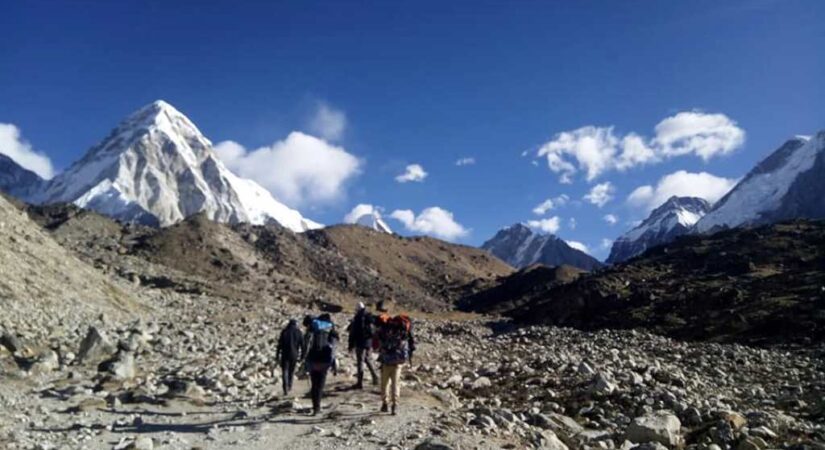
After Thukla, the trail goes up a little more. You will see very big mountains all around you. Some of the mountains are Khumbutse, Lingtren, and Pumori. These are tall, beautiful, and covered with snow.
Finally, you reach Lobuche, a small village high in the mountains. Lobuche has some tea houses and lodges where you can stay for the night. It is cold here, so be sure to wear warm clothes.
Rest well in Lobuche because tomorrow you will walk even higher.
DAY
Day 10
Trek from Lobuche to Everest Base Camp (5,364m) and back to Gorak Shep (5,140m)
14 km, 7–8 hours trek Breakfast, Lunch & Dinner Guest House
Today is a big and special day. You will walk from Lobuche to Everest Base Camp, then come back to Gorak Shep to sleep. The total distance is about 14 kilometers and will take 7 to 8 hours.
First, the trail goes over rocks and small hills. You will walk carefully because the ground is rough and sometimes slippery.
Then, you reach the Khumbu Glacier, which is a huge river of ice. This glacier moves slowly down from the mountains. You will see big blocks of ice and cracks in the glacier. The ice looks white and blue.
Along the way, you will see many colorful prayer flags tied on rocks and poles. These flags are important in the local Sherpa culture and bring good luck and peace.
When you arrive at Everest Base Camp (5,364 meters), you will see tents of climbers getting ready to climb the highest mountain in the world. You can look at the huge icefall called the Khumbu Icefall, which is very dangerous and beautiful.
Spend some time here to rest and take photos. The weather can be cold and windy, so wear warm clothes.
After visiting Base Camp, you will walk back down to Gorak Shep, a small village nearby at 5,140 meters. Gorak Shep has some tea houses where you can rest and have warm food.
Today is a long day, so make sure to take breaks and drink water. Sleep well in Gorak Shep because tomorrow you will hike early to see the sunrise from Kala Patthar.
DAY
Day 11:
Hike to Kala Patthar (5,545m) and trek to Pheriche (4,280m)
18 km, 7–8 hours trek Breakfast, Lunch & Dinner Guest House
Today starts very early in the morning. You will hike up to Kala Patthar, which is 5,545 meters high. This is a special place to see the sunrise.
The hike up to Kala Patthar takes about 2 to 3 hours. The path is steep and rocky, so walk slowly and carefully. When you reach the top, you will see amazing views of Mount Everest, Nuptse, and Pumori. The sunrise makes the mountains glow with beautiful colors. It is one of the best views on the whole trek.
After enjoying the sunrise and taking photos, you walk back down to Gorak Shep. Here, you can have a good breakfast and rest a little.
Next, you start walking down through peaceful Sherpa villages. The trail goes down from the high mountains into green valleys. You will see farms, small houses, and prayer flags along the way.
Today, you will walk about 18 kilometers and it will take around 7 to 8 hours. Your final stop is Pheriche, a quiet village at 4,280 meters. Pheriche has cozy tea houses where you can rest and eat dinner.
Make sure to drink plenty of water and rest well after this long day.
DAY
Day 12
Trek from Pheriche to Namche Bazaar (3,440m)
18 km, 5–6 hours trek Breakfast, Lunch & Dinner Guest House
After breakfast, you begin your walk downhill toward Namche Bazaar. The path leads through green forests filled with birds and fresh mountain air. You will cross several wooden suspension bridges that hang over rushing rivers.
The trail is mostly downhill, making the walk easier than previous days. Along the way, enjoy the peaceful nature and views of the mountains around you.
This day is good to relax your legs and think about all the beautiful places you have seen during the trek.
When you arrive in Namche Bazaar, you will find a busy town with shops, restaurants, and friendly people. It’s a nice place to rest for the night.
DAY
Day 13
Trek from Namche Bazaar to Surke (2,421m)
25 km, 8–9 hours trek Breakfast, Lunch & Dinner Guest House
Today, you begin your long walk down from Namche Bazaar to Surke. The distance is about 25 kilometers, and it will take around 8 to 9 hours.
The trail goes downhill through green forests with tall trees and birds singing. You will pass small villages where local people live and farm the land. You can see fields with vegetables and animals like cows and yaks.
Along the way, you will stop for lunch in Phakding, a small village by the river. This is a nice place to rest and enjoy some food before continuing your walk.
After lunch, the trail follows the river and goes through more forests and farmland. The path is mostly downhill but can be a bit rocky in places, so walk carefully.
By late afternoon, you will reach Surke, a quiet village where you can stay overnight. There are guesthouses and tea houses with warm rooms and food. This is a good place to rest after a long day.
Enjoy your evening in Surke and prepare for your last day of trekking tomorrow.
DAY
Day 14
Drive from Surke to Kathmandu (1,350m)
Breakfast Hotel In Kathmandu
Today, your trek finishes, and you will take a jeep ride back to Kathmandu. The drive covers about 265 kilometers and takes around 8 to 9 hours.
The journey is very scenic. You will pass through hills, forests, and many small villages. Along the way, you can enjoy beautiful views of mountains and rivers. The road changes from rough paths near Surke to smoother highways closer to Kathmandu.
After a long day in the jeep, you will arrive at your hotel in Kathmandu. This is a good time to relax and rest your body after the trek.
In the evening, there will be a farewell dinner to celebrate your successful trek. You can enjoy local Nepali food, share stories, and say goodbye to your guide and team.
Stay overnight in Kathmandu, ready for your next adventure or journey home.
Want me to help with any other part of your itinerary?
Departure Dates
Sorry, No fixed departure dates are listed to group join, please request private trip
Skip the Lukla flight and join our scenic road trip to Everest Base Camp! Travel through peaceful villages, enjoy gradual altitude gain, and follow the classic trekking route. Book now and get a 10–% discount for a limited time. For quick details or booking, WhatsApp us at +977 9849116284. Safe Holiday Adventure Pvt. Ltd. welcomes you!
Reviews
David Rio
Australia
Everest Base Camp Trek by Road – Guided Adventure of a Lifetime (14 Days)
2024I recently completed the 14-day Everest Base Camp Trek by road, and it was truly the adventure of a lifetime. Traveling by road instead of flying into Lukla gave me more time to enjoy the diverse landscapes along the way. The trek was well-paced, and the views of the Himalayas were simply breathtaking. What made the journey even more special was my experienced independent guide, who was not only knowledgeable but also caring and attentive throughout the trek. He ensured everything ran smoothly, from accommodations to meals, and shared a great deal about local culture and traditions. This trek is ideal for those seeking a balance of adventure and comfort without rushing the experience. I highly recommend it.
Essential Information
Everest Base Camp Trek by Road Overview
The Everest Base Camp trek by road means you travel by jeep or bus instead of flying to Lukla. This lets you see remote villages and countryside on bumpy mountain roads. After the road journey, you start trekking through beautiful mountain trails and Sherpa villages toward Everest Base Camp, one of the world’s most famous trekking destinations.
Duration of the Trek
This trek usually takes about 14 to 16 days. The road trip can take 1 to 3 days depending on road conditions and the route you choose. The trek from the road end point to Everest Base Camp takes around 7 to 10 days. This longer time helps you enjoy the journey and adjust to the higher altitude.
Trek Difficulty Level
The trek is more difficult than the common Lukla flight route because you start lower and trek more days. The path is steep and rocky in some places. However, the longer trek gives your body time to get used to the thin mountain air, which helps prevent altitude sickness.
Clothing and Gear Needed
Bring warm clothes because it is cold, especially at night and high altitudes. A raincoat is important because weather can change quickly. Good trekking boots with ankle support will protect your feet. Use layers of clothes so you can add or remove them as needed. Don’t forget a hat, gloves, sunglasses, and sunscreen.
Required Permits
Before trekking, you must get a TIMS card (Trekkers’ Information Management System) and a Sagarmatha National Park permit. These permits help protect the environment and keep trekkers safe. You can get these permits in Kathmandu or through your trekking agency.
Best Time to Trek
The best months to do this trek are in autumn (September to November) and spring (March to May). During these times, the weather is clear, and you get amazing views of the mountains. The winter is very cold and the monsoon season (June to August) brings heavy rain and slippery trails.
Guide and Porter Services
Hiring a guide helps you stay safe and learn about the culture, nature, and history of the area. A porter can carry your heavy bags, so you can walk more comfortably. Guides and porters are trained and insured for your safety.
Road Safety and Conditions
Mountain roads can be very rough with many bends and steep sections. Sometimes landslides or rain make roads dangerous or block them temporarily. Always travel with a reliable company and be patient if there are delays.
Food Options on the Trek
You will find tea houses serving local meals such as dal bhat (rice and lentils), noodles, soups, and momos (dumplings). The food is simple but nourishing to keep your energy high during trekking.
Packing Essentials
Pack light but carry important items like warm clothes, a water bottle, snacks, sunscreen, first aid kit, trekking poles, and a charger for your phone or camera. Make sure your backpack is comfortable for long walks.
Health and Altitude Sickness Awareness
Altitude sickness can happen because of less oxygen in the mountains. Signs include headache, nausea, and dizziness. It is important to drink water, walk slowly, and rest well. If symptoms get worse, descend immediately.
Accommodation During the Trek
You will stay in tea houses or lodges in villages along the route. These are simple places with basic beds and shared bathrooms. Hot showers may be available, but sometimes at extra cost.
Communication and Connectivity
Mobile phone signal and Wi-Fi are available in some villages, but can be weak or expensive. It is good to inform your family before starting,g and enjoy the trek without too much phone use.
Emergency and Rescue Services
In case of emergency, helicopter rescue is available but costly. Always trek with a guide who knows the emergency procedures and the nearest health posts.
Cultural Experiences on the Trek
You will meet Sherpa people and learn about their customs, Buddhist monasteries, prayer flags, and mountain festivals. This adds rich cultural value to your adventure.
Cancellation Note
- Free cancellation up to 60 days prior departure
- 30% of the total cost of the trip will be charged if cancelled between 60 to 30 days prior to departure date
- 60% of total cost of the trip will be charged if cancelled in between 30 to 14 days prior to departure date.
Web design & Developed by Wildstone Solution
