

Langtang National Park
18 Sep 2026 Santosh Gauli
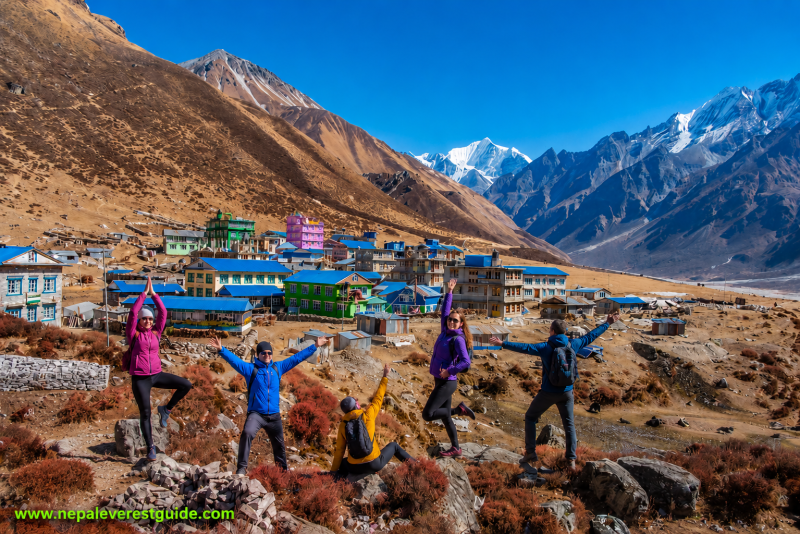
Table of Contents
- Introduction to Langtang National Park
- Location and Geography
- History and Establishment
- Flora and Fauna
- Popular Treks Inside the Park
- Best Time to Visit
- How to Get There
- Permits and Entry Fees
- Trekking Tips for Visitors
- Frequently Asked Questions
- Conclusion
1. Introduction – Langtang National Park
Tucked in the central Himalayas just north of Kathmandu, Langtang National Park holds a special place in Nepal’s conservation history as the country’s first Himalayan national park, established in 1976. Spanning roughly 1,710 square kilometers across the Rasuwa, Nuwakot, and Sindhupalchok districts, the park lies remarkably close to the capital, making it one of the most accessible high-mountain wilderness areas. Its boundary extends to the Tibetan border, giving the region a unique cultural identity shaped by centuries of trans-Himalayan trade and migration.
Langtang’s defining feature is its extraordinary vertical range — from warm, subtropical forest at roughly 1,000 meters to stark alpine terrain above 7,000 meters at Langtang Lirung, the park’s highest peak. Climbing through this landscape means passing through several ecosystems in a single trek: dense oak, pine, and rhododendron forest gradually opens into alpine meadows and glacial valleys higher up. The park’s rugged terrain also shelters elusive wildlife such as red pandas, snow leopards, and Himalayan tahr, making Langtang a compelling destination for wildlife enthusiasts and trekkers alike.
Beyond its landscapes, Langtang is deeply tied to Tamang culture, with local communities maintaining traditions, monasteries, and mountain villages along the trekking routes. Compared to the more famous Everest and Annapurna regions, Langtang offers a quieter, more intimate trekking experience without sacrificing dramatic mountain scenery. Its mix of accessibility, biodiversity, and living culture makes it one of Nepal’s most well-rounded — yet still underrated — trekking destinations.
2. Location and Geography
Nepal’s central Himalayan belt, Langtang National Park lies just 32 kilometers from the Kathmandu Valley, making it one of the most easily reached high-altitude wilderness areas. Its landscape is remarkably varied — deep river gorges, glacial valleys, dense pine and rhododendron forest, and high alpine passes lead up to Langtang Lirung, the park’s highest summit. Roughly two-thirds of this terrain is permanent rock and ice, with the rest forest, grassland, shrubland, and small patches of cultivated land near mountain villages. This habitat supports wildlife ranging from red pandas to snow leopards.
3. History and Establishment
The idea for Langtang National Park took root in 1970, when royal approval designated the region as Nepal’s first protected area in the Himalayas. After several years of planning, the park was formally gazetted in 1976 — the fourth protected area established in Nepal and the first in the Himalayan zone. In 1998, a 420-square-kilometer buffer zone was added to ease pressure on the core protected area and give local communities a structured, sustainable way to use nearby resources. Conservation significance: UNESCO’s World Network of Biosphere Reserves.
4. Flora and Fauna
Langtang National Park is home to 14 vegetation types spread across 18 distinct ecosystems, ranging from subtropical sal forest at lower elevations to alpine meadows near the snowline. Rhododendron forests are especially prominent here, bursting into vivid bloom each spring and drawing trekkers eager to see the hillsides turn shades of red and pink.
The park is a sanctuary for red pandas, Himalayan black bears, musk deer, ghoral, and the elusive snow leopard. Birdlife is equally rich, with over 250 recorded species, including the danphe — Nepal’s national bird — along with the Himalayan monal and satyr tragopan.
Conservation groups have flagged the park as an important habitat for several globally threatened species, making responsible trekking practices especially important here.
5. Popular Treks Inside Langtang National Park
Langtang National Park offers a range of trekking routes known for stunning mountain scenery, rich biodiversity, and authentic Tamang culture — all just a short drive from Kathmandu.
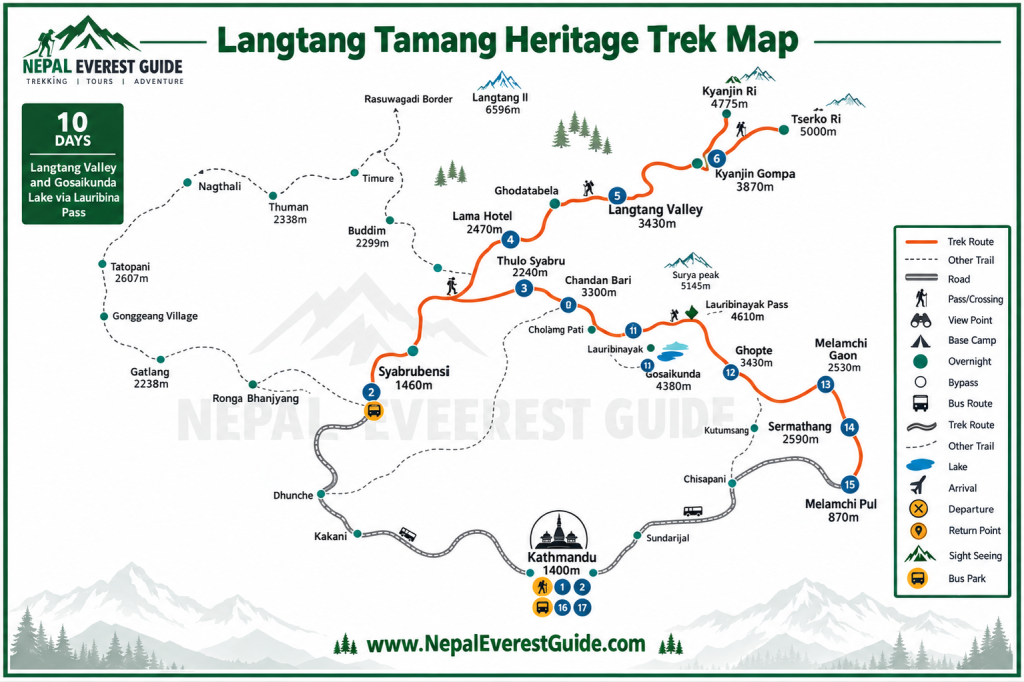
- Langtang Valley Trek — The park’s most popular route, offering close-up views of Langtang Lirung and traditional Tamang villages.
- Gosaikunda Lake Trek — A sacred high-altitude lake trek, especially popular with pilgrims and nature lovers.
- Helambu Trek — A shorter, gentler trail ideal for beginners, passing through Sherpa and Tamang settlements.
- Tamang Heritage Trail — Focused on cultural immersion, showcasing local traditions, homestays, and mountain views.
Each route combines dramatic Himalayan landscapes with a genuine cultural experience, making Langtang one of Nepal’s most rewarding trekking regions.
6. Best Time to Visit
Spring (March–May) and autumn (September–November) are the best months to trek, offering clear skies, mild temperatures, and stunning mountain views. Spring is especially popular for its blooming rhododendron forests, which add vibrant color to the trail.
Winter (December–February) works for lower-altitude routes, but expect cold temperatures and snow at higher elevations.
Monsoon (June–August) brings heavy rain and leeches, making it the least favorable season — though trails are much quieter if you don’t mind the wet conditions.
Quick tip: Book accommodations early during peak spring and autumn months, as trails get busy.
7. How to Get There
Reaching the Langtang region, Syabrubesi is the gateway village where most trekking routes officially start. There are three main ways to make this journey, each suited to a different budget and travel timeline
By Local or Tourist Bus
The most budget-friendly option is a public or tourist bus from Kathmandu’s Balaju Bus Park, which takes roughly 7 to 8 hours depending on road conditions and seasonal traffic. Buses run daily, though seats can fill up quickly during peak trekking months, so booking a ticket a day in advance is a smart move.
By Private Jeep
For a faster, more comfortable ride, directly from Kathmandu. This option noticeably cuts travel time, offers extra legroom and flexibility with stops, and suits small groups or families willing to pay a bit more for convenience.
By Helicopter
Sometimes skip the road journey altogether and book a helicopter transfer, which can reach parts of the Langtang region in under an hour. This option is considerably more expensive but popular with travelers on shorter itineraries or those wanting a scenic aerial view of the Himalayas.
Once You Reach Syabrubesi
From here, the trail network heads north into the heart of the park, passing through Lama Hotel and Langtang Village before reaching Kyanjin Gompa, the highest and final major stop on the classic Langtang Valley route. Some trekkers also start closer to the trail by hiring a jeep to skip the first this is optional and depends on personal preference.
8. Permits and Entry Fees
Before setting off on any trail in the Langtang region, trekkers need two mandatory documents: the Langtang National Park entry permit and the TIMS card. These aren’t optional formalities — checkpoints along the route, particularly at Dhunche, will turn anyone without valid paperwork. The good news is that compared to restricted areas like Upper Mustang or Manaslu, Langtang’s permit costs remain refreshingly simple and affordable.
Langtang National Park Entry Permit
This permit grants access to the park itself and helps fund conservation work, trail maintenance, and search-and-rescue coordination. Foreign nationals currently pay around NPR 3,000 (approximately USD 25–30), while SAARC nationals receive a discounted rate of roughly NPR 1,500. The permit is valid for your entire time inside the park, no matter how many days you spend trekking or directly in Dhunche on the way to Syabrubesi.
TIMS Card (Trekkers’ Information Management System)
The TIMS card is an official safety record of movements and helps in an emergency. Prices generally range from USD 10 to 20 per person, depending on whether you’re trekking solo or with an agency. Most operators now issue this through the newer e-TIMS digital system, which your guide or agency typically handles on your behalf, reducing paperwork at the trailhead.
Total Estimated Permit Cost
| Permit | Foreign Nationals | SAARC Nationals |
|---|---|---|
| Langtang National Park Entry | ~NPR 3,000 (USD 25–30) | ~NPR 1,500 (USD 10) |
| TIMS Card | ~NPR 1,500–2,000 (USD 10–20) | ~NPR 1,000 (USD 7) |
| Total | ~USD 35–50 | ~USD 17–20 |
Compared to the hundreds of dollars required for restricted regions, Langtang remains one of the most budget-friendly Himalayan permit packages.
Where and How to Get Your Permits
Independent trekkers can arrange both permits at the Nepal Tourism Board office in Kathmandu before departure, or pick up the park entry permit at the Dhunche checkpoint en route. If you’re trekking with a registered agency, they’ll typically handle both permits in advance as part of your package, so you can skip the paperwork entirely and focus on the trek itself.
A Few Practical Notes
- Carry your original passport — copies aren’t accepted for permit issuance.
- Fees are per person, per entry, and only once regardless of trek duration.
- Rates are periodically revised, so it’s worth confirming current prices with the Nepal Tourism Board or your trekking agency shortly before departure.
- Unlike restricted-area permits, Langtang does not require a minimum group size or a licensed agency for entry, giving independent trekkers more flexibility.
Want me to add a short comparison paragraph contrasting Langtang’s permit costs with Everest or Annapurna, since that’s a common thing readers search for?
9. Trekking Tips for Visitors

1. Acclimatize Properly
Altitude sickness is one of the biggest risks on high-altitude routes like the Ganja La Pass or Kyanjin Ri. Build at least one rest or acclimatization day into your itinerary, avoid gaining more than 300–500 meters of sleeping elevation per day above 3,000 meters, and watch for early symptoms like headaches, nausea, or dizziness. If symptoms worsen, descend immediately rather than pushing through.
2. Hire a Local Guide or Porter
A licensed guide helps with navigation, weather judgment, and emergency decisions, which matters most on remote sections like the Ganja La crossing where trails are less marked. A porter reduces physical strain by carrying your main pack, letting you trek longer with more energy in reserve. Beyond safety, hiring local staff puts income directly into Langtang’s communities, many of which rely heavily on trekking tourism to rebuild after the 2015 earthquake.
3. Pack Layered Clothing
Temperatures in Langtang can swing from warm and humid in the lower valleys to well below freezing near high passes and glaciers, sometimes within the same day. A practical layering system includes a moisture-wicking base layer, an insulating mid-layer (fleece or light down), and a waterproof, windproof outer shell. Pack gloves, a warm hat, and thermal layers for early mornings and any high-altitude sections.
4. Respect Wildlife Zones and Stick to Marked Trails
Langtang protects sensitive habitats for species like red pandas, musk deer, and snow leopards, many of which are easily disturbed by noise or off-trail movement. Staying on designated paths limits soil erosion and protects fragile alpine vegetation that takes years to recover. Avoid feeding wildlife, keep noise levels down near forested areas, and pack out all trash, including biodegradable waste.
5. Carry Sufficient Cash
Once you leave Kathmandu or Syabrubesi, ATMs and card payment options disappear almost entirely. Teahouses, permit checkpoints, and local shops along the trail, so estimate your daily costs (accommodation, meals, snacks, hot showers, charging fees) and withdraw enough Nepali rupees before departure, plus a reasonable buffer for delays or emergencies.
10. Frequently Asked Questions
1. Where is Langtang National Park located?
It lies in the central Himalayan region, spanning the Rasuwa, Nuwakot, and Sindhupalchok districts, roughly 32 kilometers north of Kathmandu at its nearest point.
2. When was Langtang National Park established?
It was gazetted in 1976, making it Nepal’s first national park in the Himalayan region.
3. How big is Langtang National Park?
It covers approximately 1,710 square kilometers, plus a 420-square-kilometer buffer zone added in 1998.
4. What is the highest peak in the park?
Langtang Lirung, standing at 7,234 meters, is the park’s highest point.
5. Is Langtang National Park a UNESCO site?
It was added to the World Network of Biosphere Reserves in 1979, one of the earliest such designations in the Himalayan region.
6. What wildlife can be found in Langtang National Park?
The park is home to red pandas, Himalayan black bears, musk deer, snow leopards, and over 250 bird species.
7. What is the national bird of Nepal, and is it found here?
Yes, the danphe (Himalayan monal) is Nepal’s national bird and can be spotted in the park.
8. How many vegetation types exist in the park?
14 vegetation types across 18 distinct ecosystems.
9. What are the most popular treks in Langtang National Park?
Top routes include the Langtang Valley Trek, Gosaikunda Lake Trek, Tamang Heritage Trail, and Langtang Circuit via Ganja La Pass.
10. How long does the Langtang Valley Trek take?
Most itineraries run 7 to 10 days round trip, depending on the route and pace.
11. Is Langtang good for beginner trekkers?
Yes, the main Langtang Valley Trek is considered moderate and suitable for trekkers with basic fitness and some hiking experience.
12. How does Langtang compare to Everest Base Camp?
Langtang is closer to Kathmandu, less crowded, and generally more budget-friendly, though EBC offers higher altitude and bigger mountain views.
13. What permits are required to enter the park?
Trekkers need a Langtang National Park entry permit and a TIMS card, both usually arranged in Kathmandu or at Dhunche.
14. How much does the Langtang National Park entry permit cost?
It costs around NPR 3,000 (roughly USD 25–30) for foreign nationals, with discounted rates for SAARC citizens.
15. What is the best time to visit Langtang National Park?
Spring (March–May) and autumn (September–November) offer the clearest skies and most stable weather.
16. Can I visit Langtang during monsoon season?
It’s possible, but heavy rain, leeches, and slippery trails make June to August the least favorable time to trek.
17. How do I get to Langtang National Park from Kathmandu?
Most trekkers travel by road to Syabrubesi, the main trailhead, a journey that takes roughly 7–8 hours by bus or jeep.
18. Do I need a guide to trek in Langtang?
A guide isn’t legally mandatory for this region, but hiring one is strongly recommended for safety, navigation, and supporting the local economy.
19. What villages will I pass through in the park?
Common stops include Syabrubesi, Lama Hotel, Langtang Village, and Kyanjin Gompa, home to Tamang communities with Tibetan Buddhist traditions.
20. Is Langtang National Park safe to visit today?
Yes, the region has recovered well since the 2015 earthquake and remains a safe, well-maintained trekking destination with active infrastructure and services.
11. Conclusion
Langtang National Park brings together everything that draws travelers to Nepal’s mountains — dramatic Himalayan scenery, rich biodiversity, and living cultural traditions — without the heavy crowds found in more commercialized trekking regions. Whether you’re drawn by the wildlife, the high-altitude lakes, or the chance to walk through centuries-old Tamang villages, Langtang offers a rewarding and genuinely quiet alternative to Nepal’s better-known trails.